
Comparison BASEUS CCNL050006 100 W vs Konner&Sohnen KS SP90W-3 90 W
Add to comparison | 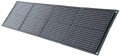 | 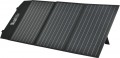 |
|---|---|---|
| BASEUS CCNL050006 100 W | Konner&Sohnen KS SP90W-3 90 W | |
| Outdated Product | Outdated Product | |
| TOP sellers | ||
| Features | portable | portable |
| Type | monocrystalline | monocrystalline |
Specs (STC) | ||
| STC Power (Pmax) | 100 W | 90 W |
| Nominal voltage (Vmp) | 18 В | 18 В |
| Nominal power (Imp) | 5.5 А | 5 А |
| Open-circuit voltage (Voc) | 23.5 В | |
| Short circuit current (Isc) | 6.1 А | |
| Efficiency | 20 % | |
Features | ||
| USB-A | 1 2.4 А 12 W | |
| USB-C | 1 3 А 18 W | |
| MC4 connector |  |  |
| DC output | | |
| Folding design | | |
| Support foot | | |
| Suspension system | | |
| Waterproof | IP66 | |
| Operating temperature | -10 °C ~ +65 °C | -20 °C ~ +85 °C |
General | ||
| Dimensions | 1588x396 mm | 1280x520x4 mm |
| Folded size | 520x370x45 mm | |
| Weight | 3.6 kg | 3.18 kg |
| In box | cable | cables, adapters |
| Added to E-Catalog | july 2023 | january 2023 |


Compare BASEUS CCNL050006 and Konner&Sohnen KS SP90W-3
You may be interested in
BASEUS CCNL050006 often compared

Glossary
Specs (STC)
Standard Test Conditions (STC) are standard test conditions that reflect the operation of a solar panel under ideal conditions. As part of the tests, the weather of a clear sunny day with an air temperature of +25 °C, no wind, solar intensity of 1000 W/m² and an emission spectrum relative to air mass of 1.5 is simulated. The surface of the solar cell must be placed strictly perpendicular to the rays from the celestial body. Note that in real operation of the solar panel, such conditions are extremely rare. However, in general, the characteristics of the STC allow us to evaluate the "passport" parameters of the energy storage device.
STC Power (Pmax)
The amount of electricity in watts that a solar panel produces in one hour in tests using the STC method. The panel must provide the declared number of watts during normal operation.
Nominal power (Imp)
Ammeter reading during solar panel testing under STC conditions. The value of the rated current Imp (Current at Maximum Power) is measured in amperes.
Open-circuit voltage (Voc)
The voltage generated by the solar battery in idle mode, that is, without connecting the load. Behind the abbreviation Voc stands for Voltage Open Circuit.
Short circuit current (Isc)
The current value under the condition of zero voltage (Short Circuit Current).
Efficiency
Percentage of the maximum solar panel power to the incident radiation power produced. The efficiency parameter allows you to determine how efficiently the panel PV module converts solar energy into direct electric current.
USB-A
"USB-A" is the official name for the classic full-sized USB port.
These connectors are very popular in computer technology and are also commonly used in chargers-adapters for household 230 V networks and 12 V car sockets. In solar panels, primarily of portable form-factor, outputs — USB-A have become widely used for charging devices.
— Qty. The number of full-sized USB ports in the solar battery design.
— Current. The maximum current delivered through the USB-A connector to the charging device. Note that different ports on solar panels may output different currents (e.g., 1.5 A and 2.1 A). In such cases, the highest current is usually indicated.
— Power. The maximum power in watts (W) that the solar panel can deliver to a single charging device. High output power can speed up the charging process. However, the corresponding power must be supported by the charging device — otherwise, the process speed will be limited by the gadget's characteristics. In models with multiple USB-A connectors, the maximum power for one device can be achieved if the other ports are not in use.
These connectors are very popular in computer technology and are also commonly used in chargers-adapters for household 230 V networks and 12 V car sockets. In solar panels, primarily of portable form-factor, outputs — USB-A have become widely used for charging devices.
— Qty. The number of full-sized USB ports in the solar battery design.
— Current. The maximum current delivered through the USB-A connector to the charging device. Note that different ports on solar panels may output different currents (e.g., 1.5 A and 2.1 A). In such cases, the highest current is usually indicated.
— Power. The maximum power in watts (W) that the solar panel can deliver to a single charging device. High output power can speed up the charging process. However, the corresponding power must be supported by the charging device — otherwise, the process speed will be limited by the gadget's characteristics. In models with multiple USB-A connectors, the maximum power for one device can be achieved if the other ports are not in use.
USB-C
"USB-C" is the official name for the symmetrical USB charging connector.
USB-C ports are smaller compared to the classic USB-A ports and have a convenient reversible design, allowing the plug to be connected in any orientation. USB-C was initially designed to incorporate various advanced features: increased power delivery, fast charging technologies, etc.
— Quantity. The number of symmetrical USB-C ports in the solar panel design.
— Current. The maximum current delivered through the USB-C port to the charging device. Note that different solar panel ports may output different currents (e.g., 1.5 A and 2.1 A). In such cases, the highest current is usually specified.
— Power. The maximum power in watts (W) that the solar panel can deliver to a single charging gadget. High output power allows the charging process to be accelerated. However, the charging device must support the corresponding power — otherwise, the speed of the process will be limited by the gadget's specifications. In models with multiple USB ports, maximum power per device can be achieved if the other ports are not in use.
USB-C ports are smaller compared to the classic USB-A ports and have a convenient reversible design, allowing the plug to be connected in any orientation. USB-C was initially designed to incorporate various advanced features: increased power delivery, fast charging technologies, etc.
— Quantity. The number of symmetrical USB-C ports in the solar panel design.
— Current. The maximum current delivered through the USB-C port to the charging device. Note that different solar panel ports may output different currents (e.g., 1.5 A and 2.1 A). In such cases, the highest current is usually specified.
— Power. The maximum power in watts (W) that the solar panel can deliver to a single charging gadget. High output power allows the charging process to be accelerated. However, the charging device must support the corresponding power — otherwise, the speed of the process will be limited by the gadget's specifications. In models with multiple USB ports, maximum power per device can be achieved if the other ports are not in use.
MC4 connector
MC4 connectors are used for connecting solar panels to each other and for crimping the ends of power cables. Such connectors have a sealed waterproof design, suitable for outdoor use. MC4 connectors are available in female and male versions. They provide long-term stability of solar panels and resistance to climatic influences.