
Comparison Dyson Corrale HS07 vs Dyson Airwrap HS01
Add to comparison | 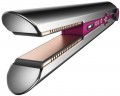 | 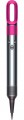 |
|---|---|---|
| Dyson Corrale HS07 | Dyson Airwrap HS01 | |
| Compare prices 7 | from $499.00 | |
| User reviews | ||
| TOP sellers | ||
The cordless styler with flexible plates made of manganese-copper alloy evenly distributes heat, providing gentle straightening. Operates up to 30 minutes on battery or from the mains. Fast charging in 70 minutes, magnetic cable and heat mat included. This version of the styler does not come with a storage case. | Air supply temperature control (no more than 150°C). Filter cleaning indicator. Some stores may complete the same model of hair dryer-brush with different components. On the market there can be both the cheapest options (minimum equipment), and options with 8 nozzles, a cover, a thermal mat. | |
| Device | hair straightener | hair dryer-multistyler |
| Motor type | brushless | |
Specs | ||
| Power | 200 W | 1300 W |
| Power/temperature regulator | separate | |
| Power modes | 3 | |
| Temperature modes | 3 | 3 |
| Temperature control | 165, 185, 210 °C | |
| Cold air |  |  |
| Curling iron diameter | 30, 40 mm | |
| Coating of the heating element | manganese-copper | |
| Functions | ionization automatic switch-off | intelligent temperature control |
| Nozzles and accessories | straightener heat resistant mat dock station | hair dryer attachment 3 brushes round brush flat brush Coanda cone nozzle 2 pcs (right/left) heat resistant mat cover/case filter cleaning brush |
General | ||
| Display | | |
| Power source | battery | |
| Operating time | 30 min | |
| Charging time | 1.2 h | |
| Input voltage 110/230V | | |
| Cord twist 360° | | |
| Removable grille | | |
| Cable length | 4.34 m | 2.7 m |
| Dimensions | 29.2x4.5x4.1 cm | 27.2x4.8x4.1 cm |
| Weight | 561 g | 660 g |
| Color | ||
| Added to E-Catalog | may 2020 | august 2019 |





Compare Dyson Corrale HS07 and Airwrap HS01
Price comparison
You may be interested in
My comparisons
Dyson Corrale HS07 often compared


Dyson Airwrap HS01 often compared


Glossary
Device
— Hair dryer. Classic hand-held hair dryers are devices that produce an intense air flow (with or without heating). Can be used for both hair drying and styling.
— Hairdryer (wall). Stationary hair dryers are wall-mounted devices that consist of the hair dryer and a wall stand. This design offers convenience, particularly in settings like beauty salons or public pool changing rooms. The stand allows users to keep the hair dryer easily accessible and frees up space on countertops or other surfaces. Additionally, the stand can accommodate extra features, such as an electric shaver socket, providing added functionality and practicality.
— Hairdryer-brush. Small appliances with nozzles in the form of round combs-brushes, supplemented with holes for air supply. They have a relatively small power and are used mainly for certain types of styling.
— Styler. Classic stylers, commonly known as straighteners, use heated tongs to straighten hair. However, these stylers are versatile and not limited to straightening alone. They can be equipped with various types of nozzles to achieve specific styling effects, such as hair crimping. Additionally, there are specialized stylers designed for unique purposes, like creating braided hairstyles.
— Multi-styler. Multi-stylers are versatile hairdressing tools used for styl...ing hair and creating a variety of hairstyles. They are composed of a heating base and interchangeable nozzles, each designed for specific hairstyling techniques. The device set may include curling irons of different sizes and shapes, straightening plates, curling nozzles, brushes for adding volume to the roots, and more. Essentially, multi-stylers are an upgraded version of stylers, offering an expanded range of complete nozzles for versatile hairstyling options.
— Curling iron. Hair curlers typically feature a round (cylindrical or conical) heating element onto which the hair is wound during use. Some models come with a clip to secure the hair tightly to the heater, while others may not have this feature. The diameter of the heating elements can vary, offering the flexibility to achieve various styling effects. Additionally, specific curling irons are also available, such as those equipped with a double heater and a clamp for enhanced styling capabilities.
— Automatic curling iron. Automated hair curlers function similarly to regular curling irons but come with a key difference: they automatically wind a strand of hair onto the heating element using a built-in motor and give a signal when the heating is complete. This feature makes them extremely user-friendly, as users don't need to manually wrap their hair around the curling iron or time the heating process. However, these devices tend to be expensive and relatively heavy, making them less convenient for self-use. Moreover, the automation is limited to standard programs and may not be suitable for creating complex or unique hairstyles.
— Brush. Outwardly, such devices most often look like combs, brushes, complemented by built-in heaters. Due to this, when combing, such devices are more effective than conventional brushes without heating, especially with thick “naughty” hair.
—Electric curlers. Curlers are small cylinders used for curling hair. They can be heated for more long-lasting styling. Electric rollers, as the name suggests, use an electric element for heating, typically built into the container where the curlers are stored. It takes approximately 10-20 minutes for them to reach the desired temperature, and the curlers themselves are made of heat-absorbing material that retains warmth for an extended period.
In addition to individual hair styling tools, there are also sets available that include two or three items, such as a "hairdryer + curling iron” combination. These sets consist of separate devices that can be used independently of each other. Purchasing such a kit is often more convenient and cost-effective compared to buying the tools separately. However, it also means relying on the manufacturer's selection of items, whereas individual tools can be chosen according to personal preference and needs.
— Hairdryer (wall). Stationary hair dryers are wall-mounted devices that consist of the hair dryer and a wall stand. This design offers convenience, particularly in settings like beauty salons or public pool changing rooms. The stand allows users to keep the hair dryer easily accessible and frees up space on countertops or other surfaces. Additionally, the stand can accommodate extra features, such as an electric shaver socket, providing added functionality and practicality.
— Hairdryer-brush. Small appliances with nozzles in the form of round combs-brushes, supplemented with holes for air supply. They have a relatively small power and are used mainly for certain types of styling.
— Styler. Classic stylers, commonly known as straighteners, use heated tongs to straighten hair. However, these stylers are versatile and not limited to straightening alone. They can be equipped with various types of nozzles to achieve specific styling effects, such as hair crimping. Additionally, there are specialized stylers designed for unique purposes, like creating braided hairstyles.
— Multi-styler. Multi-stylers are versatile hairdressing tools used for styl...ing hair and creating a variety of hairstyles. They are composed of a heating base and interchangeable nozzles, each designed for specific hairstyling techniques. The device set may include curling irons of different sizes and shapes, straightening plates, curling nozzles, brushes for adding volume to the roots, and more. Essentially, multi-stylers are an upgraded version of stylers, offering an expanded range of complete nozzles for versatile hairstyling options.
— Curling iron. Hair curlers typically feature a round (cylindrical or conical) heating element onto which the hair is wound during use. Some models come with a clip to secure the hair tightly to the heater, while others may not have this feature. The diameter of the heating elements can vary, offering the flexibility to achieve various styling effects. Additionally, specific curling irons are also available, such as those equipped with a double heater and a clamp for enhanced styling capabilities.
— Automatic curling iron. Automated hair curlers function similarly to regular curling irons but come with a key difference: they automatically wind a strand of hair onto the heating element using a built-in motor and give a signal when the heating is complete. This feature makes them extremely user-friendly, as users don't need to manually wrap their hair around the curling iron or time the heating process. However, these devices tend to be expensive and relatively heavy, making them less convenient for self-use. Moreover, the automation is limited to standard programs and may not be suitable for creating complex or unique hairstyles.
— Brush. Outwardly, such devices most often look like combs, brushes, complemented by built-in heaters. Due to this, when combing, such devices are more effective than conventional brushes without heating, especially with thick “naughty” hair.
—Electric curlers. Curlers are small cylinders used for curling hair. They can be heated for more long-lasting styling. Electric rollers, as the name suggests, use an electric element for heating, typically built into the container where the curlers are stored. It takes approximately 10-20 minutes for them to reach the desired temperature, and the curlers themselves are made of heat-absorbing material that retains warmth for an extended period.
In addition to individual hair styling tools, there are also sets available that include two or three items, such as a "hairdryer + curling iron” combination. These sets consist of separate devices that can be used independently of each other. Purchasing such a kit is often more convenient and cost-effective compared to buying the tools separately. However, it also means relying on the manufacturer's selection of items, whereas individual tools can be chosen according to personal preference and needs.
Motor type
The type of electric motor installed in the hair dryer.
This parameter is specified if the device does not use a traditional collector (brush) direct current (DC) electric motor, but more advanced motor. The options here might be:
— AC motor. Hair dryers equipped with alternating current (AC) motors use the same type of power found in regular electrical outlets. These AC motors offer several key advantages over their DC counterparts, including enhanced reliability, durability, and excellent resistance to high loads. They can operate at full power for extended periods without overheating, often lasting for at least 5 years even under continuous use. Additionally, AC motors provide more even heating and facilitate quick adjustments to temperature settings. As a result, hair dryers with AC motors are essential tools in professional settings such as hairdressers and beauty salons. However, the main drawback of AC motors is their relatively higher cost, making them less practical for occasional home use.
— Brushless motor. A brushless electric motor, which eliminates the need for a traditional commutator and brush contacts, employs a built-in electronic circuit to control the current in the motor windings. Despite being more expensive than conventional brushed motors, they offer several advantages. These motors allow for more precise and wider range adjustments of engine speed an...d airflow, resulting in higher efficiency and better overall performance for the same power consumption. Moreover, the absence of moving brush components enhances their durability, leading to significantly longer service lives compared to both AC and traditional brushed motors. However, due to their higher cost, brushless models are not widely used even in the professional industry.
This parameter is specified if the device does not use a traditional collector (brush) direct current (DC) electric motor, but more advanced motor. The options here might be:
— AC motor. Hair dryers equipped with alternating current (AC) motors use the same type of power found in regular electrical outlets. These AC motors offer several key advantages over their DC counterparts, including enhanced reliability, durability, and excellent resistance to high loads. They can operate at full power for extended periods without overheating, often lasting for at least 5 years even under continuous use. Additionally, AC motors provide more even heating and facilitate quick adjustments to temperature settings. As a result, hair dryers with AC motors are essential tools in professional settings such as hairdressers and beauty salons. However, the main drawback of AC motors is their relatively higher cost, making them less practical for occasional home use.
— Brushless motor. A brushless electric motor, which eliminates the need for a traditional commutator and brush contacts, employs a built-in electronic circuit to control the current in the motor windings. Despite being more expensive than conventional brushed motors, they offer several advantages. These motors allow for more precise and wider range adjustments of engine speed an...d airflow, resulting in higher efficiency and better overall performance for the same power consumption. Moreover, the absence of moving brush components enhances their durability, leading to significantly longer service lives compared to both AC and traditional brushed motors. However, due to their higher cost, brushless models are not widely used even in the professional industry.
Power
The rated power of the device, in fact, is the power consumed by it when operating at maximum intensity.
The power of a hair dryer, particularly for hair dryers, is a crucial factor that determines the maximum intensity of the airflow and heating capabilities. When selecting a hair dryer based on this parameter, it's essential to consider the intended usage of the device. Models with a power below 1000 W may not be sufficient for proper hair drying, especially for long hair, and are more suitable for styling purposes. Some of these models, particularly inexpensive ones, can provide high heat with low airflow, requiring careful use. For versatile and effective use, both at home and in professional settings, it's recommended to choose a hair dryer with at least 1800 W, preferably 2000 W and higher. Higher power allows for intense airflow, effective hair drying even at lower temperatures, and provides a wide range of temperature and speed settings. Models with intermediate power levels, ranging from 1000 to 1800 W, are more suitable for travel and on-the-go use.
For curling irons, electric curlers, and similar devices, the heating intensity and speed depend directly on the power. The manufacturer carefully selects the heater's power to achieve specific performance characteristics, such as temperature and heating intensity. When choosing such devices, it's essential to focus on practical indicators and compare different mode...ls based on power, especially if specific characteristics are not clearly stated, as seen in some inexpensive curling irons with basic functionality. In these cases, users should consider the weaker and more delicate their hair, the lower the temperature and less intense the heating should be. If unsure, it's safer to opt for a less powerful device, as it may take more time to curl hair, but it significantly reduces the risk of damaging the hair.
The power of a hair dryer, particularly for hair dryers, is a crucial factor that determines the maximum intensity of the airflow and heating capabilities. When selecting a hair dryer based on this parameter, it's essential to consider the intended usage of the device. Models with a power below 1000 W may not be sufficient for proper hair drying, especially for long hair, and are more suitable for styling purposes. Some of these models, particularly inexpensive ones, can provide high heat with low airflow, requiring careful use. For versatile and effective use, both at home and in professional settings, it's recommended to choose a hair dryer with at least 1800 W, preferably 2000 W and higher. Higher power allows for intense airflow, effective hair drying even at lower temperatures, and provides a wide range of temperature and speed settings. Models with intermediate power levels, ranging from 1000 to 1800 W, are more suitable for travel and on-the-go use.
For curling irons, electric curlers, and similar devices, the heating intensity and speed depend directly on the power. The manufacturer carefully selects the heater's power to achieve specific performance characteristics, such as temperature and heating intensity. When choosing such devices, it's essential to focus on practical indicators and compare different mode...ls based on power, especially if specific characteristics are not clearly stated, as seen in some inexpensive curling irons with basic functionality. In these cases, users should consider the weaker and more delicate their hair, the lower the temperature and less intense the heating should be. If unsure, it's safer to opt for a less powerful device, as it may take more time to curl hair, but it significantly reduces the risk of damaging the hair.
Power/temperature regulator
— Combined. In models with combined power and airflow temperature adjustment, the settings change with a single button press. Hair dryers usually have several fixed intensity and air temperature settings.
— Separate. Separate controls for heating power and temperature mode offer more flexibility when using hair drying and styling appliances. With separate adjustment, the strength and temperature settings of the airflow can be changed individually, allowing you to achieve optimal power and airflow temperature to prevent hair overdrying.
— Separate. Separate controls for heating power and temperature mode offer more flexibility when using hair drying and styling appliances. With separate adjustment, the strength and temperature settings of the airflow can be changed individually, allowing you to achieve optimal power and airflow temperature to prevent hair overdrying.
Power modes
The number of power modes provided in the design of the tool.
This parameter is relevant primarily for hair dryers of various types (see "Device") — in models of another type, the main point is the temperature modes, see below for them. And in hair dryers, the number of power modes is, most often, the number of speeds at which the “blower” can operate.
The abundance of speeds allows you to choose the best option depending on the current task (quick dry, delicately style), hair type, etc. At the same time, the abundance of adjustments complicates the design and affects the price. Therefore, for domestic use, 2 – 3 modes are usually quite enough, and sometimes one is enough.
Note that in single-speed hair dryers, the number of modes may not be indicated at all.
This parameter is relevant primarily for hair dryers of various types (see "Device") — in models of another type, the main point is the temperature modes, see below for them. And in hair dryers, the number of power modes is, most often, the number of speeds at which the “blower” can operate.
The abundance of speeds allows you to choose the best option depending on the current task (quick dry, delicately style), hair type, etc. At the same time, the abundance of adjustments complicates the design and affects the price. Therefore, for domestic use, 2 – 3 modes are usually quite enough, and sometimes one is enough.
Note that in single-speed hair dryers, the number of modes may not be indicated at all.
Temperature control
The specific working temperature settings that can be set on the device. A greater number of modes or a wider adjustment range offers more options and allows for a more precise adjustment of the device to a specific situation; on the other hand, expanded capabilities inevitably affect the price. When choosing a specific model, it's important to remember that the optimal temperature for a particular situation depends on a number of factors – hair characteristics, specific task, cosmetics being used, etc. Recommendations on this matter can be found in specialized sources; use them to determine the temperature you need and choose a curling iron, brush, or styler with the appropriate temperature settings based on that.
Note that if this point specifies a whole range of settings (for example, "120 – 220 °C"), it does not necessarily mean smooth adjustment is available; this detail needs to be clarified separately.
Note that if this point specifies a whole range of settings (for example, "120 – 220 °C"), it does not necessarily mean smooth adjustment is available; this detail needs to be clarified separately.
Cold air
The ability to operate a hair dryer without using a heating element — when the airflow is at the same temperature as the surrounding air. Cold mode will be useful for drying weakened hair that is particularly sensitive to overheating. In addition, it can be useful during styling — in particular, cold air is used to "set" the finished hairstyle.
Curling iron diameter
The diameter of the curling iron determines the size of the curl: the narrower the working surface, the smaller and more resilient the curls, while larger diameters create soft large waves and easy Hollywood-style styling. For short haircuts, thin models are more convenient, whereas long hair is easier to style with a wide curling iron that provides gentle volume without a strong curl.
Coating of the heating element
Type of outer coating of the heating element.
— Chrome plated. The most basic and widely used coating option is chrome. It is affordable and heats up quickly. However, using chrome-coated heaters can pose a higher risk of hair damage, so caution is needed when using them. Due to this risk, chrome-coated nozzles are not ideal for frequent or continuous use.
— Aluminium. Such heaters are considered more advanced than the chrome ones described above, due to a longer service life and better heat distribution. However, it is not without the characteristic drawbacks of any metal coating, primarily the negative impact on the condition of the hair.
— Titan. Another option for a metal heater. In terms of basic properties, it is almost completely similar to aluminium (see above), in most cases it differs only in appearance.
— Ceramics. The main advantage of ceramics is the better distribution of heat than in metal heaters. Due to this, such a coating is considered much more “gentle”; however, its cost is noticeably higher, and heating is slower.
— Tourmaline. In most cases, when referring to a ceramic heater, it is typically combined with a tourmaline coating. This coating serves two primary functions: ionization, which promotes smooth and even styling, and friction reduction, allowing the cur...ling iron to glide through the hair effortlessly.
— Titanium ceramics. A specific type of ceramic coating used by some manufacturers. The design, usually, implements various additional technologies designed to improve the quality of work; however, whether such devices outperform "ceramic" analogues depends on the model in each specific case.
— Titanium-tourmaline. An analogue of the tourmaline coating described above, in which titanium is used as the base of the heater instead of ceramic. There is practically no difference in the main features.
— Steel. The most basic and common coating option is "ordinary metal plating," typically referring to steel. The main advantage of this surface is its low cost. However, the heating can be uneven and harsh, which demands careful handling of the tool and makes it less suitable for frequent use.
— Teflon. Teflon stands out for its low friction, making plates glide effortlessly through the hair, even more so than ceramic ones. However, in terms of heating uniformity, it slightly lags behind ceramics.
— Copper silicon. Typically, the reference is made to silicon-coated copper plates. Copper offers excellent thermal conductivity, ensuring uniform heating, while silicon provides practical properties similar to ceramics, such as a gentle effect and suitability for frequent use. However, this option is relatively specific and does not offer significant advantages over more traditional materials, which is why it is relatively rare.
— Manganese-copper. The manganese-copper coating on the heating plates offers a very gentle effect on the hair. These flexible plates allow the styler (straightener or curling iron) to adapt to the shape of the hair strand, reducing mechanical stress on the hair and minimizing damage. As a result, the hair becomes more manageable and obedient.
— Chrome plated. The most basic and widely used coating option is chrome. It is affordable and heats up quickly. However, using chrome-coated heaters can pose a higher risk of hair damage, so caution is needed when using them. Due to this risk, chrome-coated nozzles are not ideal for frequent or continuous use.
— Aluminium. Such heaters are considered more advanced than the chrome ones described above, due to a longer service life and better heat distribution. However, it is not without the characteristic drawbacks of any metal coating, primarily the negative impact on the condition of the hair.
— Titan. Another option for a metal heater. In terms of basic properties, it is almost completely similar to aluminium (see above), in most cases it differs only in appearance.
— Ceramics. The main advantage of ceramics is the better distribution of heat than in metal heaters. Due to this, such a coating is considered much more “gentle”; however, its cost is noticeably higher, and heating is slower.
— Tourmaline. In most cases, when referring to a ceramic heater, it is typically combined with a tourmaline coating. This coating serves two primary functions: ionization, which promotes smooth and even styling, and friction reduction, allowing the cur...ling iron to glide through the hair effortlessly.
— Titanium ceramics. A specific type of ceramic coating used by some manufacturers. The design, usually, implements various additional technologies designed to improve the quality of work; however, whether such devices outperform "ceramic" analogues depends on the model in each specific case.
— Titanium-tourmaline. An analogue of the tourmaline coating described above, in which titanium is used as the base of the heater instead of ceramic. There is practically no difference in the main features.
— Steel. The most basic and common coating option is "ordinary metal plating," typically referring to steel. The main advantage of this surface is its low cost. However, the heating can be uneven and harsh, which demands careful handling of the tool and makes it less suitable for frequent use.
— Teflon. Teflon stands out for its low friction, making plates glide effortlessly through the hair, even more so than ceramic ones. However, in terms of heating uniformity, it slightly lags behind ceramics.
— Copper silicon. Typically, the reference is made to silicon-coated copper plates. Copper offers excellent thermal conductivity, ensuring uniform heating, while silicon provides practical properties similar to ceramics, such as a gentle effect and suitability for frequent use. However, this option is relatively specific and does not offer significant advantages over more traditional materials, which is why it is relatively rare.
— Manganese-copper. The manganese-copper coating on the heating plates offers a very gentle effect on the hair. These flexible plates allow the styler (straightener or curling iron) to adapt to the shape of the hair strand, reducing mechanical stress on the hair and minimizing damage. As a result, the hair becomes more manageable and obedient.