
Comparison Scheppach HC53dc 50 L 230 V vs Scheppach HC52dc 50 L
Add to comparison | 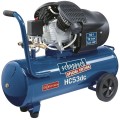 | 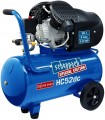 |
|---|---|---|
| Scheppach HC53dc 50 L 230 V | Scheppach HC52dc 50 L | |
from $277.28 up to $320.80 | from $264.24 up to $305.71 | |
| TOP sellers | ||
| Compressor type | piston | piston |
| Design | oil-lubricated | oil-lubricated |
| Drive | direct | direct |
Specs | ||
| Input performance | 412 L/min | 412 L/min |
| Output performance | 272 L/min | 272 L/min |
| Rated pressure | 10 bar | 8 bar |
| Power | 2.2 kW | 2.2 kW |
| Rotation speed | 2850 rpm | 2850 rpm |
| Number of cylinders | 2 | 2 |
| Number of steps | 1 | 1 |
| Receiver | horizontal | horizontal |
| Receiver volume | 50 L | 50 L |
| Power source | mains (230 V) | mains (230 V) |
General | ||
| Design features | transportation wheels | transportation wheels |
| Noise level | 97 dB | 97 dB |
| Dimensions | 88x37x71 cm | |
| Weight | 44.5 kg | 44 kg |
| Added to E-Catalog | december 2015 | november 2015 |


Compare Scheppach HC53dc and HC52dc
What is the difference between Scheppach HC53dc and HC52dc?
Scheppach HC53dc and HC52dc are essentially the same 50 L, oil-lubricated piston compressors with identical motor power and air delivery, so day-to-day performance with most air tools will feel very similar. The key practical difference is pressure: the HC53dc is rated to 10 bar while the HC52dc is rated to 8 bar, which makes the HC53dc a better pick if you need higher-pressure applications or want more headroom before the compressor cycles.
Which is better?
Scheppach HC53dc is the better pick for most buyers because it delivers higher maximum pressure (10 bar vs 8 bar) with the same airflow and motor power.
Both are oil-lubricated, piston compressors with a 50 L tank, 2.2 kW motor, two cylinders, and identical output performance (272 L/min), so day-to-day air delivery is essentially the same. The HC53dc’s higher rated pressure gives more headroom for demanding tools and helps maintain usable pressure longer before the motor cycles. Noise is identical at 97 dB, and both have transport wheels, so comfort and mobility are similar. If you only run tools that never need more than 8 bar, the HC52dc makes sense since you are not paying for extra pressure you will not use.
You may be interested in
Scheppach HC53dc often compared

Glossary
Rated pressure
The maximum pressure created by the compressor during operation. This parameter, as well as the performance described above, is very important for selecting a compressor for a specific pneumatic tool: it is necessary that the nominal pressure be not lower than the working pressure of the tool. At the same time, high pressure is not a problem — it can be reduced by the appropriate regulator on the gearbox.
Most modern compressors have a pressure rating of 8 bar, which is sufficient for most air tools. Units for 6 bar belong to the entry level, their main purpose is painting work, where high pressure is not required. There are also options for 10 bar and even more — they, usually, belong to specialized models and cost accordingly. Therefore, it is worth looking specifically for a high-pressure unit only if this parameter is critical for the planned work (for example, if you need a compressor for tyre fitting).
When selecting according to the nominal pressure, it must be taken into account that the maximum allowable pressure in the receiver is usually indicated as the nominal pressure. The pressure actually given out by the compressor to the outlet is often somewhat less, this is due to some design features. For the most popular nominal pressure options — 8 and 10 bar — the real figures are usually 2 bar less, i.e. 6 and 8 bar respectively.
Most modern compressors have a pressure rating of 8 bar, which is sufficient for most air tools. Units for 6 bar belong to the entry level, their main purpose is painting work, where high pressure is not required. There are also options for 10 bar and even more — they, usually, belong to specialized models and cost accordingly. Therefore, it is worth looking specifically for a high-pressure unit only if this parameter is critical for the planned work (for example, if you need a compressor for tyre fitting).
When selecting according to the nominal pressure, it must be taken into account that the maximum allowable pressure in the receiver is usually indicated as the nominal pressure. The pressure actually given out by the compressor to the outlet is often somewhat less, this is due to some design features. For the most popular nominal pressure options — 8 and 10 bar — the real figures are usually 2 bar less, i.e. 6 and 8 bar respectively.