
Comparison NEO Tools 90-004 vs NEO Tools 90-002
Add to comparison | 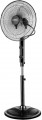 | 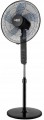 |
|---|---|---|
| NEO Tools 90-004 | NEO Tools 90-002 | |
| Outdated Product | Outdated Product | |
| TOP sellers | ||
| Type | floor standing | floor standing |
| Mechanism | axial | axial |
Specs | ||
| Power consumption | 80 W | 45 W |
| Number of speeds | 3 | 3 |
| Air flow | 4904 m³/h | 3653 m³/h |
| Maximum noise level | 51 dB | 54 dB |
Features | ||
| Functions | oscillation night mode wind imitation height adjustment tilt adjustment timer remote control | oscillation night mode wind imitation height adjustment tilt adjustment timer remote control |
| Diameter | 40 cm | 40 cm |
| Number of blades | 3 | 5 |
| Base | disc base | disc base |
| Dimensions (HxWxD) | 152.5x45x28 cm | 123x39x29 cm |
| Weight | 5.38 kg | |
| Color | ||
| Added to E-Catalog | july 2021 | july 2021 |


Compare NEO Tools 90-004 and Tools 90-002
You may be interested in
My comparisons
NEO Tools 90-004 often compared

NEO Tools 90-002 often compared


Glossary
Power consumption
The maximum power consumed by the fan during operation. The higher the power consumption, the higher, usually, the greater the airflow rate created by the fan, and, accordingly, the higher the performance of the device. On the other hand, power usually directly affects the price, all other things being equal.
Air flow
The maximum performance provided by the fan — that is, the maximum amount of air that it can pass through itself in an hour.
The air flow is selected by manufacturers, taking into account the area and, accordingly, the volume of the room for which the device is designed. For efficient operation, the device must be able to pass the entire volume of processed air through itself at least once per hour. At the same time, for models with the same area of the room, different performance parameters can be claimed — accordingly, the processing speed and efficiency will differ.
Also, note that the recommended area of the room can be estimated by performance if the latter is not stated in the characteristics. For example, if the device provides 200 m³/h, this means that the volume of the room can be less than 200 m³, which, with a standard ceiling height of 2.5 m, gives an area of 200/2.5 = 80 m². And ideally, the area should be even 2-3 times smaller — that is, be about 25-40 m².
The air flow is selected by manufacturers, taking into account the area and, accordingly, the volume of the room for which the device is designed. For efficient operation, the device must be able to pass the entire volume of processed air through itself at least once per hour. At the same time, for models with the same area of the room, different performance parameters can be claimed — accordingly, the processing speed and efficiency will differ.
Also, note that the recommended area of the room can be estimated by performance if the latter is not stated in the characteristics. For example, if the device provides 200 m³/h, this means that the volume of the room can be less than 200 m³, which, with a standard ceiling height of 2.5 m, gives an area of 200/2.5 = 80 m². And ideally, the area should be even 2-3 times smaller — that is, be about 25-40 m².
Maximum noise level
The maximum noise level produced by the fan when operating at the highest speed. For comparison: a noise of 30 dB corresponds to a distinguishable whisper at a distance of 5 m, 40 dB — to human speech, and 50 dB — to the sound background in an office room. The quieter the fan runs, the more comfortable it is to use.
Number of blades
With the same power and blade width, fans with numerous blades can boast of greater air mass distillation performance. However, the formation of a powerful airflow is not affected by the number of blades, but by their diameter. In addition, the operation of multi-bladed fans is usually associated with an increased level of noise.