
Comparison Beko BCNA 306 E42SN vs Beko BCNA 306 E4SN
Add to comparison | 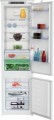 | 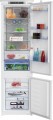 |
|---|---|---|
| Beko BCNA 306 E42SN | Beko BCNA 306 E4SN | |
| Outdated Product | from $1,426.00 | |
| TOP sellers | ||
HarvestFresh technology — special lighting mimics the solar cycle, which preserves vitamins in fruits and vegetables for longer. | HarvestFresh technology — special lighting mimics the solar cycle, which preserves vitamins in fruits and vegetables for longer. | |
| Total capacity | 284 L | 284 L |
| Number of chambers | 2 | 2 |
| Number of cooling circuits | 2 | 2 |
| Number of compressors | 1 | 1 |
| Inverter compressor |  | |
| No Frost | Freezer/refrigerator | Freezer/refrigerator |
Features | ||
| Functions | holiday mode display door alarm reversible door | holiday mode display door alarm reversible door |
Refrigeration chamber | ||
| Refrigerator capacity | 215 L | 215 L |
| Number of shelves | 4 | 4 |
| Storage compartments | humidity zone bottle rack | humidity zone bottle rack |
| Fast cooling | | |
| Dynamic air cooling | | |
| Auto-defrost | | |
| LED lighting | | |
Freezer chamber | ||
| Freezer location | bottom | bottom |
| Freezer capacity | 69 L | 69 L |
| Number of freezer drawers | 3 | 3 |
| Autonomy time | 13 h | 13 h |
| Freeze capacity | 3.5 kg/day | 3.5 kg/day |
| Fast freeze | | |
More specs | ||
| Controls | push-buttons | push-buttons |
| Energy class (new) | E | E |
| Energy consumption per year | 223 kWh | |
| Climate class | SN, N, ST, T (+10...+43 °С) | SN, N, ST, T (+10...+43 °С) |
| Noise class | C | |
| Noise level | 37 dB | 37 dB |
| Door panel hinge | sliding mount | |
| Dimensions (HxWxD) | 193.5x54x54.5 cm | 193.5x54x54.5 cm |
| Added to E-Catalog | september 2022 | may 2021 |


Compare Beko BCNA 306 E42SN and BCNA 306 E4SN
You may be interested in
Beko BCNA 306 E4SN often compared


Glossary
Energy consumption per year
The average amount of energy consumed by a refrigerator in a year of operation.
The given parameter is an estimated value and assumes that the refrigerator operates under stable conditions without sudden temperature changes, frequent door openings, and within its designated climate class (see below). Actual energy consumption may deviate slightly from the stated value. Despite this, it is a useful parameter that allows for a rough comparison of different models in terms of energy efficiency.
It should be noted that the energy consumption per year is often a more practical and convenient parameter than the energy consumption class (see above), which is a relative indicator of how efficient a refrigerator is compared to other models of similar size and features. The energy consumption per year, on the other hand, provides an estimate of the actual electricity cost when using a particular refrigerator. For instance, a small two-door refrigerator with an energy class of A can consume less energy per year than a large side-by-side refrigerator with a class of A+++, despite the fact that the latter is formally more energy-efficient than the former in terms of its energy class.
The given parameter is an estimated value and assumes that the refrigerator operates under stable conditions without sudden temperature changes, frequent door openings, and within its designated climate class (see below). Actual energy consumption may deviate slightly from the stated value. Despite this, it is a useful parameter that allows for a rough comparison of different models in terms of energy efficiency.
It should be noted that the energy consumption per year is often a more practical and convenient parameter than the energy consumption class (see above), which is a relative indicator of how efficient a refrigerator is compared to other models of similar size and features. The energy consumption per year, on the other hand, provides an estimate of the actual electricity cost when using a particular refrigerator. For instance, a small two-door refrigerator with an energy class of A can consume less energy per year than a large side-by-side refrigerator with a class of A+++, despite the fact that the latter is formally more energy-efficient than the former in terms of its energy class.
Noise class
Allows people to decode the values of the noise level in decibels. It is marked in Latin letters like other classes, where A is the quietest class of refrigerators.
Door panel hinge
— Door sliding — a special type of mount for a built-in refrigerator, in which the decorative facade rests on the hinges of the cabinet, and the refrigerator door itself is only partially loaded. The sliding fastening of a built-in refrigerator's facade allows the door of the fridge to slide along the guides on the inside of the decorative panel, reducing the load on the hinges and increasing the appliance's durability. However, this can create a gap where dust can accumulate, and the door can only open up to 90-95˚, which may cause inconvenience when accessing shelves and drawers.
— Door on door — a special type of fastening of a built-in refrigerator, in which the front decorative facade is hung directly on the refrigerator door. With this type of installation, the front decorative panel of the refrigerator is fixed directly onto the door hinges. The main advantage of this rigid attachment method is that the refrigerator door can be opened wider, up to 110-115˚ or even more. Furthermore, there is no gap between the door of the refrigerator and the decorative panel, which creates a sense of structural integrity. However, one drawback of this method is that it can create additional weight load on the refrigerator door hinges, leading to sagging if they are not designed to bear the weight of the panel.