
Comparison JBL Clip 4 vs JBL Go 3
Add to comparison | 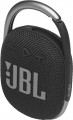 |  |
|---|---|---|
| JBL Clip 4 | JBL Go 3 | |
| Compare prices 42 | Compare prices 21 | |
| User reviews | ||
| TOP sellers | ||
Ingress protection IP67. Bluetooth 5.1. USB Type C. | ||
Connection | ||
| Sources and media | Bluetooth v5.1 | Bluetooth v5.1 |
Acoustic characteristics | ||
| Number of channels | 1.0 (mono) | 1.0 (mono) |
| Signal-to-noise ratio | 85 dB | 85 dB |
| Output power | 5 W | 4.2 W |
| Frequency range | 100 – 20000 Hz | 110 – 20000 Hz |
| More features | carbine / clamping | carbine / clamping |
Battery | ||
| Battery capacity | 500 mAh | |
| Battery life | 10 h | 5 h |
| Charging time | 3 h | 2.5 h |
| USB charging port | USB-C | USB-C |
General | ||
| Waterproof | IP67 | IP67 |
| Material | plastic | plastic |
| Size (HxWxD) | 86x135x46 mm | 88x75x41 mm |
| Weight | 239 g | 209 g |
| Color | ||
| Added to E-Catalog | january 2021 | october 2020 |





Compare JBL Clip 4 and Go 3
When comparing portable speakers JBL Clip 4 and JBL Go 3, several key differences should be noted. JBL Clip 4 has a greater power of 5 W, providing louder sound compared to JBL Go 3, which has an output power of 4.2 W. The battery life of Clip 4 is 10 hours, while Go 3 works for only 5 hours. Both devices have an IP67 water resistance rating, making them suitable for outdoor use. However, Clip 4 has a built-in carabiner, making it easier to transport. Meanwhile, Go 3 is distinguished by its more compact size and light weight, making it convenient to carry. Users note that the sound of Clip 4 is richer, but Go 3 also offers good sound quality for its size.
Price comparison
You may be interested in
My comparisons
JBL Clip 4 often compared


JBL Go 3 often compared


Glossary
Output power
The total power of all channels of the speaker system. The higher the power, the larger the size of the room in which the audio system can be used, however, more powerful portable speakers usually have larger dimensions and weight.
Frequency range
The range of audio frequencies reproduced by the audio system. The wider the range, the richer the sound, the more details the speakers can convey, especially in the low and high frequencies. At the same time, we note that the average human ear is able to hear sounds in the range of about 16 – 20,000 Hz, and it makes no sense to provide a wider range in speakers — a person simply will not hear it. Also note that a wide frequency range alone does not guarantee good sound quality.
Battery capacity
Theoretically, a higher capacity allows to achieve greater battery life, but in fact, the operating time also depends on the power consumption of acoustics — and it can be very different, depending on the characteristics and design features. So this parameter is secondary, and when choosing it is worth paying attention not so much to the battery capacity, but to the directly claimed operating time (see below).
Battery life
Operating time of a portable audio system without connecting to an external power source (network or USB port, depending on the capabilities). Note that manufacturers tend to indicate battery life in their specifications under optimal conditions for energy saving: at low volume, without using additional functions, etc. Therefore, in fact, this indicator may be noticeably lower than the claimed one, and speakers with a long operating time will not sound at full volume for the specified hours.
Charging time
The time it takes to charge a fully discharged device to 100% charge.