
Comparison Daewoo DAT 2500ER vs Daewoo DAT 2500E
Add to comparison | 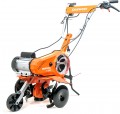 | 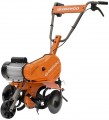 |
|---|---|---|
| Daewoo DAT 2500ER | Daewoo DAT 2500E | |
| Outdated Product | from $354.29 up to $379.80 | |
| User reviews | ||
| TOP sellers | ||
| Motor type | electric (mains) | electric (mains) |
Soil cultivation | ||
| Working width | 55 cm | 55 cm |
| Working depth | 28 cm | 28 cm |
| Number of blades | 4 | 4 |
| Speed rotation | 165 rpm | |
Design characteristics | ||
| Design | transportation wheels plant protection handle height adjustment | transportation wheels plant protection handle height adjustment |
| Reducer | chain | chain |
| Gears | 1 forward / 1 back | 1 forward |
Motor | ||
| Motor power | 2500 W | 2500 W |
General | ||
| Noise level | 90 dB | 90 dB |
| Dimensions | 66x41x58 cm | 66x41x58 cm |
| Weight | 31 kg | 30 kg |
| Added to E-Catalog | september 2021 | february 2016 |


Compare Daewoo DAT 2500ER and DAT 2500E
You may be interested in
Daewoo DAT 2500E often compared


Glossary
Speed rotation
The speed of rotation of the cutters provided by the two-wheel tractor in normal operation. For models with several gears and, accordingly, several speed options, this paragraph usually gives the maximum speed.
The value of this parameter directly depends on the type of cutter used in the two-wheel tractor. In models with active rototillers (see below), only the intensity of cultivation and the degree of crushing of the soil depend on the rotation speed; it is believed that it should be at least 270 – 280 rpm. And in motor cultivators, where the cutter is installed on the power axis of the unit (the so-called axial structure), the overall speed of movement will also depend on its speed — and it should not be too high, otherwise the user simply will not keep up with the unit. In such models, manufacturers select the rotation speed depending on the diameter of the cutter so that the speed of the machine in the end is less than 6 – 7 km/h. Therefore, in large motor cultivators, the rotation speed usually does not exceed 130 rpm, and in compact battery models with small diameter cutters, it can reach 300 rpm and even more.
The value of this parameter directly depends on the type of cutter used in the two-wheel tractor. In models with active rototillers (see below), only the intensity of cultivation and the degree of crushing of the soil depend on the rotation speed; it is believed that it should be at least 270 – 280 rpm. And in motor cultivators, where the cutter is installed on the power axis of the unit (the so-called axial structure), the overall speed of movement will also depend on its speed — and it should not be too high, otherwise the user simply will not keep up with the unit. In such models, manufacturers select the rotation speed depending on the diameter of the cutter so that the speed of the machine in the end is less than 6 – 7 km/h. Therefore, in large motor cultivators, the rotation speed usually does not exceed 130 rpm, and in compact battery models with small diameter cutters, it can reach 300 rpm and even more.
Gears
The number of gears provided in a self-propelled cultivator/motor-block, simply put, is the number of travel speeds. There are the simplest motor-blocks with 1 gear or 2 gears, as well as more advanced ones with three, four, and even 6 gears. Lower gears are not characterized by speed, but they handle high loads effectively and are better suited for starting from a standstill; higher gears provide less traction but good speed. Thus, having multiple gears allows you to adjust the unit's operating mode to the specifics of the situation.
It is worth mentioning that some models have the ability to move in reverse — for this, the direction of the wheel or cutter rotation is reversed. This function offers additional maneuvering capabilities; it is especially useful in heavy machinery, which would be inconvenient to pull manually. The number of gears is also relevant for reverse, as there are motor-blocks and cultivators with 1 gear and more.
It is worth mentioning that some models have the ability to move in reverse — for this, the direction of the wheel or cutter rotation is reversed. This function offers additional maneuvering capabilities; it is especially useful in heavy machinery, which would be inconvenient to pull manually. The number of gears is also relevant for reverse, as there are motor-blocks and cultivators with 1 gear and more.