
Comparison Xiaomi Mi Wireless Charging Stand 50W vs ANKER PowerWave Select+ Magnetic Pad
Add to comparison | 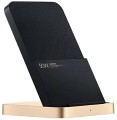 | 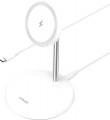 |
|---|---|---|
| Xiaomi Mi Wireless Charging Stand 50W | ANKER PowerWave Select+ Magnetic Pad | |
| Outdated Product | Outdated Product | |
| TOP sellers | ||
Wireless charging power: 50W Maximum power is only possible with certain Xiaomi smartphone models. | MagSafe Tilt Mount for iPhone 12 | |
| Type | wireless charger | wireless charger |
| Charging areas | 1 | 1 |
| Wireless charging | MagSafe | |
| Wireless charging power | 50 W | 12 W |
| Features | work indicator detachable charger power cable | work indicator detachable charger power cable |
| Charger connection port | USB-C | USB-C |
| Cable included | + | + |
| Cable length | 1.5 m | |
| Color | ||
| Added to E-Catalog | october 2022 | october 2022 |


Compare Xiaomi Mi Wireless Charging Stand 50W and ANKER PowerWave Select+ Magnetic Pad
You may be interested in
Xiaomi Mi Wireless Charging Stand 50W often compared


Glossary
Wireless charging
The presence of wireless charging in a charger means it can charge a compatible smartphone without a cable, while versions like MagSafe and Qi2 also offer magnetic alignment for more precise and convenient attachment. This is particularly handy at home, in the office, or by the bed when the phone can simply be placed on the pad or stand without searching for the port.
MagSafe is mainly aimed at the Apple ecosystem, while Qi2.0 develops the same idea of magnetic positioning as an open standard, with the newer Qi2.2 revision additionally offering increased power up to 25W. Compared to regular wireless charging without magnets, this option seems more practical because the smartphone aligns better with the charging area and is less dependent on how accurately it is placed on the device.
MagSafe is mainly aimed at the Apple ecosystem, while Qi2.0 develops the same idea of magnetic positioning as an open standard, with the newer Qi2.2 revision additionally offering increased power up to 25W. Compared to regular wireless charging without magnets, this option seems more practical because the smartphone aligns better with the charging area and is less dependent on how accurately it is placed on the device.
Wireless charging power
The key indicator that determines the speed of wireless energy transmission to the device's battery. The higher this value, the faster the gadget will recharge: for example, a 15W charger will complete the task significantly faster than basic 5W models.
Unlike the wired method, a portion of the energy is inevitably lost as heat, making the wireless method generally less efficient than a cable. It is also important for proper operation that the charger's power matches the smartphone's technical specifications; otherwise, the speed will be limited to the minimum value.
Unlike the wired method, a portion of the energy is inevitably lost as heat, making the wireless method generally less efficient than a cable. It is also important for proper operation that the charger's power matches the smartphone's technical specifications; otherwise, the speed will be limited to the minimum value.
Cable length
The length of the cable supplied with or included with the charger. For wireless models, the length of the power cable of the charger itself is indicated here, for wired models, the length of the cord for charging gadgets
Anyway, a longer cable gives more freedom of movement, but it creates inconvenience for short distances. Also note that charging is supposed to be used in the immediate vicinity of sockets, so wires longer than 2 m are practically not found among such devices. A length of more than 1.5 m is considered significant, from 1 to 1.5 m — medium, from 0.5 to 1 m — small, and in some models there are wires shorter than 0.5 m.
Anyway, a longer cable gives more freedom of movement, but it creates inconvenience for short distances. Also note that charging is supposed to be used in the immediate vicinity of sockets, so wires longer than 2 m are practically not found among such devices. A length of more than 1.5 m is considered significant, from 1 to 1.5 m — medium, from 0.5 to 1 m — small, and in some models there are wires shorter than 0.5 m.