
Comparison Little Doctor LD-301 vs Microlife MT 1951
Add to comparison | 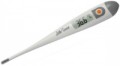 | 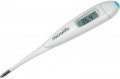 |
|---|---|---|
| Little Doctor LD-301 | Microlife MT 1951 | |
from $4.08 up to $5.68 | from $9.60 up to $10.40 | |
| User reviews | ||
| TOP sellers | ||
| Type | contact | contact |
| Application area | axillary oral rectal | axillary oral rectal |
Measurements | ||
| Measurement duration | 180 с | 10 с |
| Measurement range | 35.5-42 °C | 32-43 °C |
| Measurement accuracy | 0.05 °C | 0.1 °C |
General | ||
| Reading memory | 1 pcs | 1 pcs |
| Sound signal |  | |
| Display backlight |  | |
| Waterproof case | | |
| Flexible tip | | |
| Case included | | |
| Power source | 1хLR41 | 1хLR41 |
| Color | ||
| Added to E-Catalog | march 2016 | february 2016 |


Compare Little Doctor LD-301 and Microlife MT 1951
You may be interested in
My comparisons
Little Doctor LD-301 often compared


Microlife MT 1951 often compared


Glossary
Measurement duration
The time it takes for a thermometer to provide a temperature reading, from contact or activating the IR sensor to obtaining the result, is crucial for efficiency. Quick measurements save time during temperature checks. However, it's important to mention that for axillary use (see "Application area"), it's advised to keep the thermometer in place for a minimum of 5 minutes, irrespective of the manufacturer's specified measurement time, due to the nature of the procedure.
Measurement range
The range of temperatures that a thermometer can measure.
For measuring body temperature, a range of 35 – 43 °C is considered ample, covering values encountered in individuals with high fever or hypothermia. Although modern medical thermometers may have broader ranges, especially those designed for water and air temperature measurement (e.g., -20 – 100 °C), when used for body temperature, they typically operate within a narrower range. The overall and "solid" measurement ranges are often specified separately in these thermometers.
For measuring body temperature, a range of 35 – 43 °C is considered ample, covering values encountered in individuals with high fever or hypothermia. Although modern medical thermometers may have broader ranges, especially those designed for water and air temperature measurement (e.g., -20 – 100 °C), when used for body temperature, they typically operate within a narrower range. The overall and "solid" measurement ranges are often specified separately in these thermometers.
Measurement accuracy
The extent to which a device deviates from the actual temperature during measurements determines its accuracy. Even the least accurate electronic medical thermometers today have a maximum deviation of 0.3 °C, sufficient for everyday and basic medical use. Common models offer even higher accuracy, with deviations as low as 0.1 °C or 0.2 °C, making the pursuit of maximum accuracy necessary only in specific scenarios.
Display backlight
Availability of backlight at own display of the thermometer. This feature allows you to easily see the screen readings in low light and even in complete darkness.
Flexible tip
The presence of a flexible tip in the design. This feature is characteristic only for contact models (see "Type") — it is not required for an IR thermometer. A flexible tip can in some cases simplify the use of the thermometer (particularly for rectal measurements) and also reduce the risk of breakage (for example, a small child trying to break the device will only bend it instead).