
Comparison Antex Zeta vs Antex AGATA
Add to comparison | 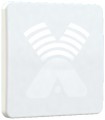 | 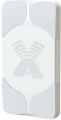 |
|---|---|---|
| Antex Zeta | Antex AGATA | |
| Outdated Product | Outdated Product | |
| TOP sellers | ||
| Features | Wi-Fi/3G/4G | Wi-Fi/3G/4G |
| Mount | external | external |
| Directional pattern | beamed | beamed |
| Polarization | vertical and horizontal | vertical and horizontal |
| HPBW / hor. | 26 º | 48 º |
| HPBW / vert. | 26 º | 26 º |
| Frequency range | 2.4GHz GSM 1800 UMTS 2100 LTE 1800 LTE 2600 | 2.4GHz GSM 1800 UMTS 2100 LTE 1800 LTE 2600 |
| Wave drag | 50 Ohm | 50 Ohm |
| Max. power | 50 W | 50 W |
| Gain | 20 dBi | 17.5 dBi |
| Connector | N-connector | N-connector |
| Dimensions | 450x450x60 mm | 240x410x60 mm |
| Weight | 3195 g | 1600 g |
| Added to E-Catalog | february 2017 | february 2017 |


Compare Antex Zeta and AGATA
You may be interested in
Antex Zeta often compared


Glossary
HPBW / hor.
The effective angle spanned by the antenna in the horizontal plane.
Any antenna that is not omnidirectional radiates a signal in the form of a "beam", and unevenly: the power is highest in the middle of this beam and weakens as it moves towards the edges. The boundaries of HBPW are two opposite lines, on which the signal power is attenuated to half of the maximum. In other words, HBPW is a sector (in this case, horizontally) within which the signal from the antenna will not weaken by more than half and it will maintain acceptable performance.
Other things being equal, a more widely directional antenna will be more convenient in aiming at a target, and also more effective in difficult signal propagation conditions (for example, in dense buildings where it can come from different directions). A narrower focus, in turn, has a positive effect on the gain and, accordingly, the “range”.
Any antenna that is not omnidirectional radiates a signal in the form of a "beam", and unevenly: the power is highest in the middle of this beam and weakens as it moves towards the edges. The boundaries of HBPW are two opposite lines, on which the signal power is attenuated to half of the maximum. In other words, HBPW is a sector (in this case, horizontally) within which the signal from the antenna will not weaken by more than half and it will maintain acceptable performance.
Other things being equal, a more widely directional antenna will be more convenient in aiming at a target, and also more effective in difficult signal propagation conditions (for example, in dense buildings where it can come from different directions). A narrower focus, in turn, has a positive effect on the gain and, accordingly, the “range”.
Gain
The signal gain provided by the antenna.
In this case, we mean the gain relative to an perfect isotropic radiator — an antenna that uniformly radiates a radio signal in all directions in the form of spherical waves. Such amplification is carried out by narrowing the flow of radio waves, roughly speaking, by increasing their concentration in space (even omnidirectional antennas emit waves not in the form of a sphere, but in the form of a disk). In this case, the coefficient is measured by the maximum power, which is achieved in the centre of the radiation pattern. Note also that the decibel is used to denote this parameter (more precisely, dBi, decibel relative to the isotrope). This is a non-linear unit: for example, a difference of 3 dB corresponds to a difference of approximately 2 times, 10 dB — 10 times, 20 dB — 100 times, etc. There are tables and calculators that allow you to convert decibels to times.
All this means that the gain is a rather specific parameter, and when choosing its optimal value, consultation with special sources or a professional communications operator may be required. However, this is true primarily for specific situations — for example, installing a 3G antenna in a private house a few kilometers from the base station. The general rule is this: an increase in the gain has a positive effect on the communication range, however, it makes the antenna more susceptible to interference and, usuall...y, affects its dimensions and weight.
In this case, we mean the gain relative to an perfect isotropic radiator — an antenna that uniformly radiates a radio signal in all directions in the form of spherical waves. Such amplification is carried out by narrowing the flow of radio waves, roughly speaking, by increasing their concentration in space (even omnidirectional antennas emit waves not in the form of a sphere, but in the form of a disk). In this case, the coefficient is measured by the maximum power, which is achieved in the centre of the radiation pattern. Note also that the decibel is used to denote this parameter (more precisely, dBi, decibel relative to the isotrope). This is a non-linear unit: for example, a difference of 3 dB corresponds to a difference of approximately 2 times, 10 dB — 10 times, 20 dB — 100 times, etc. There are tables and calculators that allow you to convert decibels to times.
All this means that the gain is a rather specific parameter, and when choosing its optimal value, consultation with special sources or a professional communications operator may be required. However, this is true primarily for specific situations — for example, installing a 3G antenna in a private house a few kilometers from the base station. The general rule is this: an increase in the gain has a positive effect on the communication range, however, it makes the antenna more susceptible to interference and, usuall...y, affects its dimensions and weight.