
Comparison 1stPlayer DK1 vs 1stPlayer FK1
Add to comparison | 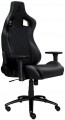 | 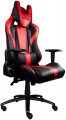 |
|---|---|---|
| 1stPlayer DK1 | 1stPlayer FK1 | |
| Outdated Product | Outdated Product | |
| User reviews | ||
| TOP sellers | ||
| Features | gaming | gaming |
| Max. user weight | 160 kg | 160 kg |
Size and weight | ||
| Back height | 91 cm | 91 cm |
| Shoulder back width | 52 cm | 55 cm |
| Seat size (WxD) | 56x39 cm | 56x39 cm |
| Seat height | 37 - 41 cm | 37 - 44 cm |
| Weight | 20.9 kg | 20.5 kg |
Design | ||
| Base | cross with rollers | cross with rollers |
| Mechanism | Tilt (swing) | Tilt (swing) |
| Armrests |  | |
| Waist support | | |
| Removable cushions | | |
Adjustments | ||
| Backrest tilt | 170° | 170° |
| Rocking stiffness level | | |
| Seat height | | |
Armrests | ||
| Height from the seat | 36.5 cm | 34 cm |
| Adjustment | 3D height (up / down) turn (right / left) length (forward / backward) | 2D height (up / down) turn (right / left) |
Material | ||
| Seat material | leatherette | leatherette |
| Back material | leatherette | leatherette |
| Base material | metal | metal |
| Color | ||
| Added to E-Catalog | january 2020 | january 2020 |


Compare 1stPlayer DK1 and FK1
Both chairs, 1stPlayer DK1 and FK1, are designed for gamers and have similar features such as a maximum user weight of up to 160 kg and a Tilt rocking mechanism. However, there are a few key differences. The DK1 has a seat height from 37 to 41 cm, while the FK1 offers a range from 37 to 44 cm. The backrest width on the FK1 is 55 cm, which is slightly larger than the DK1's 52 cm. The armrests on the FK1 are adjustable in height from 27 to 34 cm, whereas on the DK1, they adjust from 29.5 to 36.5 cm. Overall, the FK1 can offer slightly more comfort and flexibility in adjustments, as noted by users in reviews.
You may be interested in
My comparisons
1stPlayer DK1 often compared


1stPlayer FK1 often compared

Glossary
Shoulder back width
The width of the back at the shoulders of the intended wearer.
In order to recline as much as possible on the back, this width should be no less than the actual width of the user's shoulders. At the same time, for more or less comfortable use, a smaller back size is also sufficient — approximately corresponding to the width of the back in the area of \u200b\u200bthe shoulders (between the outer edges of the shoulder blades). Well, anyway, this parameter is, on the one hand, secondary, and on the other, very subjective. This means that in most cases you can not pay much attention to it, however, if you have already decided to choose the furniture that is the most suitable in size, it is better not to measure your own back, but to test several chairs and determine the most convenient value by experience.
In order to recline as much as possible on the back, this width should be no less than the actual width of the user's shoulders. At the same time, for more or less comfortable use, a smaller back size is also sufficient — approximately corresponding to the width of the back in the area of \u200b\u200bthe shoulders (between the outer edges of the shoulder blades). Well, anyway, this parameter is, on the one hand, secondary, and on the other, very subjective. This means that in most cases you can not pay much attention to it, however, if you have already decided to choose the furniture that is the most suitable in size, it is better not to measure your own back, but to test several chairs and determine the most convenient value by experience.
Seat height
Seat height from the floor. The optimal height for an average person is considered to be 40 – 50 cm, however, this is largely subjective, and the comfort of the chair for a specific user greatly depends on their preferences and physical characteristics. In light of this, many models offer the ability to adjust the height within a certain range (see "Adjustments"). For the best choice, it's best to "try out" in person to determine at what height you feel comfortable sitting and find a model with the corresponding features.
Height from the seat
The height of the armrests installed in the chair relative to the seat. In models that have the ability to adjust the armrests in height (see "Adjustments"), the range of such adjustment is usually indicated.
The overall comfort of using the chair depends on the height of the armrests, but this parameter is largely subjective: even people of the same height can differ in physique and personal preferences. So if comfort is of fundamental importance to you, it is best to check live what armrest height is optimal and choose a chair with the appropriate specifications.
The overall comfort of using the chair depends on the height of the armrests, but this parameter is largely subjective: even people of the same height can differ in physique and personal preferences. So if comfort is of fundamental importance to you, it is best to check live what armrest height is optimal and choose a chair with the appropriate specifications.
Adjustment
Armrest settings can be quite extensive. In everyday life, there is even a marking 1D, 2D, 3D, 4D, depending on the number of adjustments. The following adjustment options are available: height, length(forward / backward), width(right / left), tilt and swivel(right / left). More about them:
- Height. The ability to adjust the height of the armrests relative to the level of the seat. This feature allows you to adjust the arm rests for maximum comfort and minimize shoulder and neck fatigue.
- Turn (right / left). In this case, the possibility of turning the armrests to the right or left is implied, so that they are not parallel, but “look” in different directions.
— By length (forward / backward). Length adjustment refers to the ability to move the armrests back and forth for the convenience of placing hands under a certain physique of the user of a computer chair.
- By width (right / left). Adjusting the position of the armrests to the right or left in a horizontal plane. The stem adjustment contributes to a comfortable fit and allows you to adjust the chair to a certain arm span.
- By tilt. This adjustment assumes the presence of armrests mounted on swivel mounts. It can work as a height adjustment: turning the armrest in the mount changes not only i...ts inclination, but also the height of the point of contact with the arm. However, the matter is not limited to this: in many models, the handles can be placed vertically (raised or lowered) and, in fact, the armrests can be removed in this way.
If it is assumed that the position of the armrests can only be adjusted in height, they are marked with the designation 1D. For 2D armrests, in addition to the height adjustment, the ability to rotate the palm rests to the right / left (around the axis) is added. 3D armrests are adjustable in height, rotate around the axis and move back and forth. Finally, 4D armrests are considered the most functional - they additionally have the ability to shift the surface of the armrest to the side.
- Height. The ability to adjust the height of the armrests relative to the level of the seat. This feature allows you to adjust the arm rests for maximum comfort and minimize shoulder and neck fatigue.
- Turn (right / left). In this case, the possibility of turning the armrests to the right or left is implied, so that they are not parallel, but “look” in different directions.
— By length (forward / backward). Length adjustment refers to the ability to move the armrests back and forth for the convenience of placing hands under a certain physique of the user of a computer chair.
- By width (right / left). Adjusting the position of the armrests to the right or left in a horizontal plane. The stem adjustment contributes to a comfortable fit and allows you to adjust the chair to a certain arm span.
- By tilt. This adjustment assumes the presence of armrests mounted on swivel mounts. It can work as a height adjustment: turning the armrest in the mount changes not only i...ts inclination, but also the height of the point of contact with the arm. However, the matter is not limited to this: in many models, the handles can be placed vertically (raised or lowered) and, in fact, the armrests can be removed in this way.
If it is assumed that the position of the armrests can only be adjusted in height, they are marked with the designation 1D. For 2D armrests, in addition to the height adjustment, the ability to rotate the palm rests to the right / left (around the axis) is added. 3D armrests are adjustable in height, rotate around the axis and move back and forth. Finally, 4D armrests are considered the most functional - they additionally have the ability to shift the surface of the armrest to the side.