
Comparison Special4you Silba vs Special4you Marin
Add to comparison | 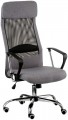 | 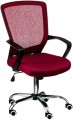 |
|---|---|---|
| Special4you Silba | Special4you Marin | |
| Outdated Product | Outdated Product | |
| User reviews | ||
| TOP sellers | ||
| Features | for staff | for staff |
| Max. user weight | 120 kg | 120 kg |
Size and weight | ||
| Back height | 75 cm | 51 cm |
| Seat size (WxD) | 50x50 cm | 47x51 cm |
| Seat height | 46 - 54 cm | 48 - 60.5 cm |
| Weight | 12.7 kg | 11 kg |
Design | ||
| Base | cross with rollers | cross with rollers |
| Mechanism | Tilt (swing) | Tilt (swing) |
| Headrest |  |  |
| Armrests | | |
Adjustments | ||
| Rocking stiffness level | | |
| Seat height | | |
Armrests | ||
| Full size | | |
Material | ||
| Seat material | fabric | fabric |
| Back material | fabric mesh | mesh |
| Base material | metal | metal |
| Color | ||
| Added to E-Catalog | october 2018 | october 2017 |


Compare Special4you Silba and Marin
You may be interested in
My comparisons
Special4you Silba often compared


Glossary
Back height
Chair back height; for models with a variable back height (see "Adjustments"), as a rule, the maximum value is indicated.
The back height is measured from the seat to the top edge. In essence, this is the height of support available to the back. In some situations, you can not pay much attention to this indicator - for example, if the chair is intended for visitors and the role of the back in it is purely symbolic. However, if you have to sit in a chair often and for a long time, this point should also be taken into account. Ideally, it's best to try a few chairs "live" and find out which backrest height is most comfortable for you. If this is not possible, it is worth deciding which area on the body the back should reach (to the shoulder blades, to the base of the neck, etc.) and measure at what height from the seat this area is in a sitting position. And if you need specific support for the back of the head, you should choose among models equipped with head restraints (see above).
The back height is measured from the seat to the top edge. In essence, this is the height of support available to the back. In some situations, you can not pay much attention to this indicator - for example, if the chair is intended for visitors and the role of the back in it is purely symbolic. However, if you have to sit in a chair often and for a long time, this point should also be taken into account. Ideally, it's best to try a few chairs "live" and find out which backrest height is most comfortable for you. If this is not possible, it is worth deciding which area on the body the back should reach (to the shoulder blades, to the base of the neck, etc.) and measure at what height from the seat this area is in a sitting position. And if you need specific support for the back of the head, you should choose among models equipped with head restraints (see above).
Seat size (WxD)
Dimensions of the seat installed in the chair in width and depth (from the back to the front edge). For models with variable depth (see "Adjustments"), the maximum value is taken into account when the seat is pushed forward to the stop.
Most modern chairs are designed for the average adult, so paying attention to size is primarily for people of a large, or, conversely, miniature physique. In width, the average is considered to be 45 – 55 cm, the narrowest models are up to 40 cm wide, in the widest it can exceed 60 cm. Similarly, a depth of less than 40 cm is considered small, up to 60 cm — medium, more than 60 cm — large.
Most modern chairs are designed for the average adult, so paying attention to size is primarily for people of a large, or, conversely, miniature physique. In width, the average is considered to be 45 – 55 cm, the narrowest models are up to 40 cm wide, in the widest it can exceed 60 cm. Similarly, a depth of less than 40 cm is considered small, up to 60 cm — medium, more than 60 cm — large.
Seat height
Seat height from the floor. The optimal height for an average person is considered to be 40 – 50 cm, however, this is largely subjective, and the comfort of the chair for a specific user greatly depends on their preferences and physical characteristics. In light of this, many models offer the ability to adjust the height within a certain range (see "Adjustments"). For the best choice, it's best to "try out" in person to determine at what height you feel comfortable sitting and find a model with the corresponding features.
Headrest
The presence of a headrest in the design of the chair.
The role of the headrest can be played as a stand, made separately from the backrest, and the upper part of the backrest — if it has a pronounced characteristic shape or a pillow is supplied in the kit, which can be installed at the request of the user. The simplest high backs that do not have a characteristic upper part are not considered head restraints.
Anyway, this feature provides additional comfort — especially when reclining back. On the other hand, if you have to sit mostly straight in the chair and the back plays a symbolic role, perhaps the best choice would be a model without a headrest(especially since such chairs are cheaper).
The role of the headrest can be played as a stand, made separately from the backrest, and the upper part of the backrest — if it has a pronounced characteristic shape or a pillow is supplied in the kit, which can be installed at the request of the user. The simplest high backs that do not have a characteristic upper part are not considered head restraints.
Anyway, this feature provides additional comfort — especially when reclining back. On the other hand, if you have to sit mostly straight in the chair and the back plays a symbolic role, perhaps the best choice would be a model without a headrest(especially since such chairs are cheaper).
Full size
The armrests closed in a contour having direct connection with a back of a computer chair. Full size armrests are available in both adjustable and non-adjustable versions. In models with adjustable positions, the height of the armrests changes in conjunction with the adjustment of the angle of the backrest.
Back material
The main material used for the chair backrest. Note that some models are available in several design options, differing in materials; all available options are listed for such models.
— Fabric. Relatively inexpensive and at the same time quite practical material. It has decent strength, is easy to maintain, and can be made in numerous colors and designs; in addition, it provides good ventilation, which can be useful in hot weather.
— Leather. Natural leather is expensive and strongly highlights the owner's status (especially since leather products themselves look solid and luxurious). Accordingly, the main use of this option is for executive chairs (see "Purpose"). From a practical perspective, leather is durable and quite pleasant to the touch, however, it has poor breathability (which can cause discomfort in hot weather) and requires specific care, otherwise, it may lose its "marketable appearance."
— Leatherette. There are many types of leatherette, significantly differing in price and properties, and the most advanced ones are even used in premium-class "executive" chairs. Leatherette backrests are not as demanding in care as natural leather, but they are less durable and more prone to wear and tear.
— Mesh. Backrests in the form of a rigid frame with a fabric or synthetic mesh stretched...over it. The main advantages of such designs are their lightweight and good breathability. The design of the meshes allows their use even in executive chairs. The noticeable drawbacks include slightly less reliability and greater repair complexity compared to similar fabric (see above).
— Plastic. Purely plastic backrests are most often used in chairs with seats made of the same material (see above). They are strong and inexpensive, but due to their hardness, they are quite uncomfortable, which is why they are not widespread even among visitor models.
— Wood. Wooden backrests are in many ways similar to the plastic ones described above, except that they are somewhat more expensive and can have an original appearance due to the wood's textured patterns. They are also rarely used due to their hardness and the associated discomfort.
— Fabric. Relatively inexpensive and at the same time quite practical material. It has decent strength, is easy to maintain, and can be made in numerous colors and designs; in addition, it provides good ventilation, which can be useful in hot weather.
— Leather. Natural leather is expensive and strongly highlights the owner's status (especially since leather products themselves look solid and luxurious). Accordingly, the main use of this option is for executive chairs (see "Purpose"). From a practical perspective, leather is durable and quite pleasant to the touch, however, it has poor breathability (which can cause discomfort in hot weather) and requires specific care, otherwise, it may lose its "marketable appearance."
— Leatherette. There are many types of leatherette, significantly differing in price and properties, and the most advanced ones are even used in premium-class "executive" chairs. Leatherette backrests are not as demanding in care as natural leather, but they are less durable and more prone to wear and tear.
— Mesh. Backrests in the form of a rigid frame with a fabric or synthetic mesh stretched...over it. The main advantages of such designs are their lightweight and good breathability. The design of the meshes allows their use even in executive chairs. The noticeable drawbacks include slightly less reliability and greater repair complexity compared to similar fabric (see above).
— Plastic. Purely plastic backrests are most often used in chairs with seats made of the same material (see above). They are strong and inexpensive, but due to their hardness, they are quite uncomfortable, which is why they are not widespread even among visitor models.
— Wood. Wooden backrests are in many ways similar to the plastic ones described above, except that they are somewhat more expensive and can have an original appearance due to the wood's textured patterns. They are also rarely used due to their hardness and the associated discomfort.