
Comparison Omron C101 Essential vs Microlife NEB 100B
Add to comparison | 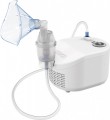 | 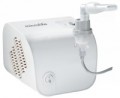 |
|---|---|---|
| Omron C101 Essential | Microlife NEB 100B | |
| Outdated Product | from $50.00 up to $56.12 | |
| User reviews | ||
| TOP sellers | ||
| Type | compressor | compressor |
| Purpose | stationary | stationary |
Specs | ||
| Medicine container | 12 ml | 12 ml |
| Max air flow | 12 L/min | |
| Nebulization rate | 0.35 ml/min | 0.35 ml/min |
| Medium particle size (MMAD) | 2.6 µm | 2.6 µm |
| Noise level | 57 dB | 56 dB |
| Nozzles | adult mask children's mask nozzle for nose nozzle for mouth | adult mask children's mask nozzle for nose nozzle for mouth |
General | ||
| Power source | mains | mains |
| Dimensions | 145x124x222 mm | 140x150x120 mm |
| Weight | 1100 g | 1200 g |
| Added to E-Catalog | january 2019 | may 2014 |


Compare Omron C101 Essential and Microlife NEB 100B
You may be interested in
My comparisons
Omron C101 Essential often compared


Microlife NEB 100B often compared


Glossary
Max air flow
The maximum air output of a compressor nebuliser during operation is a key factor to consider. It's important to note that actual performance during normal operation is often lower. Different applications have recommended air flow intensities, and knowing this parameter helps assess how well the inhaler aligns with specific recommendations.
Noise level
The nebuliser's maximum noise level during normal operation is a crucial factor for user comfort, especially in situations where loud sounds are undesirable, such as when treating children or during nighttime use. It's important to note that the relationship between decibel levels and actual perceived noise is not linear. For instance, a 3 dB increase corresponds to a doubling of noise, and a 20 dB increase equals a 100 — fold increase in noise. Comparative tables are often used to assess the actual loudness of inhalers, and here are some relevant values for modern devices:
30 dB — comparable to a whisper, the maximum permissible noise level in residential premises at night according to sanitary standards;
35 dB — talking in an undertone;
40 dB — normal speech at a distance of about 10 m;
45 dB — conversation in a normal voice;
50 dB — a conversation is slightly louder than usual, it is considered the maximum noise level that does not cause noticeable inconvenience;
55 dB — car engine;
60 dB — TV at medium volume;
65 dB — loud conversations at a distance of up to 1 m.
30 dB — comparable to a whisper, the maximum permissible noise level in residential premises at night according to sanitary standards;
35 dB — talking in an undertone;
40 dB — normal speech at a distance of about 10 m;
45 dB — conversation in a normal voice;
50 dB — a conversation is slightly louder than usual, it is considered the maximum noise level that does not cause noticeable inconvenience;
55 dB — car engine;
60 dB — TV at medium volume;
65 dB — loud conversations at a distance of up to 1 m.