
Comparison Miele Complete C3 Score vs Miele Classic C1
Add to comparison | 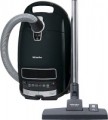 | 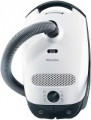 |
|---|---|---|
| Miele Complete C3 Score | Miele Classic C1 | |
| Compare prices 1 | from $1,049.00 | |
| User reviews | ||
| TOP sellers | ||
| Type | conventional | conventional |
| Source of power | mains | mains |
| Cleaning type | dry | dry |
| Dust collector | bag | bag |
Specs | ||
| Motor power | 2000 W | 1400 W |
| Dust collector capacity | 4.5 L | 4.5 L |
| Power adjustment | on body | on body |
| Dust collector indicator |  | |
| Fine filter | HEPA 13 | |
Nozzles included | ||
| Nozzle functions | combined (floor/carpet) for sofa crevice dust | combined (floor/carpet) for sofa crevice dust |
More specs | ||
| Compatible bags (dust collectors) | G/N | G/N |
| Compatible HEPA filters | SF-AA 50, SF-HA 50 | SF-AA 50, SF-HA 50 |
| Tube type | telescopic | telescopic |
| Nozzle compartment | |  |
| Power cord rewind | automatic | automatic |
| Cord length | 5.5 m | |
| Dimensions (HxWxD) | 46.3x22.1x27 cm | |
| Weight | 5.8 kg | |
| Color | ||
| Added to E-Catalog | november 2014 | november 2014 |



Compare Miele Complete C3 Score and Classic C1
When comparing the Miele Complete C3 Score and Miele Classic C1 vacuum cleaners, one can note that both models have similar features, such as a dust bag volume of 4.5 liters and the use of bags for dust collection. However, the Complete C3 Score stands out with a higher power (2000 W versus 1400 W for the Classic C1) and quieter operation, making it more preferable for users who value comfort during cleaning. Users appreciate the convenience of storing attachments within the Complete C3 Score's body and its maneuverability, while the Classic C1 also receives high marks for its lightness and build quality. Nevertheless, the Classic C1 has a drawback of expensive consumables, which may affect the overall maintenance cost. Overall, the Complete C3 Score is suitable for those looking for a powerful and quiet vacuum cleaner, whereas the Classic C1 is a good choice for those who prefer a more economical option with good performance.
Price comparison
You may be interested in
My comparisons
Miele Classic C1 often compared


Glossary
Motor power
Rated power consumed by the vacuum cleaner. In models with power adjustment (see below), the maximum value is taken into account in this case. We are talking about the characteristics of the installed motor, which is the main, and in most vacuum cleaners, the only consumer of energy.
Higher power increases suction force and improves overall cleaning efficiency. In addition, a more powerful unit is easier to equip with a capacious dust collector. On the other hand, only vacuum cleaners of the same type with the same types of dust collectors can be directly compared by this parameter (see above for both). And even in such cases, the actual suction force (see below) may be different — and it is it that determines the real efficiency. However, the total power also allows you to generally evaluate the capabilities of the vacuum cleaner, including in comparison: a 1500 W model will significantly outperform its 800 W counterpart in efficiency (although it is impossible to say exactly by how much). But what definitely depends on this indicator is energy consumption.
As for specific power values, they are largely related to the type of device. For example, handheld models and uproght units have low power — less than 1500 W(and often noticeably less). Such values are quite popular among other types of vacuum cleaners (conventional, industrial, workshop, etc.), but among them there are already more solid indicators — 1500 – 1750 W..., 1750 – 2000 W and even more than 2000 W.
Higher power increases suction force and improves overall cleaning efficiency. In addition, a more powerful unit is easier to equip with a capacious dust collector. On the other hand, only vacuum cleaners of the same type with the same types of dust collectors can be directly compared by this parameter (see above for both). And even in such cases, the actual suction force (see below) may be different — and it is it that determines the real efficiency. However, the total power also allows you to generally evaluate the capabilities of the vacuum cleaner, including in comparison: a 1500 W model will significantly outperform its 800 W counterpart in efficiency (although it is impossible to say exactly by how much). But what definitely depends on this indicator is energy consumption.
As for specific power values, they are largely related to the type of device. For example, handheld models and uproght units have low power — less than 1500 W(and often noticeably less). Such values are quite popular among other types of vacuum cleaners (conventional, industrial, workshop, etc.), but among them there are already more solid indicators — 1500 – 1750 W..., 1750 – 2000 W and even more than 2000 W.
Fine filter
The presence of a HEPA fine filter in the vacuum cleaner; also in this paragraph, the specific class of this filter is often specified.
HEPA (High Efficiency Particulate Absorbing) filters are designed to purify the air from the smallest mechanical contaminants — up to tenths of a micron in size. It allows you to trap not only fine dust but even bacteria. For comparison: the size of most bacteria starts at 0.5 microns, and the effectiveness of HEPA filters is evaluated by the ability to retain particles with a size of 0.1 – 0.3 microns. The most advanced such filters ( class 13 and above) are able to remove more than 99.9% of these particles from the air. Here is a more detailed description of the different classes:
— HEPA 10 – traps at least 85% of particles with a size of 0.1 – 0.3 microns;
— HEPA 11 – at least 95% of such particles;
— HEPA 12 – not less than 99.5%;
— HEPA 13 – not less than 99.95%;
— HEPA 14 – not less than 99.995%;
Note that pollution with a size of 0.1 – 0.3 microns is the worst-kept by HEPA filters, so with particles of other sizes (both larger and smaller), the efficiency of such elements will be even higher.
Regarding the choice for this parameter, it is worth noting that, in fact, it does not always make sense to pursue a high filtration class. For example, during wet cleaning with a washing vacuum cleaner (see abov...e), the HEPA filter, in fact, is not needed at all (in many models, it is recommended to remove it altogether for such cases). So if you plan to use such a vacuum cleaner mainly for washing, you can ignore this parameter. Another specific case is industrial units (see "Type"): they are often used for rough cleaning of large debris, where thorough air filtration is not required.
HEPA (High Efficiency Particulate Absorbing) filters are designed to purify the air from the smallest mechanical contaminants — up to tenths of a micron in size. It allows you to trap not only fine dust but even bacteria. For comparison: the size of most bacteria starts at 0.5 microns, and the effectiveness of HEPA filters is evaluated by the ability to retain particles with a size of 0.1 – 0.3 microns. The most advanced such filters ( class 13 and above) are able to remove more than 99.9% of these particles from the air. Here is a more detailed description of the different classes:
— HEPA 10 – traps at least 85% of particles with a size of 0.1 – 0.3 microns;
— HEPA 11 – at least 95% of such particles;
— HEPA 12 – not less than 99.5%;
— HEPA 13 – not less than 99.95%;
— HEPA 14 – not less than 99.995%;
Note that pollution with a size of 0.1 – 0.3 microns is the worst-kept by HEPA filters, so with particles of other sizes (both larger and smaller), the efficiency of such elements will be even higher.
Regarding the choice for this parameter, it is worth noting that, in fact, it does not always make sense to pursue a high filtration class. For example, during wet cleaning with a washing vacuum cleaner (see abov...e), the HEPA filter, in fact, is not needed at all (in many models, it is recommended to remove it altogether for such cases). So if you plan to use such a vacuum cleaner mainly for washing, you can ignore this parameter. Another specific case is industrial units (see "Type"): they are often used for rough cleaning of large debris, where thorough air filtration is not required.
Nozzle compartment
The presence in the vacuum cleaner of a special device for storing nozzles and sometimes other accessories.
Such a device can be either a compartment in the case or a set of external fasteners; the latter, in particular, is quite common in industrial vacuum cleaners (see "Type"). Anyway, the attachment compartment makes it much easier to store and transport various accessories: they are not scattered or lost, and you do not need to look for a separate package for them. However, such a compartment is often not intended for all nozzles and accessories but only for the smallest ones. However, even in such cases, it makes life much easier for the user. The disadvantages of such equipment include the fact that it inevitably affects the dimensions of the case. However, in full-size vacuum cleaners — conventional, industrial, for workshop (see "Type") — this disadvantage is often not important.
Such a device can be either a compartment in the case or a set of external fasteners; the latter, in particular, is quite common in industrial vacuum cleaners (see "Type"). Anyway, the attachment compartment makes it much easier to store and transport various accessories: they are not scattered or lost, and you do not need to look for a separate package for them. However, such a compartment is often not intended for all nozzles and accessories but only for the smallest ones. However, even in such cases, it makes life much easier for the user. The disadvantages of such equipment include the fact that it inevitably affects the dimensions of the case. However, in full-size vacuum cleaners — conventional, industrial, for workshop (see "Type") — this disadvantage is often not important.
Cord length
The length of the power cord that is equipped with a vacuum cleaner powered by an outlet.
Here we note that manufacturers select the specific length of the cord depending on the general purpose of the unit. In general, the length of 4 – 5 m and less can be called small, 5 – 6 m — medium, 6 – 7 m and 7 – 8 m — more than average, and in some models this figure is more than 8 m. However, a lot depends on the specifics of the vacuum cleaner. For example, among conventional units there are many models with a 4-5 m wire (this is enough for cleaning on the scale of an apartment, a private house or a small office space), but for industrial solutions this is a very limited indicator.
Keep in mind that a longer power cord is not always more convenient. On the one hand, it provides more freedom when working. On the other hand, it can create inconvenience at a short distance from the outlet as well as during storage/transportation. In addition, you can use an extension cord to work away from the outlet. So when choosing, you need to take into account the specific needs of the use of a vacuum cleaner. Detailed recommendations for different situations can be found in special sources.
Here we note that manufacturers select the specific length of the cord depending on the general purpose of the unit. In general, the length of 4 – 5 m and less can be called small, 5 – 6 m — medium, 6 – 7 m and 7 – 8 m — more than average, and in some models this figure is more than 8 m. However, a lot depends on the specifics of the vacuum cleaner. For example, among conventional units there are many models with a 4-5 m wire (this is enough for cleaning on the scale of an apartment, a private house or a small office space), but for industrial solutions this is a very limited indicator.
Keep in mind that a longer power cord is not always more convenient. On the one hand, it provides more freedom when working. On the other hand, it can create inconvenience at a short distance from the outlet as well as during storage/transportation. In addition, you can use an extension cord to work away from the outlet. So when choosing, you need to take into account the specific needs of the use of a vacuum cleaner. Detailed recommendations for different situations can be found in special sources.