
Comparison Blaupunkt FMS601 vs Blaupunkt FMS501
Add to comparison | 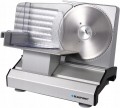 | 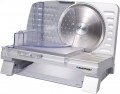 |
|---|---|---|
| Blaupunkt FMS601 | Blaupunkt FMS501 | |
from $280.72 | from $271.70 | |
| TOP sellers | ||
| Power | 250 W | 200 W |
| Blade type | wavy | wavy |
Specs | ||
| Blade diameter | 190 mm | 170 mm |
| Min. thickness of slice | 0.1 mm | 0.1 mm |
| Max. thickness of slice | 20 mm | 20 mm |
| Pulse mode |  | |
| Holder with finger protector | | |
| Slicing tray |  | |
| Compartment for cord | | |
| Material | metal | metal |
| Dimensions | 38x25x28 cm | 34x24x24 cm |
| Weight | 3.5 kg | 2.9 kg |
| Color | ||
| Added to E-Catalog | february 2020 | february 2020 |


Compare Blaupunkt FMS601 and FMS501
You may be interested in
My comparisons
Blaupunkt FMS601 often compared


Blaupunkt FMS501 often compared

Glossary
Power
The total power consumption of the slicer. The value of this parameter is small — the performance of even the most powerful models usually does not exceed 200 W.
Almost all the power consumed is for operation of the engine, so the higher it is, the more powerful the engine is installed in the slicer. Theoretically, the higher power allows you to better cope with solid and dense products, but in fact everything also depends on the characteristics of the knife — primarily its type (see below) and the quality of sharpening. Therefore, power data are more reference than practically significant, and this indicator has almost no effect on the quality of the slicer.
Almost all the power consumed is for operation of the engine, so the higher it is, the more powerful the engine is installed in the slicer. Theoretically, the higher power allows you to better cope with solid and dense products, but in fact everything also depends on the characteristics of the knife — primarily its type (see below) and the quality of sharpening. Therefore, power data are more reference than practically significant, and this indicator has almost no effect on the quality of the slicer.
Blade diameter
The diameter of the blade of the knife supplied with the slicer. Knives are shaped like discs — accordingly, the diameter of the blade is actually equal to the diameter of the disc.
The larger the blade, the larger ingredients the device can handle at a time and the “larger” the cut slices can be. At the same time, in fact it is rarely necessary to use a slicer for very thick products. Therefore, even in the most “large-caliber” modern models, the knife diameter usually does not exceed 300 mm.
The larger the blade, the larger ingredients the device can handle at a time and the “larger” the cut slices can be. At the same time, in fact it is rarely necessary to use a slicer for very thick products. Therefore, even in the most “large-caliber” modern models, the knife diameter usually does not exceed 300 mm.
Slicing tray
The presence of a tray for chopped products in the design or delivery set of the slicer.
Such a pallet can be made both as a non-removable element and as a separate device that is not attached to the slicer body. However, this piece of equipment saves the user from having to look for a board, saucer, plate or other "seat" for chunks coming out from under the knife of the unit anyway. Of course, in a modern kitchen, finding such a “seat” is not a problem, but using a tray is often more convenient.
Such a pallet can be made both as a non-removable element and as a separate device that is not attached to the slicer body. However, this piece of equipment saves the user from having to look for a board, saucer, plate or other "seat" for chunks coming out from under the knife of the unit anyway. Of course, in a modern kitchen, finding such a “seat” is not a problem, but using a tray is often more convenient.