
Comparison iRobot Roomba 616 vs iRobot Roomba 615
Add to comparison | 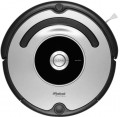 | 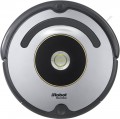 |
|---|---|---|
| iRobot Roomba 616 | iRobot Roomba 615 | |
from $279.56 up to $345.60 | from $336.08 | |
| User reviews | ||
| TOP sellers | ||
Adaptation to various surfaces. Long battery life. No cleaning scheduling feature. There is no dust bag full indicator. | ||
| Type | robot vacuum cleaner | robot vacuum cleaner |
| Cleaning | dry side brush turbo brush | dry side brush turbo brush |
Robot vacuum cleaner | ||
| Dust container capacity | 500 ml | 500 ml |
| Fine filter | HEPA | |
| Cleaning area limitation | laser sensor | |
Battery | ||
| Battery capacity | 2.2 Ah | 3 Ah |
| Operating time | 150 min | 150 min |
General | ||
| Cleaning area | 60 m² | |
| Noise level | 61 dB | 61 dB |
| Dimensions (HxWxD) | 9.2x34x34 cm | 9.2x34x34 cm |
| Weight | 3.6 kg | 3.6 kg |
| Color | ||
| Added to E-Catalog | april 2016 | april 2016 |


Compare iRobot Roomba 616 and Roomba 615
The iRobot Roomba 616 and Roomba 615 robot vacuum cleaners have similar features, but there are important differences. Both devices offer dry cleaning with a cyclonic dustbin system with a capacity of 0.5 L and run on Ni-Mh batteries with up to 150 minutes of operation. However, the Roomba 615 is equipped with a HEPA filter, which can be an advantage for allergy sufferers, whereas the Roomba 616 does not have this feature. Both vacuums have drop protection and obstacle sensors, as well as identical noise levels of 61 dB and dimensions. Users note good adaptation to different surfaces in both models, but the Roomba 616 does not support the cleaning schedule function and lacks a dustbin fill indicator, which may be a disadvantage. Overall, the Roomba 615 might be preferred by those looking for higher quality filtration.
You may be interested in
My comparisons
iRobot Roomba 616 often compared


Glossary
Fine filter
Fine filter captures fine dust, pollen, and other particles that have passed through the main dust container, preventing them from returning to the room air. The higher the class, the more effective the filtration.
— EPA 10. Retains at least 85% of particles of the most penetrating size and provides basic fine filtration of the outgoing air.
— EPA 11. Captures at least 95% of fine particles, making it better suited for regular cleaning of dusty rooms.
— EPA 12. Provides efficiency from 99.5% and noticeably reduces the amount of fine dust returned to the room.
— HEPA 13. Captures at least 99.95% of the most difficult-to-retain particles and is especially useful in homes with allergy sufferers, children, or pets.
— HEPA 14. Retains from 99.995% of such particles and provides the highest level of filtration among the listed classes.
— EPA 10. Retains at least 85% of particles of the most penetrating size and provides basic fine filtration of the outgoing air.
— EPA 11. Captures at least 95% of fine particles, making it better suited for regular cleaning of dusty rooms.
— EPA 12. Provides efficiency from 99.5% and noticeably reduces the amount of fine dust returned to the room.
— HEPA 13. Captures at least 99.95% of the most difficult-to-retain particles and is especially useful in homes with allergy sufferers, children, or pets.
— HEPA 14. Retains from 99.995% of such particles and provides the highest level of filtration among the listed classes.
Cleaning area limitation
Cleaning area restriction lets you prevent the robot vacuum from entering certain rooms or selected floor areas. This is useful near pet bowls, fragile items, wires, children’s play areas, or surfaces that should not be wiped with a wet attachment. There are various methods.
— Laser sensor. A separate accessory that creates an invisible boundary — the robot detects it with its sensors and does not cross it. It can be moved between rooms, but the device takes up floor space and usually requires separate power.
— Magnetic tape. A strip is placed on the floor or under a thin covering, creating a physically defined no-go line. This is a simple and reliable method, but the tape may be noticeable in the interior and only restricts the area where it is laid.
— Mobile app. No-go zones and virtual walls are applied directly to the saved map of the room. This option does not require additional accessories, allows you to quickly change boundaries, and is usually the most convenient for regular use.
— Laser sensor. A separate accessory that creates an invisible boundary — the robot detects it with its sensors and does not cross it. It can be moved between rooms, but the device takes up floor space and usually requires separate power.
— Magnetic tape. A strip is placed on the floor or under a thin covering, creating a physically defined no-go line. This is a simple and reliable method, but the tape may be noticeable in the interior and only restricts the area where it is laid.
— Mobile app. No-go zones and virtual walls are applied directly to the saved map of the room. This option does not require additional accessories, allows you to quickly change boundaries, and is usually the most convenient for regular use.
Battery capacity
Battery capacity indicates the amount of charge available to the robot vacuum for navigation, motor operation, brushes, and the mopping system. A higher-capacity battery can potentially provide longer runtime, but it does not allow the exact cleaning time to be determined without considering the device's power consumption. Operating time is more strongly affected by the selected mode, suction power, floor type, use of mopping pads, and frequency of returns to the docking station.
Cleaning area
The cleaning area refers to the approximate room size the robot can cover on a single battery charge. In Eco mode, the device will cover more space than at maximum suction power or during intensive floor mopping. The value stated by the manufacturer is usually calculated for a relatively uncluttered room and may be lower in real conditions.