
Comparison Roland JUNO-DS88 vs Roland JUNO-DS61
Add to comparison | 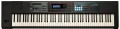 | 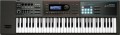 |
|---|---|---|
| Roland JUNO-DS88 | Roland JUNO-DS61 | |
from $1,249.99 | from $849.99 | |
| TOP sellers | ||
Autonomous food. Phrase pad panel. Favorite mode. Microphone input. Vocoder. No built-in speakers. | ||
| Type | synthesizer (rompler) | synthesizer (rompler) |
Keys | ||
| Number of keys | 88 | 61 |
| Size | full size | full size |
| Mechanics | active | active |
| Sensitivity adjustment |  | |
| Rigidity | semi-weighted | |
Specs | ||
| Polyphony | 128 voices | 128 voices |
| Built-in timbres | 1230 шт | 1230 шт |
| Auto accompaniment | | |
| Accompaniment styles | 240 шт | 240 шт |
| Sequencer (recording) | | |
| Sampling | | |
Effects and control | ||
| Arpeggiator | | |
| Reverberation | | |
| Chorus | | |
| Pitch controller | | |
| Modulation controller | | |
Connectors | ||
| Inputs | mini-Jack (3.5 mm) MIDI in USB to device (type A) | mini-Jack (3.5 mm) MIDI in USB to device (type A) |
| Microphone | 1 pcs | 1 pcs |
| Connectable pedals | 2 шт | 2 шт |
| Outputs | USB to host (type B) MIDI out headphones | USB to host (type B) MIDI out headphones |
| Linear outputs | 2 | 2 |
In box | ||
| In box | PSU | PSU |
General | ||
| Display | monochrome | monochrome |
| Autonomous power supply | aA batteries | aA batteries |
| Dimensions (WxHxD) | 1415x144x341 mm | 1008x97x300 mm |
| Weight | 16.2 kg | 5.3 kg |
| Color | ||
| Added to E-Catalog | february 2018 | october 2017 |


Compare Roland JUNO-DS88 and JUNO-DS61
You may be interested in
My comparisons
Roland JUNO-DS88 often compared


Roland JUNO-DS61 often compared


Glossary
Number of keys
The greater the number of keys — the wider the range of the instrument, the lower and higher notes you can take on it right during the game, without resorting to tricks like octave shift (see below). By comparison, a full size piano keyboard has 88 keys. However, in synthesizers, such an amount is rare, because. the instrument would have turned out to be too bulky and expensive, and not every musician, even a professional one, needs such an extensive range. Thus, 88-key keyboards are used primarily in high-end workstations (see "Type"). For ordinary synthesizers, the standard is 49, 61 or 76 keys ( there are also options for 73 keys) — this is usually quite enough (while the "golden mean" option is considered to be 61 keys). And small children's models can have 32 keys.
Rigidity
— Unweighted. Keys with a very low pressing force, literally "failing" under the fingers. This option is well suited for inexpensive synthesizers with passive mechanics (see above), but is rarely used in active models — a small resistance force makes it difficult to choose the optimal pressing force.
— Semi- weighted. Medium-strength keys, not up to the hardness of a full-fledged piano, but showing noticeably more resistance than unweighted ones. This variant is most popular among instruments with active mechanics (see above) — the force on the keys provides adequate feedback and at the same time playing such an instrument does not cause any special difficulties even for those who previously dealt only with unweighted keyboards.
— Weighted. Keys with high actuation force, comparable to that of a classical piano. Used only in professional hammer action instruments (see above) — high rigidity is a must for such mechanics (more precisely, for the response that it must provide).
— Semi- weighted. Medium-strength keys, not up to the hardness of a full-fledged piano, but showing noticeably more resistance than unweighted ones. This variant is most popular among instruments with active mechanics (see above) — the force on the keys provides adequate feedback and at the same time playing such an instrument does not cause any special difficulties even for those who previously dealt only with unweighted keyboards.
— Weighted. Keys with high actuation force, comparable to that of a classical piano. Used only in professional hammer action instruments (see above) — high rigidity is a must for such mechanics (more precisely, for the response that it must provide).