
Comparison Yamaha APX600 vs Yamaha APX500III
Add to comparison | 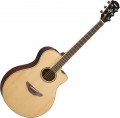 | 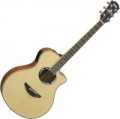 |
|---|---|---|
| Yamaha APX600 | Yamaha APX500III | |
from $369.99 | from $539.52 | |
| TOP sellers | ||
| Type | electroacoustic | electroacoustic |
| Number of strings | 6 | 6 |
| Pickup |  | |
Tone block | ||
| Type | active | active |
| Equalizer | | |
| Tuner | | |
Body | ||
| Size | 4/4 | 4/4 |
| Shape | mini jumbo | mini jumbo |
| Cutaway | | |
| Top deck | spruce | spruce |
| Bottom deck | nato | nato |
| Shell | nato | nato |
| Bridge | rosewood | rosewood |
Neck | ||
| Number of frets | 22 | 22 |
| Anchor | single | single |
| Scale | 25 " | 25.6 " |
| Neck material | nato | nato |
| Fretboard | rosewood | rosewood |
| Color | ||
| Added to E-Catalog | june 2018 | july 2016 |


Compare Yamaha APX600 and APX500III
The models Yamaha APX600 and Yamaha APX500III are electro-acoustic guitars with 6 strings and an active tone block, however, they have some differences. The APX600 has a back made of nato, while the APX500III uses okoume, which can affect the sound. Additionally, the APX600 has a scale length of 25", whereas the APX500III is 25.6", which may be noticeable when playing. In terms of design, the APX600 is available in several colors, including sand and blue, while the APX500III is only available in black. Both instruments have 22 frets and a cutaway for easy playability.
You may be interested in
My comparisons
Yamaha APX600 often compared


Glossary
Scale
Scale length of the guitar. The scale in this case is the working part of the string, in other words, the distance from the saddle (on the headstock) to the saddle (on the bridge). In most acoustic and similar guitars, the scale is set during production and is unchanged. Without going into technical details, we can say that the value of this parameter is generally a reference: it allows you to some extent estimate the overall dimensions of the instrument, as well as the size of the frets (the longer the scale, the larger the size of the frets, regardless of their number). However, there is also a practical application: with an adjustable anchor (see above), the scale length data can be useful in the tuning process.