
Comparison Eurogold 21778A vs Eurogold 35748W
Add to comparison | 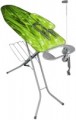 | 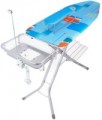 |
|---|---|---|
| Eurogold 21778A | Eurogold 35748W | |
from $39.20 up to $48.08 | from $84.76 up to $87.84 | |
| TOP sellers | ||
| Type | floor | floor |
| Countertop material | thermoplastic | metal mesh |
| Working surface size | 120x38 cm | 130x48 cm |
Specs | ||
| Features | stand for iron height adjustment armrest linen shelf built-in socket wire holder | stand for iron height adjustment armrest linen shelf built-in socket wire holder |
| Max. height | 95 cm | 99 cm |
| Minimum height | 77 cm | |
| Weight | 8 kg | |
| Added to E-Catalog | august 2015 | july 2014 |


Compare Eurogold 21778A and 35748W
You may be interested in
My comparisons
Eurogold 21778A often compared

Eurogold 35748W often compared


Glossary
Countertop material
The material from which the main working surface of the board is made.
— Wood. Ironing boards can be crafted from various wood types: natural wood, chipboard, or plywood. While natural wood offers greater durability, it can make boards heavy. Chipboard and plywood allow for lighter constructions, but they are less durable, prone to deformation from moisture and high temperature. This issue is also present, to a lesser extent, with natural wood. Consequently, wood is primarily utilized in low-cost-friendly models.
— Metal. Metal countertops typically feature a solid sheet with perforations for steam release, ensuring robustness due to the moisture-resistant alloys that resist deformation from iron's operating temperatures. However, these boards tend to be costly, and the longevity of the cover relies heavily on the quantity of holes—if too few, wear occurs more rapidly.
— Metal mesh. A "lighter" alternative to solid metal countertops is the grid design. While slightly less durable than solid sheets, grids still offer reliability and resistance to deformation. Moreover, they provide better steam passage and are lighter in weight.
— Thermoplastic. A special type of plastic, originally created as a material for ironing boards. With a small weight, it is resistant to heat and moisture, as well as goo...d strength and reliability. The main disadvantage of this material is its high cost.
— Wood. Ironing boards can be crafted from various wood types: natural wood, chipboard, or plywood. While natural wood offers greater durability, it can make boards heavy. Chipboard and plywood allow for lighter constructions, but they are less durable, prone to deformation from moisture and high temperature. This issue is also present, to a lesser extent, with natural wood. Consequently, wood is primarily utilized in low-cost-friendly models.
— Metal. Metal countertops typically feature a solid sheet with perforations for steam release, ensuring robustness due to the moisture-resistant alloys that resist deformation from iron's operating temperatures. However, these boards tend to be costly, and the longevity of the cover relies heavily on the quantity of holes—if too few, wear occurs more rapidly.
— Metal mesh. A "lighter" alternative to solid metal countertops is the grid design. While slightly less durable than solid sheets, grids still offer reliability and resistance to deformation. Moreover, they provide better steam passage and are lighter in weight.
— Thermoplastic. A special type of plastic, originally created as a material for ironing boards. With a small weight, it is resistant to heat and moisture, as well as goo...d strength and reliability. The main disadvantage of this material is its high cost.
Working surface size
The size of the main surface of the ironing board in length and width. The second size is usually indicated by the widest point, because most modern boards have a shape tapering towards one of the ends. The larger the working surface, the more convenient it will be to work and the greater part of the ironed product can fit on the board at a time. On the other hand, to install such a board, you will need the appropriate space, and this parameter also affects the cost.
Max. height
The highest height from the floor or table (depending on the type, see above) at which the working surface of the board can be placed in the unfolded state. If the design does not provide height adjustment (see "Features"), then this parameter is also a standard working height.
If you have experience using ironing boards and know what height is most convenient for you, you can easily choose the best option for this parameter.
If you have experience using ironing boards and know what height is most convenient for you, you can easily choose the best option for this parameter.
Minimum height
The lowest height from the floor or table (depending on the type, see above) at which the working surface of the board can be placed in the unfolded state. Along with the maximum height (see above), this parameter determines the working height range of a particular model; knowing this range, you can estimate how comfortable it will be for you.