
Comparison Fiskars 1050649 vs Fiskars 131410
Add to comparison | 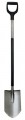 | 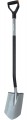 |
|---|---|---|
| Fiskars 1050649 | Fiskars 131410 | |
| Outdated Product | from $172.67 | |
| User reviews | ||
| TOP sellers | ||
Art. 131416 — gardening gloves included. | ||
| Type | garden / construction | garden / construction |
| Shape | trench | trench |
| Blade material | steel | steel |
| Blade width | 195 mm | 195 mm |
| Shaft material | steel | steel |
| Handle | D-handle | D-handle |
| Ergonomic curve |  | |
| Rubberized shaft | | |
| Shovel length | 1210 mm | 1250 mm |
| Weight | 2000 g | 1900 g |
| Added to E-Catalog | april 2019 | august 2016 |


Compare Fiskars 1050649 and 131410
You may be interested in
My comparisons
Fiskars 131410 often compared


Glossary
Shovel length
The total length of the shovel; for models with variable length (folding or telescopic, see above), the maximum size is taken into account, when unfolded to the maximum position.
In the case of full size shovels (garden shovels, construction shovels, snow shovels — see "Type"), the optimal length depends primarily on the height of the user. It is believed that a shovel, placed vertically, should be 10 cm below the shoulder joint; however, some prefer a shorter tool — up to the elbow. If you do not have the opportunity to “try on” the shovel “live”, you can measure the height to the desired point (10 cm below the shoulder or elbow) and, when choosing, compare this height with the length of the tool. Note that a shovel without a handle (see above) may well be somewhat longer than necessary — the “surplus” of the handle usually does not create any particular inconvenience. But in the presence of a handle, length matching is extremely important.
If we are talking about small shovels for tourist / automotive purposes, then here we should proceed from a compromise between efficiency and compactness. A shorter shovel will be more convenient to store and transport, but may be inconvenient and ineffective for heavy work (both because of the inconvenience in the hands and because of the short lever length, which requires considerable effort).
In the case of full size shovels (garden shovels, construction shovels, snow shovels — see "Type"), the optimal length depends primarily on the height of the user. It is believed that a shovel, placed vertically, should be 10 cm below the shoulder joint; however, some prefer a shorter tool — up to the elbow. If you do not have the opportunity to “try on” the shovel “live”, you can measure the height to the desired point (10 cm below the shoulder or elbow) and, when choosing, compare this height with the length of the tool. Note that a shovel without a handle (see above) may well be somewhat longer than necessary — the “surplus” of the handle usually does not create any particular inconvenience. But in the presence of a handle, length matching is extremely important.
If we are talking about small shovels for tourist / automotive purposes, then here we should proceed from a compromise between efficiency and compactness. A shorter shovel will be more convenient to store and transport, but may be inconvenient and ineffective for heavy work (both because of the inconvenience in the hands and because of the short lever length, which requires considerable effort).
Weight
The total weight of the shovel; for models with a removable handle (wooden) it is specified taking into account the complete handle.
The lightweight tool reduces effort and therefore fatigue, allowing you to work faster and longer. At the same time, in some situations, just a lot of weight is more desirable: for example, a heavy bayonet shovel easily pierces even into dense earth and cuts the roots without any problems. In addition, weight loss often comes at a cost. Therefore, it makes sense to specifically look for a light shovel only when working with loose soil or materials where the blade does not have to be “driven” with force.
The lightweight tool reduces effort and therefore fatigue, allowing you to work faster and longer. At the same time, in some situations, just a lot of weight is more desirable: for example, a heavy bayonet shovel easily pierces even into dense earth and cuts the roots without any problems. In addition, weight loss often comes at a cost. Therefore, it makes sense to specifically look for a light shovel only when working with loose soil or materials where the blade does not have to be “driven” with force.