
Comparison Atemi Sniper vs Atemi 900C
Add to comparison | 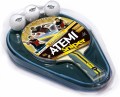 | 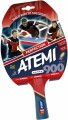 |
|---|---|---|
| Atemi Sniper | Atemi 900C | |
| Outdated Product | from $19.00 | |
| User reviews | ||
| TOP sellers | ||
| In box | 1 racket 3 balls case | 1 racket |
| Class | professional (5*) | professional (5*) |
Specs | ||
| Playing style | attacking | attacking |
| Handle shape | flared | flared |
| Speed | 90 | 90 |
| Spin | 90 | 90 |
| Control | 70 | 70 |
| Base material | wood | wood |
| Number of base layers | 5 | 5 |
| Sponge thickness | 1.8 mm | 1.8 mm |
General | ||
| ITTF certificate |  | |
| Added to E-Catalog | march 2015 | march 2015 |


Compare Atemi Sniper and 900C
You may be interested in
My comparisons
Atemi Sniper often compared


Atemi 900C often compared


Glossary
In box
— Racket. The primary playing tool in table tennis, consisting of a solid base and rubber coverings glued on both sides. This option is convenient for amateur play, training, and beginner players, while professional players customize their tools, choosing each part to suit their needs. It should be noted that rackets can be sold individually or come in sets of 2 or 4.
— Blade. A wooden or composite blank of the racket that determines its basic speed, control, flexibility, and overall weight. Rubber coverings are separately installed on the blade to adjust speed, control, spin, and the racket's behavior for attacking, defensive, or all-around styles. Such a delicate approach to choosing playing equipment is primarily relevant for professionals.
— Balls. Having balls is convenient for a starter kit, especially if the purchase is intended for home, cottage, school, or office, where it's important to start playing immediately without separately choosing accessories. At the same time, the quality of the balls may vary: in simple sets, they are usually suitable for amateur play, while for training, it is better to separately check the class and durability of the balls.
— Net. This accessory allows you to quickly prepare a place for play. However, in...most cases, it is usually intended for home and amateur use, not for sports competitions.
— Cover. A protective accessory for storing one or more rackets. It reduces the risk of rubber covering damage, protects the surface from dust, and helps conveniently carry the equipment. It is especially useful for rackets with softer or tackier coverings, which quickly lose playing properties if not stored carefully.
— Blade. A wooden or composite blank of the racket that determines its basic speed, control, flexibility, and overall weight. Rubber coverings are separately installed on the blade to adjust speed, control, spin, and the racket's behavior for attacking, defensive, or all-around styles. Such a delicate approach to choosing playing equipment is primarily relevant for professionals.
— Balls. Having balls is convenient for a starter kit, especially if the purchase is intended for home, cottage, school, or office, where it's important to start playing immediately without separately choosing accessories. At the same time, the quality of the balls may vary: in simple sets, they are usually suitable for amateur play, while for training, it is better to separately check the class and durability of the balls.
— Net. This accessory allows you to quickly prepare a place for play. However, in...most cases, it is usually intended for home and amateur use, not for sports competitions.
— Cover. A protective accessory for storing one or more rackets. It reduces the risk of rubber covering damage, protects the surface from dust, and helps conveniently carry the equipment. It is especially useful for rackets with softer or tackier coverings, which quickly lose playing properties if not stored carefully.