
Comparison Liebherr G 1213 98 L vs Liebherr GP 1376 103 L
Add to comparison | 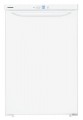 | 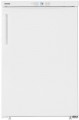 |
|---|---|---|
| Liebherr G 1213 98 L | Liebherr GP 1376 103 L | |
from $211.28 up to $311.96 | from $326.00 up to $453.96 | |
| User reviews | ||
| TOP sellers | ||
Ability to operate in cold weather. FrostSafe deep containers. System of the organization of internal space VarioSpace. Magic Eye display. Superfrost automatic quick freezing system. 5-level adjustment of the brightness of the indicators. | ||
| Product type | freezer | freezer |
| Capacity | 98 L | 103 L |
| Number of compartments | 3 3 drawers | 4 |
Features | ||
| Max. temperature | -15 °C | -14 °C |
| Minimum temperature | -32 °C | -28 °C |
| Power failure autonomy | 26 h | 23 h |
| Freeze capacity | 11 kg/day | 11 kg/day |
| Fast freeze |  | |
| Reversible door | | |
| Hidden door handle | |  |
More specs | ||
| Controls | external push-buttons | external push-buttons |
| Display | | |
| Child lock | | |
| Cold accumulators | 2 | |
| Energy class | A+ | A++ |
| Energy consumption per year | 190 kWh | 138 kWh |
| Climate class | SN, N, ST, T (+10...+43 °С) | SN, N, ST, T (+10...+43 °С) |
| Operation at sub-zero temperatures | | |
| Noise level | 40 dB | 39 dB |
| Dimensions (HxWxD) | 85.1x55.3x62.4 cm | 85x55x62 cm |
| Weight | 36 kg | |
| Country of origin | Bulgaria | Bulgaria |
| Color | ||
| Added to E-Catalog | april 2012 | march 2012 |


Compare Liebherr G 1213 and GP 1376
You may be interested in
My comparisons
Liebherr G 1213 often compared


Liebherr GP 1376 often compared


Glossary
Capacity
The total working volume of the freezer compartment. A larger volume allows for more products to be stored, but it affects the size and cost of the unit; therefore, when choosing based on this parameter, it's important not to chase maximum capacity but to consider what volume you actually need. For example, for household use, the average necessary volume is 50 liters per person; and when choosing a display freezer (see "Type"), you need to consider the number of products to be sold. More detailed recommendations for selecting the optimal volume can be found in specialized sources.
It is also worth considering that the freezer is often divided into several compartments (see below) — which means that a large volume does not necessarily guarantee that large pieces of products can fit into the device.
It is also worth considering that the freezer is often divided into several compartments (see below) — which means that a large volume does not necessarily guarantee that large pieces of products can fit into the device.
Number of compartments
The number of compartments provided in the freezer's design. They can be designed as pull-out drawers or shelves with a drop-down door. In some models, there is the possibility to set different temperatures for different compartments. It is worth noting that a large number of compartments does not always imply maximum convenience, as the volume of each individual drawer or shelf inevitably decreases with the increase in their number.
Max. temperature
The highest temperature maintained by the freezer during normal operation. This parameter is not as important as the minimum freezing temperature, however, it allows to evaluate the optimal conditions for storing certain categories of products that do not need deep freezing. And in some cases, it shows that the freezer can work as a refrigerator.
Minimum temperature
The lowest temperature that the freezer can maintain in normal operation. First of all, the duration of food storage in the freezer depends on this parameter: it is believed that a temperature of -12 ° C is enough to preserve food for a month, -18 ° C – 3 months, -24 ° C – up to a year. At the same time, it must be taken into account that not only temperature affects the shelf life but also the type of product and its quality before freezing.
Power failure autonomy
The amount of time the freezer keeps food cold enough when the refrigeration system is turned off, for example, due to a breakdown or power outage. Technically, the power failure autonomy for each model is calculated differently; For example, for a freezer with an operating temperature of -18 ° C, this is the period during which the products in the chamber heat up from -18 ° C to -9 ° C. To sum up, the time is indicated during which the frozen products are guaranteed not to heat up to a temperature at which they could lose their properties.
Hidden door handle
A handle made in the form of a notch at the end of the door. Thanks to the hidden handle, the freezer at least gets a neat, discreet appearance — with a minimum of unnecessary details on the doors. In addition, a traditional handle can be touched by careless movement, but with a hidden one, it is impossible. It is especially relevant in cramped conditions.
Child lock
The child lock allows you to block freezer controls and/or access to its internal volumes. This function will be useful in families where there are small children. Thus, the child will not be able to get to the freezer controls and change its operation mode.
Cold accumulators
The presence of removable refrigerants (cold accumulators) in the freezer design. This solution allows you to extend the temperature retention time in case of a power outage and also allows you to take it with you for use outside the freezer if necessary.
Energy class
The energy class shows how economical the freezer is in terms of electricity consumption. Initially, the classes were designated in Latin letters from A (most economical) to G (high power consumption). Recently, improved classes A+, A++ and A+++ appeared (the more pluses - the more economical the device).
It should be borne in mind that this indicator represents not the actual energy consumption but the efficiency of the unit compared to similar models. Therefore, a small class A freezer may have a lower power consumption than a large class A++ model. And other things being equal, a more economical device, as a rule, costs more, but this difference can quickly pay off during the operation.
It should be borne in mind that this indicator represents not the actual energy consumption but the efficiency of the unit compared to similar models. Therefore, a small class A freezer may have a lower power consumption than a large class A++ model. And other things being equal, a more economical device, as a rule, costs more, but this difference can quickly pay off during the operation.