
Comparison Paritet-K R.30.K.E vs Paritet-K S.20.K.E
Add to comparison | 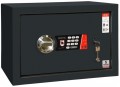 | 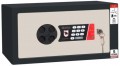 |
|---|---|---|
| Paritet-K R.30.K.E | Paritet-K S.20.K.E | |
| Outdated Product | from $131.92 up to $138.88 | |
| TOP sellers | ||
| Product Type | regular (for deposit) | regular (for deposit) |
| Capacity | 31 L | 14.7 L |
| Country of origin | Ukraine | Ukraine |
Protective features | ||
| Types of locks | key electronic | key electronic |
| Number of locking bolts | 2 | 2 |
| Lock model | STUV, GRIFFON | GRIFFON |
| Possibility of fastening |  | |
Storage | ||
| Separate compartments | 1 | 1 |
| Number of shelves | 1 | 1 |
Safe dimensions | ||
| External dimensions (HxWxD) | 300x430x320 mm | 200x380x260 mm |
| Internal dimensions (HxWxD) | 294x424x255 mm | 194x374x202 mm |
| Door wall thickness | 6 mm | 3 mm |
| Body walls thickness | 3 mm | 3 mm |
| Weight | 20 kg | 16 kg |
| Added to E-Catalog | october 2017 | march 2016 |


Compare Paritet-K R.30.K.E and S.20.K.E
You may be interested in
My comparisons
Glossary
Capacity
The volume of the interior space of the safe. Usually this parameter is indicated taking into account the safe-in-safe and other additional internal compartments. The amount of content that can be placed inside directly depends on the volume; on the other hand, it affects the external dimensions and weight of the storage.
Lock model
This paragraph indicates the manufacturer of the safe lock.
External dimensions (HxWxD)
The size of safe regarding its external dimensions. These figures will allow you to estimate how much space the safe takes up and whether it will fit into the intended installation location. Of course, greater capacity implies larger dimensions.
Internal dimensions (HxWxD)
Dimensions of the interior space of the safe. Note that in our catalog this parameter is indicated without a safe-in-safe, ammo compartment (see below) or other additional compartment provided inside.
This parameter directly determines the internal volume (see below). In addition, with the internal dimensions are known, you can determine whether this or that object will fit inside; this is especially important if you plan to use the safe for large items (for example, large-format documents that cannot be folded) — after all, in different models, the dimensions on three sides can vary significantly even with the same capacity.
This parameter directly determines the internal volume (see below). In addition, with the internal dimensions are known, you can determine whether this or that object will fit inside; this is especially important if you plan to use the safe for large items (for example, large-format documents that cannot be folded) — after all, in different models, the dimensions on three sides can vary significantly even with the same capacity.
Door wall thickness
The wall thickness of the door is meant the thickness of a separate metal sheet used in its construction. The use of this parameter is due to the fact that some safes may have voids in metal doors filled with air or a special filler (this is especially true for fireproof models, see "Product Type"). And since the most durable material of the safe door is usually metal, it is the wall thickness that largely determines the overall burglary resistance of the product.
Do not confuse this parameter with the total thickness of the door (see above). For clarity, we can take this example: if a safe door consists of a filler layer of 10 mm with sheets of metal of 5 mm on both sides, then the total thickness of the door will be 20 mm, while the wall thickness is only 5 mm.
Do not confuse this parameter with the total thickness of the door (see above). For clarity, we can take this example: if a safe door consists of a filler layer of 10 mm with sheets of metal of 5 mm on both sides, then the total thickness of the door will be 20 mm, while the wall thickness is only 5 mm.
Weight
The total weight of the empty safe. Unlike many other products, for safes, heavy weight is usually more of an advantage than a disadvantage: the heavier the safe, the more difficult it is to steal it entirely for later opening in a safe place. The only exceptions are portable and automotive models (see "Product Type") — in their case, theft prevention is ensured primarily by fastening, and in the first case, the product, by definition, must be suitable for carrying in hands.