
Comparison Elenberg MS-2009M white vs Mystery MMW-2012 white
Add to comparison | 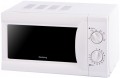 | 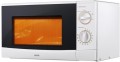 |
|---|---|---|
| Elenberg MS-2009M white | Mystery MMW-2012 white | |
from $51.96 up to $56.76 | from $47.96 up to $53.16 | |
| User reviews | ||
| TOP sellers | ||
| Capacity | 20 L | 20 L |
Technical specs | ||
| Microwave power | 700 W | 800 W |
| Controls | rotary knobs | rotary knobs |
| Turntable |  | |
| Turntable diameter | 245 mm | 245 mm |
| Power levels | 6 | 5 |
| Features | defrosting | defrosting |
More specs | ||
| Door opening | side (left) | side (left) |
| Door opens with | door handle | button |
| Inner coating | enamel | enamel |
| Dimensions (HxWxD) | 26x45x34 cm | 26x45x33 cm |
| Color | ||
| Added to E-Catalog | december 2014 | february 2014 |


Compare Elenberg MS-2009M and Mystery MMW-2012
You may be interested in
My comparisons
Elenberg MS-2009M often compared


Mystery MMW-2012 often compared


Glossary
Microwave power
The actual "output" energy of a microwave, which heats food, is the best indicator of how quickly the microwave can handle reheating and defrosting. The higher the microwave power, the less time is needed for standard tasks: a typical plate of soup will heat noticeably faster at 900-1000 watts than at 700-800 watts. This parameter is often confused with the electricity consumption from the socket: a microwave with 800 watts of microwave power can consume about 1200-1300 watts because part of the energy is used for the operation of the magnetron, fan, and electronics — but it's more accurate to compare models based on cooking speed and efficiency by microwave power. In everyday use, it looks simple: for office reheating and simple dishes, usually 700-800 watts is enough, but if you often heat large portions, cook potatoes, porridge, or prefer fast results without "cold spots," 900-1100 watts is more comfortable with normal cookware and proper stirring.
Power levels
It is the number of fixed power levels provided in the design of the microwave. The more such levels, the wider the capabilities of the device because different tasks require different heating intensities.
Door opens with
- Handle. The door of the built-in microwave oven opens and closes with a handle while fixing in the closed position is provided by a spring latch. To open such a door, you need to pull it by the handle, overcoming the resistance of the spring latch. The handle on the door is common in capacious microwaves, as well as models with a downward opening door.
- Button. The door opening mechanism automatically ejects the door at the push of a button. To close the door back, the user needs to press the edge of the door against the lock. As a rule, the open button is used in built-in microwaves with a capacity not higher than average. The push-button opening mechanism is relevant only for models with a sideward door opening. The button allows you to get rid of the handle, which in some cases can spoil the overall interior of the kitchen, but the weak point of such a mechanism is the lock device itself, which is subject to mechanical wear.
- Button. The door opening mechanism automatically ejects the door at the push of a button. To close the door back, the user needs to press the edge of the door against the lock. As a rule, the open button is used in built-in microwaves with a capacity not higher than average. The push-button opening mechanism is relevant only for models with a sideward door opening. The button allows you to get rid of the handle, which in some cases can spoil the overall interior of the kitchen, but the weak point of such a mechanism is the lock device itself, which is subject to mechanical wear.