
Comparison Ryobi OBV18 vs Ryobi RBV36B
Add to comparison | 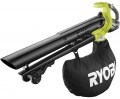 | 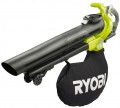 |
|---|---|---|
| Ryobi OBV18 | Ryobi RBV36B | |
from $437.00 | from $332.26 | |
| TOP sellers | ||
The battery and charger are not included. | Brushless motor. The battery and charger are not included. | |
| Type | manual | manual |
| Operating mode | blowing suction grinding | blowing suction grinding |
Specs | ||
| Max. air flow rate | 201 km/h | 238 km/h |
| Air flow control |  | |
| Air flow (blowing) | 2.5 m³/min | 12.9 m³/min |
| Air flow (suction) | 6 m³/min | |
| Mulching ratio | 10:1 | |
| Garbage container volume | 35 L | 45 L |
Motor | ||
| Motor type | electric (battery) | electric (battery) |
| Brushless motor |  | |
Battery | ||
| Battery in set | absent | absent |
| Battery platform | Ryobi ONE+ | Ryobi MAX Power |
| Battery voltage | 18 В | 36 В |
| Compatible batteries | RB18L13, RB18L15, RB18L20, RB18L25, RB18L30, RB18L40, RB18L50, RB18L90 | BPL3620D, BPL3626D, BPL3626D2, BPL3640D, BPL3640D2, BPL3650D |
General | ||
| Shoulder strap | | |
| Support wheels | | |
| Noise level | 103 dB | |
| Weight | 3.7 kg | 5.3 kg |
| Added to E-Catalog | september 2018 | september 2018 |


Compare Ryobi OBV18 and RBV36B
You may be interested in
My comparisons
Glossary
Max. air flow rate
The highest speed of the air stream given out by the vacuum cleaner. The higher this parameter, the stronger the thrust provided by the device, and the more efficiently it is able to pull or blow out debris particles from cracks and other hard-to-reach places (of course, if there is an appropriate operating mode — see above). At the same time, in most modern models, this figure exceeds 150 km/h — this is more than enough for work of small and medium complexity. Therefore, paying attention to a high flow rate makes sense only when choosing a powerful model for working in difficult conditions; we note that in the most “high-speed” vacuum cleaners, the indicators can exceed 400 km/h.
Air flow (blowing)
Performance of the garden vacuum cleaner when blowing (see "Operating mode").
This parameter determines the amount of air that the device distills through itself in a certain time. It should be noted that it depends not only on the speed of this air, but also on other parameters — for example, the diameter of the pipe. Therefore, two models with the same performance can noticeably differ in speed, and vice versa. You also need to keep in mind that the efficiency of "purging" bottlenecks with stuck debris does not depend on performance, but on the flow rate. On the other hand, good performance makes it easier to work on large areas, as allows you to simultaneously cover a large area with a jet of air.
Most modern garden vacuum cleaners in blowing mode provide up to 15 m / min; higher rates are typical mainly for professional models.
This parameter determines the amount of air that the device distills through itself in a certain time. It should be noted that it depends not only on the speed of this air, but also on other parameters — for example, the diameter of the pipe. Therefore, two models with the same performance can noticeably differ in speed, and vice versa. You also need to keep in mind that the efficiency of "purging" bottlenecks with stuck debris does not depend on performance, but on the flow rate. On the other hand, good performance makes it easier to work on large areas, as allows you to simultaneously cover a large area with a jet of air.
Most modern garden vacuum cleaners in blowing mode provide up to 15 m / min; higher rates are typical mainly for professional models.
Air flow (suction)
Performance of the garden vacuum cleaner when working on suction (see "Operating mode").
As with blowing described above, this parameter primarily characterizes how large the area covers the vacuum cleaner when working: high performance means that the device captures more air and draws debris from a larger surface. But this indicator is weakly related to suction efficiency: the ability of a vacuum cleaner to “pull out” debris particles from cracks, thick grass, etc. depends primarily on speed characteristics, not performance.
As with blowing described above, this parameter primarily characterizes how large the area covers the vacuum cleaner when working: high performance means that the device captures more air and draws debris from a larger surface. But this indicator is weakly related to suction efficiency: the ability of a vacuum cleaner to “pull out” debris particles from cracks, thick grass, etc. depends primarily on speed characteristics, not performance.
Mulching ratio
The ratio of shredding debris provided by a vacuum cleaner with the appropriate mode of operation (see above).
This parameter shows how much the volume occupied by garbage decreases after passing through the grinder. For example, the value "8:1" corresponds to a reduction of 8 times. These figures, of course, are quite approximate, because. in fact, much depends on the type of waste, and in different cases, the indicators will also be different. For example, bulky large branches are “packed” very tightly, and soft leaves initially take up relatively little space, and for them the difference in volume before and after the chopper may be small. Nevertheless, the claimed values quite reliably describe the capabilities of the vacuum cleaner for processing the collected garbage.
Garden vacuum cleaners with a grinding ratio of 1:10 can be classified as average; lower rates are typical for relatively modest models, larger ones for advanced ones.
This parameter shows how much the volume occupied by garbage decreases after passing through the grinder. For example, the value "8:1" corresponds to a reduction of 8 times. These figures, of course, are quite approximate, because. in fact, much depends on the type of waste, and in different cases, the indicators will also be different. For example, bulky large branches are “packed” very tightly, and soft leaves initially take up relatively little space, and for them the difference in volume before and after the chopper may be small. Nevertheless, the claimed values quite reliably describe the capabilities of the vacuum cleaner for processing the collected garbage.
Garden vacuum cleaners with a grinding ratio of 1:10 can be classified as average; lower rates are typical for relatively modest models, larger ones for advanced ones.
Garbage container volume
The volume of the garbage collector — a container for garbage — regularly supplied with a garden vacuum cleaner. The larger the bin, the more debris can fit inside and the less often you have to empty it during work. On the other hand, a capacious container has the appropriate dimensions, and when filled, it also weighs a lot, which can affect the ease of use of the vacuum cleaner (this is especially true for manual and backpack models, see "Type"). Therefore, manufacturers tend to choose bins for their products based on the overall level of the vacuum cleaner and the scale of work for which it is designed. And some units may not be equipped with complete containers at all — in the expectation that the user picks up such a container separately.
The volume of the garbage can can be approximately estimated, knowing that an ordinary household bucket holds about 10 – 12 liters. Thus, for example, a 35 liter container corresponds approximately to three standard buckets.
The volume of the garbage can can be approximately estimated, knowing that an ordinary household bucket holds about 10 – 12 liters. Thus, for example, a 35 liter container corresponds approximately to three standard buckets.
Brushless motor
A modern brushless motor, in which the rotor rotates thanks to electronics and magnets rather than friction against the commutator. For the user, this means higher efficiency, less heating, and significantly greater durability, especially during regular autumn use when leaves need to be blown and vacuumed for extended periods. Compared to classic brushed motors, such blower-vacuums are quieter, maintain stable speeds under load, require servicing less frequently, and perform better on low battery charge or when operating at the limit from the mains. Brushless Motor is especially valuable in battery models: it provides more power and runtime on a single charge, and withstands frequent starts and switches between blower and vacuum modes without losing power, which is important for owners of areas with a lot of trees and pathways.
Battery platform
Name of the battery platform supported by the device. A unified battery platform is used to combine various power tools and garden equipment of one brand into a single line (drill, angle grinder, trimmer, etc.). Devices belonging to the same platform use interchangeable batteries and chargers. Thanks to this, for example, there is no need to choose a battery for each individual model of power tool, as one battery purchased as a spare can be used in various power tools, depending on the situation or as needed. Batteries of one platform mainly differ only in capacity.
Battery voltage
The battery voltage for which the powered garden vacuum cleaner is designed (see "Motor type"). For a powerful unit, usually, a fairly high voltage is required.
For the user, this parameter is important if the purchased vacuum cleaner is not equipped with a battery (see "Battery included"): in order to successfully select the battery, you need to know the required voltage. If the battery is included in the kit, then this indicator has a purely reference value, and can only come in handy when looking for a spare or additional battery.
For the user, this parameter is important if the purchased vacuum cleaner is not equipped with a battery (see "Battery included"): in order to successfully select the battery, you need to know the required voltage. If the battery is included in the kit, then this indicator has a purely reference value, and can only come in handy when looking for a spare or additional battery.
Compatible batteries
The name of the battery that is compatible with the device. It helps to buy a spare or find a suitable one in case of a breakdown of the main one.