
Comparison STIHL BGA 56 vs Makita DUB362Z
Add to comparison | 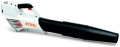 | 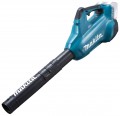 |
|---|---|---|
| STIHL BGA 56 | Makita DUB362Z | |
| Outdated Product | from $316.03 | |
| TOP sellers | ||
Battery and charger not included | The battery and charger are not included. | |
| Type | manual | manual |
| Operating mode | blowing | blowing |
Specs | ||
| Max. air flow rate | 162 km/h | 195 km/h |
| Air flow control |  |  |
| Air flow (blowing) | 10 m³/min | 13.4 m³/min |
Motor | ||
| Motor type | electric (battery) | electric (battery) |
| Max. engine speed | 21500 rpm | |
Battery | ||
| Battery in set | absent | absent |
| Battery platform | STIHL COMPACT | Makita 18V LXT |
| Battery voltage | 36 В | 18 В |
| Compatible batteries | AK 10, AK 20, AK 30 | BL1815N, BL1820, BL1820B, BL1830, BL1840, BL1850, BL1830B, BL1840B |
| Powered by two batteries | | |
General | ||
| Noise level | 91 dB | 93 dB |
| Weight | 2.1 kg | 3.5 kg |
| Added to E-Catalog | june 2017 | july 2016 |


Compare STIHL BGA 56 and Makita DUB362Z
You may be interested in
My comparisons
STIHL BGA 56 often compared

Makita DUB362Z often compared


Glossary
Max. air flow rate
The highest speed of the air stream given out by the vacuum cleaner. The higher this parameter, the stronger the thrust provided by the device, and the more efficiently it is able to pull or blow out debris particles from cracks and other hard-to-reach places (of course, if there is an appropriate operating mode — see above). At the same time, in most modern models, this figure exceeds 150 km/h — this is more than enough for work of small and medium complexity. Therefore, paying attention to a high flow rate makes sense only when choosing a powerful model for working in difficult conditions; we note that in the most “high-speed” vacuum cleaners, the indicators can exceed 400 km/h.
Air flow control
The ability to change the speed (and, accordingly, the intensity) of the air flowissued by the vacuum cleaner. This function allows you to optimally adjust the operating parameters to the specifics of certain conditions — in order, on the one hand, not to waste energy / fuel and not wear out the unit, and on the other, to ensure proper work efficiency. For example, for collecting leaves from an asphalt path, high power is not needed, but for cleaning in thick grass, it can be very useful.
The ability to adjust is especially important for high-performance garden vacuums — these are the models that are most likely to find themselves in a situation where high power is unnecessary. And in models with a petrol engine (see below), this function is provided by default.
The ability to adjust is especially important for high-performance garden vacuums — these are the models that are most likely to find themselves in a situation where high power is unnecessary. And in models with a petrol engine (see below), this function is provided by default.
Air flow (blowing)
Performance of the garden vacuum cleaner when blowing (see "Operating mode").
This parameter determines the amount of air that the device distills through itself in a certain time. It should be noted that it depends not only on the speed of this air, but also on other parameters — for example, the diameter of the pipe. Therefore, two models with the same performance can noticeably differ in speed, and vice versa. You also need to keep in mind that the efficiency of "purging" bottlenecks with stuck debris does not depend on performance, but on the flow rate. On the other hand, good performance makes it easier to work on large areas, as allows you to simultaneously cover a large area with a jet of air.
Most modern garden vacuum cleaners in blowing mode provide up to 15 m / min; higher rates are typical mainly for professional models.
This parameter determines the amount of air that the device distills through itself in a certain time. It should be noted that it depends not only on the speed of this air, but also on other parameters — for example, the diameter of the pipe. Therefore, two models with the same performance can noticeably differ in speed, and vice versa. You also need to keep in mind that the efficiency of "purging" bottlenecks with stuck debris does not depend on performance, but on the flow rate. On the other hand, good performance makes it easier to work on large areas, as allows you to simultaneously cover a large area with a jet of air.
Most modern garden vacuum cleaners in blowing mode provide up to 15 m / min; higher rates are typical mainly for professional models.
Max. engine speed
The highest speed at which the vacuum cleaner engine is able to operate in normal mode.
Theoretically, faster motors are capable of delivering more solid performance; however, in fact, these characteristics depend on so many different design features that the engine speed is practically lost against the background of these features. Therefore, this moment, in fact, is purely reference (and partly promotional — impressive rpm numbers can at first glance give the impression of high power and performance; but this impression is often deceptive).
Theoretically, faster motors are capable of delivering more solid performance; however, in fact, these characteristics depend on so many different design features that the engine speed is practically lost against the background of these features. Therefore, this moment, in fact, is purely reference (and partly promotional — impressive rpm numbers can at first glance give the impression of high power and performance; but this impression is often deceptive).
Battery platform
Name of the battery platform supported by the device. A unified battery platform is used to combine various power tools and garden equipment of one brand into a single line (drill, angle grinder, trimmer, etc.). Devices belonging to the same platform use interchangeable batteries and chargers. Thanks to this, for example, there is no need to choose a battery for each individual model of power tool, as one battery purchased as a spare can be used in various power tools, depending on the situation or as needed. Batteries of one platform mainly differ only in capacity.
Battery voltage
The battery voltage for which the powered garden vacuum cleaner is designed (see "Motor type"). For a powerful unit, usually, a fairly high voltage is required.
For the user, this parameter is important if the purchased vacuum cleaner is not equipped with a battery (see "Battery included"): in order to successfully select the battery, you need to know the required voltage. If the battery is included in the kit, then this indicator has a purely reference value, and can only come in handy when looking for a spare or additional battery.
For the user, this parameter is important if the purchased vacuum cleaner is not equipped with a battery (see "Battery included"): in order to successfully select the battery, you need to know the required voltage. If the battery is included in the kit, then this indicator has a purely reference value, and can only come in handy when looking for a spare or additional battery.
Compatible batteries
The name of the battery that is compatible with the device. It helps to buy a spare or find a suitable one in case of a breakdown of the main one.
Powered by two batteries
Powered by Two Batteries means that the tool simultaneously uses two battery packs, usually from the same series. This is often done to increase power and voltage (for example, a pair of 18-volt batteries gives 36 V), as well as to significantly extend runtime without recharging. These models perform better with wet and compacted leaves, cleaning long paths, large lawns, and yards, where a single battery isn't sufficient to cover the entire area. However, the device becomes heavier and requires two working batteries. On the plus side, owners with a whole battery ecosystem can conveniently use existing packs from other garden tools. Such blower-vacuums are more commonly chosen for regular cleaning of large areas, as well as by users who want to achieve almost "wired" power in a fully autonomous format.
Noise level
The noise level generated by the vacuum cleaner during normal operation. The lower this indicator, the more comfortable it is to work with the unit, the less the operator gets tired; and high noise levels may require the use of protection (e.g. earmuffs).
When assessing the noise level, note that the decibel used to measure this level is a non-linear quantity. Therefore, it is easiest to evaluate specific values using comparative tables. Here is one of the variants of such a table (rather simplified):
— 60 dB — sound comparable to a TV at medium volume. From this value, the indicators of modern garden vacuum cleaners begin, because. this technique works quite loudly.
— 70 dB — to a truck at a distance of about 8 m;
— 80 dB — traffic noise on a busy street;
— 90 dB — freight train noise at a distance of 8 – 10 m;
— 100 dB — the noise of the demolition hammer;
— 110 dB — indoor rock concert
When assessing the noise level, note that the decibel used to measure this level is a non-linear quantity. Therefore, it is easiest to evaluate specific values using comparative tables. Here is one of the variants of such a table (rather simplified):
— 60 dB — sound comparable to a TV at medium volume. From this value, the indicators of modern garden vacuum cleaners begin, because. this technique works quite loudly.
— 70 dB — to a truck at a distance of about 8 m;
— 80 dB — traffic noise on a busy street;
— 90 dB — freight train noise at a distance of 8 – 10 m;
— 100 dB — the noise of the demolition hammer;
— 110 dB — indoor rock concert