
Comparison Navitel R650 NV vs Navitel R600
Add to comparison | 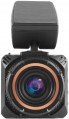 | 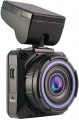 |
|---|---|---|
| Navitel R650 NV | Navitel R600 | |
| Outdated Product | Outdated Product | |
| User reviews | ||
| TOP sellers | ||
Large Sony photosensor and powerful Novatek processor. FullHD video recording. Viewing angle 170°. Shock sensor. Two batteries. Supports memory cards up to 256 GB. | ||
| Type | dashcam | dashcam |
| Installation | on the windscreen | on the windscreen |
| Glass mount | sticker | sticker |
| Dashcam mount | clip | clip |
| Power through mount |  | |
| Power connector | miniUSB | miniUSB |
Camera | ||
| Screen type | Sony IMX307 | Sony IMX323 |
| Processor | Novatek NTK96658 | Novatek NTK96650 |
| Full HD (1080) | 1920x1080, 30 fps | 1920x1080, 30 fps |
| Viewing angle | 170 ° | 170 ° |
| Recording features | G-sensor sound recording | G-sensor sound recording |
Features | ||
| Driving assistants | parking mode speaker | parking mode speaker |
Screen | ||
| Screen size | 2 " | 2 " |
| Screen resolution | 320x240 px | 960x640 px |
General | ||
| Max. memory card size | 256 GB | 256 GB |
| Backup power | battery | battery |
| Battery capacity | 180 mAh | 180 mAh |
| Size | 56x54x31 mm | 54x51x32 mm |
| Added to E-Catalog | december 2019 | september 2017 |


Compare Navitel R650 NV and R600
Dashcams Navitel R650 NV and Navitel R600 have similar features, such as mounting on the windshield and shooting in Full HD (1920x1080 pixels at 30 fps) with a 170° viewing angle. However, the R650 NV uses the Sony IMX307 sensor, while the R600 is equipped with the Sony IMX323 sensor, which may affect recording quality. Users note that the R650 NV has good recording quality but sometimes overheats, whereas the R600 is characterized by a more compact design and convenient mount, but has a less clear screen with a resolution of 960x640 pixels. Both devices support memory cards up to 256 GB and have G-sensor and sound recording functions.
You may be interested in
My comparisons
Navitel R650 NV often compared


Navitel R600 often compared


Glossary
Screen type
The sensor is a key element of any digital camera; it is from it and from signal processing technologies that the quality of the resulting image primarily depends. In this case, the type refers rather to the brand or brand of the matrix; it is usually indicated if the recorder is equipped with a high-quality sensor that is noticeably superior to most solutions on the market.
One of the most popular such options is Sony. The specific characteristics of the matrices ( IMX179, IMX222, IMX291, IMX307, IMX317, IMX322, IMX323, IMX326, IMX335, IMX415) may vary, but anyway, such a sensor is a sign of a high-end DVR.
In addition, there are models equipped with matrices from other manufacturers — Aptina, OmniVision, Samsung(GalaxyCore), Sandvik. Such solutions are generally considered to be simpler and more democratic than Sony — both in terms of price and functionality. Nevertheless, Samsung has a lot of developments in the field of electronics, and even such r...elatively “simple” sensors are usually more advanced and of higher quality than “know-names”.
Another manufacturer that produces fairly high-quality matrices is Panasonic. Such sensors are not as widespread as those described above, but they are still found in video recorders, including pretty advanced.
One of the most popular such options is Sony. The specific characteristics of the matrices ( IMX179, IMX222, IMX291, IMX307, IMX317, IMX322, IMX323, IMX326, IMX335, IMX415) may vary, but anyway, such a sensor is a sign of a high-end DVR.
In addition, there are models equipped with matrices from other manufacturers — Aptina, OmniVision, Samsung(GalaxyCore), Sandvik. Such solutions are generally considered to be simpler and more democratic than Sony — both in terms of price and functionality. Nevertheless, Samsung has a lot of developments in the field of electronics, and even such r...elatively “simple” sensors are usually more advanced and of higher quality than “know-names”.
Another manufacturer that produces fairly high-quality matrices is Panasonic. Such sensors are not as widespread as those described above, but they are still found in video recorders, including pretty advanced.
Processor
Model of the processor used in the dashcam
The term "video chip" is used mainly for devices with classic capabilities, "processor" — for advanced models with an abundance of non-standard functions. However, anyway, we are talking about the same component — the main computing unit, the characteristics of which directly affect the capabilities of the recorder as a whole. Knowing the model of the processor, you can find detailed data on it and evaluate how satisfied you are with a device based on such electronics. Of the most advanced modern chips, one can name, in particular, Ambarella A7L, Ambarella A12, Novatek NTK96655, Novatek NTK96660 and HiSilicon Hi3516.
The term "video chip" is used mainly for devices with classic capabilities, "processor" — for advanced models with an abundance of non-standard functions. However, anyway, we are talking about the same component — the main computing unit, the characteristics of which directly affect the capabilities of the recorder as a whole. Knowing the model of the processor, you can find detailed data on it and evaluate how satisfied you are with a device based on such electronics. Of the most advanced modern chips, one can name, in particular, Ambarella A7L, Ambarella A12, Novatek NTK96655, Novatek NTK96660 and HiSilicon Hi3516.
Screen resolution
Resolution of the display installed in the recorder.
The higher the resolution (with the same diagonal) — the clearer the image is, but the more expensive the screen itself. At the same time, high resolutions are not needed to set the camera in the desired position and to work with the basic settings of the device. So you should pay attention to this parameter only if you plan to use additional functions that require a high-quality “picture” — for example, a GPS navigator (see “Functions”) or a remote camera that plays the role of a reversing camera.
The higher the resolution (with the same diagonal) — the clearer the image is, but the more expensive the screen itself. At the same time, high resolutions are not needed to set the camera in the desired position and to work with the basic settings of the device. So you should pay attention to this parameter only if you plan to use additional functions that require a high-quality “picture” — for example, a GPS navigator (see “Functions”) or a remote camera that plays the role of a reversing camera.