
Comparison Triton TTS 1400 vs Makita SP6000
Add to comparison | 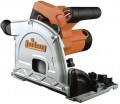 | 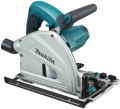 |
|---|---|---|
| Triton TTS 1400 | Makita SP6000 | |
from $623.54 | from $286.64 up to $405.60 | |
| TOP sellers | ||
| Product type | circular | circular |
| Type | portable | portable |
| Power source | mains (230 V) | mains (230 V) |
Motor | ||
| Engine location | transversely | transversely |
| Power | 1400 W | 1300 W |
| No load blade speed | 5300 rpm | 6400 rpm |
Cutting equipment | ||
| Bar/blade size | 165 mm | 165 mm |
| Bore diameter | 20 mm | 20 mm |
| Cutting depth | 54 mm | 56 mm |
| Cutting depth (45° angle) | 38 mm | |
| Saw angle | 48 ° | 48 ° |
Protective functions | ||
| Soft start |  | |
| Electronic motor protection |  | |
Features | ||
| Features | speed controller speed control | speed controller speed control |
General | ||
| Noise level | 95 dB | 103 dB |
| Cable length | 4 m | |
| Size | 335x250x235 mm | 341x225x250 mm |
| Weight | 5.5 kg | 4.4 kg |
| Added to E-Catalog | december 2014 | april 2010 |


Compare Triton TTS 1400 and Makita SP6000
You may be interested in
My comparisons
Makita SP6000 often compared


Glossary
Power
Saw motor power in watts. For petrol tools (see "Power Source"), horsepower is additionally indicated, see below for details.
The higher the power, the better the tool is suitable for voluminous work and hard materials, the greater the depth of cut it can provide and the easier it can cope with significant loads. In addition, for different types of saws and different types of materials, the actual power values \u200b\u200bcan also be different. For example, a power of 2.5 – 3 kW is actually the limit for chain saws, but in chain saws this is an average figure, among such tools there are models of 3 – 4 kW and even more. Detailed selection recommendations for various cases can be found in special sources.
The higher the power, the better the tool is suitable for voluminous work and hard materials, the greater the depth of cut it can provide and the easier it can cope with significant loads. In addition, for different types of saws and different types of materials, the actual power values \u200b\u200bcan also be different. For example, a power of 2.5 – 3 kW is actually the limit for chain saws, but in chain saws this is an average figure, among such tools there are models of 3 – 4 kW and even more. Detailed selection recommendations for various cases can be found in special sources.
No load blade speed
The maximum speed of the disk, provided by a saw of the appropriate design — disk, cut-off, etc. (see "Device").
Note that most of these saws use gearboxes, so that the blade revolutions are much lower than the engine revolutions (see above). This achieves an increase in torque, which in the case of saws is often more important than the high speed of the blade.
As for the specific number of revolutions, it is first of all worth noting that only saws with the same disc diameter can be compared according to this indicator. In these cases, higher speeds provide better performance, but the trade-off is reduced torque; such saws do better with relatively "light" materials. Conversely, low speeds reduce productivity, but allow the blade to effectively "bite" even into dense, stubborn workpieces. More specific recommendations regarding the choice of a saw according to the number of revolutions of the blade can be found in special sources.
Note that most of these saws use gearboxes, so that the blade revolutions are much lower than the engine revolutions (see above). This achieves an increase in torque, which in the case of saws is often more important than the high speed of the blade.
As for the specific number of revolutions, it is first of all worth noting that only saws with the same disc diameter can be compared according to this indicator. In these cases, higher speeds provide better performance, but the trade-off is reduced torque; such saws do better with relatively "light" materials. Conversely, low speeds reduce productivity, but allow the blade to effectively "bite" even into dense, stubborn workpieces. More specific recommendations regarding the choice of a saw according to the number of revolutions of the blade can be found in special sources.
Cutting depth
The greatest depth of cut provided by the saw.
In most types of saws (see “Device”), the depth of cut directly depends on both the engine power and the size of the tyre / disk. The specifications give a value for the maximum allowable size of the working nozzle; when using nozzles of a smaller size, the depth of cut, respectively, will be less. But in band saws, this depth is rather weakly related to the actual length of the tape — it is determined primarily by the length of the open section of the tape, which is directly involved in the work.
Anyway, the greater depth of cut makes the tool more versatile, but comes at the cost of weight, price, and electricity/fuel consumption. So when choosing, it is worth considering the real features of the planned work and the dimensions of the workpieces that are planned to be cut. As for specific values, the most modest tools provide a depth of up to 50 mm ; 50 – 75 mm is considered a low indicator, 75 – 100 mm is average, 100 – 125 mm is above average, 125 – 150 mm is already quite an impressive thickness, and the most powerful modern saws can have a cutting depth of more than 150 mm.
In most types of saws (see “Device”), the depth of cut directly depends on both the engine power and the size of the tyre / disk. The specifications give a value for the maximum allowable size of the working nozzle; when using nozzles of a smaller size, the depth of cut, respectively, will be less. But in band saws, this depth is rather weakly related to the actual length of the tape — it is determined primarily by the length of the open section of the tape, which is directly involved in the work.
Anyway, the greater depth of cut makes the tool more versatile, but comes at the cost of weight, price, and electricity/fuel consumption. So when choosing, it is worth considering the real features of the planned work and the dimensions of the workpieces that are planned to be cut. As for specific values, the most modest tools provide a depth of up to 50 mm ; 50 – 75 mm is considered a low indicator, 75 – 100 mm is average, 100 – 125 mm is above average, 125 – 150 mm is already quite an impressive thickness, and the most powerful modern saws can have a cutting depth of more than 150 mm.
Cutting depth (45° angle)
Maximum cutting depth achieved when sawing at a 45° bevel.
This feature is indicated only for those models that are originally designed for sawing at an angle — for example, due to the special design of the attachment for the blade / blade (in stationary models, see "Type") or due to the inclined support platform (in manual) . The maximum angle of inclination of the saw in such models can be different (see below for more details), however, 45 ° is considered the standard option, so it is for this inclination that data on the depth of cut is given.
The general meaning of this parameter is quite obvious. On the one hand, a greater depth of cut allows you to cope with thicker workpieces and generally gives you more options; on the other hand, an increase in depth requires an increase in the size of the disk / canvas and an increase in power, which, accordingly, affects the price, dimensions and consumption of electricity / fuel.
This feature is indicated only for those models that are originally designed for sawing at an angle — for example, due to the special design of the attachment for the blade / blade (in stationary models, see "Type") or due to the inclined support platform (in manual) . The maximum angle of inclination of the saw in such models can be different (see below for more details), however, 45 ° is considered the standard option, so it is for this inclination that data on the depth of cut is given.
The general meaning of this parameter is quite obvious. On the one hand, a greater depth of cut allows you to cope with thicker workpieces and generally gives you more options; on the other hand, an increase in depth requires an increase in the size of the disk / canvas and an increase in power, which, accordingly, affects the price, dimensions and consumption of electricity / fuel.
Electronic motor protection
Electronic motor protection in a saw controls the load on the motor and helps protect it from overheating, overload, or damage. If the tool is operating in a mode that is too heavy, the system can limit power, shut off the engine, or prevent it from overheating. This is beneficial not only for user safety but also for extending the lifespan of the saw itself. For example, when cutting dense wood, wet timber, or during long continuous work, such a feature helps avoid costly breakdowns.
Noise level
The noise level produced by the saw during operation. Note that this parameter is rather approximate, because in fact, the “loudness of the work” depends not only on the tool, but also on the material being processed and the characteristics of the environment. Nevertheless, the data given in the characteristics make it possible to assess the comfort of working with the tool. The lower this indicator, the less discomfort the noise will cause, and at high values, even special hearing protection may be needed.
Note that the noise level is usually measured in decibels, and this unit is not linear: for example, a difference of 3 dB corresponds to a difference of 2 times, 10 dB — to 10 times. Therefore, it is easiest to evaluate the noise level using comparative tables. Here is a simplified version of such a table for the range in which modern saws operate:
70 dB — loud conversation of several people in close proximity;
75 dB — a cry in the immediate vicinity;
80 dB — truck engine, mechanical alarm ringing;
85 dB — loud scream;
90 dB — freight car at a distance of 7 – 10 m;
95 dB — subway car at a distance of 7 – 10 m;
100 dB — industrial shop;
110 dB — tractor engine;
120 dB — demolition hammer, thunder from a close lightning strike (pain threshold of auditory perception).
Note that the noise level is usually measured in decibels, and this unit is not linear: for example, a difference of 3 dB corresponds to a difference of 2 times, 10 dB — to 10 times. Therefore, it is easiest to evaluate the noise level using comparative tables. Here is a simplified version of such a table for the range in which modern saws operate:
70 dB — loud conversation of several people in close proximity;
75 dB — a cry in the immediate vicinity;
80 dB — truck engine, mechanical alarm ringing;
85 dB — loud scream;
90 dB — freight car at a distance of 7 – 10 m;
95 dB — subway car at a distance of 7 – 10 m;
100 dB — industrial shop;
110 dB — tractor engine;
120 dB — demolition hammer, thunder from a close lightning strike (pain threshold of auditory perception).
Cable length
The length of the network cable can tell you how far from the outlet you can operate the device. Therefore, for domestic use, it is more relevant to choose models with a short cord, for construction work or use in production, in the garage a longer cable is better.
Size
General dimensions of the saw. For a stationary tool (see "Type"), this parameter determines primarily the amount of space that will be required for installation; problems with this can only arise in very tight spaces, so in most cases the dimensions of a stationary saw do not need to be given special attention. In the case of hand-held models, the small size makes it easier to work in hard-to-reach places and improves overall usability. On the other hand, a compact tool inevitably turns out to be low-power; and some jobs by definition require large, heavy saws, with large bar lengths or blade diameters.
Weight
The total weight of the tool. For petrol models (see "Power Source"), usually, dry weight is indicated, excluding fuel.
In general, it makes sense to pay attention to this parameter primarily when choosing a hand tool. At the same time, note that higher power, a more capacious battery or a capacious tank will inevitably affect weight. However, tools with similar characteristics can and do differ markedly in weight. And here it is worth considering that a lighter model will be more comfortable to work with, but weight reduction may affect reliability and/or cost. In addition, a more massive tool is more stable, it is not so prone to jerks under uneven loads. If we talk about specific numbers, then a weight of 3 kg or less is considered very light, 3–5 kg is relatively small, 5–7 kg is medium, 7–10 kg is significant, and some powerful tools (mainly gasoline) weigh and over 10 kg.
As for stationary saws, weight is of secondary importance for them — it mainly affects the ease of transportation.
In general, it makes sense to pay attention to this parameter primarily when choosing a hand tool. At the same time, note that higher power, a more capacious battery or a capacious tank will inevitably affect weight. However, tools with similar characteristics can and do differ markedly in weight. And here it is worth considering that a lighter model will be more comfortable to work with, but weight reduction may affect reliability and/or cost. In addition, a more massive tool is more stable, it is not so prone to jerks under uneven loads. If we talk about specific numbers, then a weight of 3 kg or less is considered very light, 3–5 kg is relatively small, 5–7 kg is medium, 7–10 kg is significant, and some powerful tools (mainly gasoline) weigh and over 10 kg.
As for stationary saws, weight is of secondary importance for them — it mainly affects the ease of transportation.