
Comparison AL-KO CS 4030 113616 vs AL-KO CS 36 Li 113365
Add to comparison | 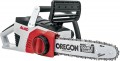 | 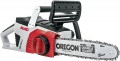 |
|---|---|---|
| AL-KO CS 4030 113616 | AL-KO CS 36 Li 113365 | |
| Outdated Product | Outdated Product | |
| TOP sellers | ||
Brushless motor. Keyless chain tension. Keyless blade replacement. Oregon bar and chain. | Model 113365 comes without battery and charger, model 113666 comes with battery (4 Ah) and charger | |
| Product type | chainsaw | chainsaw |
| Type | portable | portable |
| Power source | battery | battery |
Motor | ||
| Brushless motor |  |  |
| Engine location | transversely | transversely |
Cutting equipment | ||
| Bar/blade size | 300 mm | 300 mm |
| Chain pitch | 3/8 " | 3/8 " |
| Chain speed | 17 m/s | 17 m/s |
Protective functions | ||
| Chain brake | | |
| Electronic motor protection | | |
Features | ||
| Features | keyless chain tension keyless blade replacement | keyless chain tension keyless blade replacement |
| In box | chain without charger | without charger |
Battery | ||
| Battery in set | no | no |
| Battery platform | AL-KO EnergyFlex | AL-KO EnergyFlex |
| Battery voltage | 40 В | 36 В |
| Compatible batteries | EnergyFlex B150 Li, EnergyFlex B200 Li | 113280 |
General | ||
| Noise level | 101 dB | 105 dB |
| Oil tank volume | 0.18 L | 0.18 L |
| Weight | 4.45 kg | 4.45 kg |
| Added to E-Catalog | may 2018 | april 2017 |


Compare AL-KO CS 4030 113616 and CS 36 Li 113365
You may be interested in
Glossary
Brushless motor
A modern brushless motor type, which makes the tool more powerful, efficient, and convenient for prolonged use. This design reduces friction inside the motor, so the saw typically heats up less, operates more quietly, and lasts longer under regular load.
Compared to brushed models, the brushless motor better utilizes battery charge and maintains stable RPM under load, which is especially noticeable when cutting dense wood, beams, or sheet materials. Another significant advantage is fewer consumables and less maintenance, as brushes do not need to be replaced over time.
In practice, this is particularly useful for frequent construction, installation, roofing work, and other tasks where high power, autonomy, and reliability are expected from the saw.
Compared to brushed models, the brushless motor better utilizes battery charge and maintains stable RPM under load, which is especially noticeable when cutting dense wood, beams, or sheet materials. Another significant advantage is fewer consumables and less maintenance, as brushes do not need to be replaced over time.
In practice, this is particularly useful for frequent construction, installation, roofing work, and other tasks where high power, autonomy, and reliability are expected from the saw.
Electronic motor protection
Electronic motor protection in a saw controls the load on the motor and helps protect it from overheating, overload, or damage. If the tool is operating in a mode that is too heavy, the system can limit power, shut off the engine, or prevent it from overheating. This is beneficial not only for user safety but also for extending the lifespan of the saw itself. For example, when cutting dense wood, wet timber, or during long continuous work, such a feature helps avoid costly breakdowns.
In box
- Disc. The presence of a saw blade is included in the delivery set of the circular tool. It can be either one or several, which allows you to use the saw “out of the box” without the need to purchase additional consumables. If you already have a saw blade or intend to select it for specific tasks, it is worth taking a closer look at the configurations without a blade - they are usually cheaper.
- Chain. One or more chains included as standard with the saw. The presence of a chain with teeth for cutting allows you to do without purchasing a separate executive body for chain saw. However, there are configurations without a chain - it is assumed that the customer already has a chain or he will select the required option himself.
— Saw blade. The presence of one or more saw blades in the complete set of a reciprocating or band tool. They ensure that the saw is ready for use literally immediately after unpacking. There are also configurations of reciprocating or band models without a saw blade - they are cheaper, and the customer has the right to choose a suitable blade independently.
— Dust collector. A dust collector is included with the saw. The dust collector is a container for collecting sawdust and other d...ebris generated during operation; As a rule, such a container is made removable. Installing a dust collector slightly increases the dimensions of the entire tool, but this is compensated by cleanliness and convenience: dust and other production waste mostly settle in the container and not on surrounding objects.
- Charger. The presence of a charging block in the package allows you to charge batteries. Accordingly, for models with batteries, this accessory is necessary to power the battery. However, there are models without a charger. And saw with it may differ in the charger model, the name of which will allow you to learn more about its characteristics and, if necessary or if required (breakdown), purchase a similar one.
— Case (bag). Availability of a case or bag included with the instrument. A case is a container-suitcase made of hard material; bags are usually made of soft material. This way the case provides maximum protection and the bag can be folded away compactly when not in use. The specific type of case that comes with the saw should be specified separately. However, in any case, a complete case or bag will be more convenient for storing and transporting the instrument than impromptu packaging.
- Stand. The stand makes the saw tool more stable, reliable and safe. The presence of a stand is typical for stationary type saw. Mostly these are powerful, productive, large and heavy models that are located in a separate place. The stand can be implemented either with classic legs (bed) or with a cabinet with a tool compartment. The stand can be equipped with various types of saw: circular saw, miter saw, band saw, cutting saw and even chain saw (with electric drive).
— Wheels for transportation. Transport wheels make it easy to move sawing equipment around the shop. The presence of wheels will come in handy when the saw needs to be moved a little to install some large workpieces or simply when cleaning the workshop. As a rule, wheels are typical for stationary saw with a table top or work holder.
- Chain. One or more chains included as standard with the saw. The presence of a chain with teeth for cutting allows you to do without purchasing a separate executive body for chain saw. However, there are configurations without a chain - it is assumed that the customer already has a chain or he will select the required option himself.
— Saw blade. The presence of one or more saw blades in the complete set of a reciprocating or band tool. They ensure that the saw is ready for use literally immediately after unpacking. There are also configurations of reciprocating or band models without a saw blade - they are cheaper, and the customer has the right to choose a suitable blade independently.
— Dust collector. A dust collector is included with the saw. The dust collector is a container for collecting sawdust and other d...ebris generated during operation; As a rule, such a container is made removable. Installing a dust collector slightly increases the dimensions of the entire tool, but this is compensated by cleanliness and convenience: dust and other production waste mostly settle in the container and not on surrounding objects.
- Charger. The presence of a charging block in the package allows you to charge batteries. Accordingly, for models with batteries, this accessory is necessary to power the battery. However, there are models without a charger. And saw with it may differ in the charger model, the name of which will allow you to learn more about its characteristics and, if necessary or if required (breakdown), purchase a similar one.
— Case (bag). Availability of a case or bag included with the instrument. A case is a container-suitcase made of hard material; bags are usually made of soft material. This way the case provides maximum protection and the bag can be folded away compactly when not in use. The specific type of case that comes with the saw should be specified separately. However, in any case, a complete case or bag will be more convenient for storing and transporting the instrument than impromptu packaging.
- Stand. The stand makes the saw tool more stable, reliable and safe. The presence of a stand is typical for stationary type saw. Mostly these are powerful, productive, large and heavy models that are located in a separate place. The stand can be implemented either with classic legs (bed) or with a cabinet with a tool compartment. The stand can be equipped with various types of saw: circular saw, miter saw, band saw, cutting saw and even chain saw (with electric drive).
— Wheels for transportation. Transport wheels make it easy to move sawing equipment around the shop. The presence of wheels will come in handy when the saw needs to be moved a little to install some large workpieces or simply when cleaning the workshop. As a rule, wheels are typical for stationary saw with a table top or work holder.
Battery voltage
The operating voltage of the battery in the saw with the appropriate type of power supply (see "Power supply"). The more powerful the tool, the higher the battery voltage, usually. At the same time, this parameter is usually selected in such a way as to optimally match the characteristics of a particular model; therefore, in fact, voltage data may be required only when looking for a spare or additional battery.
Note that most often in modern saws one of two standard voltages is used — 18 V or 36 V. Batteries less than 18 V are typical mainly for compact low-power models, and 40 V or more — for heavy units, mostly professional ones.
Note that most often in modern saws one of two standard voltages is used — 18 V or 36 V. Batteries less than 18 V are typical mainly for compact low-power models, and 40 V or more — for heavy units, mostly professional ones.
Compatible batteries
Battery models that the saw of the corresponding type is compatible with (see “Power source”). This information will be useful in cases where the battery(ies) must be purchased separately, for example, if the tool does not come with a battery at all, if you need to supplement the original package, or if the existing battery has failed.
Noise level
The noise level produced by the saw during operation. Note that this parameter is rather approximate, because in fact, the “loudness of the work” depends not only on the tool, but also on the material being processed and the characteristics of the environment. Nevertheless, the data given in the characteristics make it possible to assess the comfort of working with the tool. The lower this indicator, the less discomfort the noise will cause, and at high values, even special hearing protection may be needed.
Note that the noise level is usually measured in decibels, and this unit is not linear: for example, a difference of 3 dB corresponds to a difference of 2 times, 10 dB — to 10 times. Therefore, it is easiest to evaluate the noise level using comparative tables. Here is a simplified version of such a table for the range in which modern saws operate:
70 dB — loud conversation of several people in close proximity;
75 dB — a cry in the immediate vicinity;
80 dB — truck engine, mechanical alarm ringing;
85 dB — loud scream;
90 dB — freight car at a distance of 7 – 10 m;
95 dB — subway car at a distance of 7 – 10 m;
100 dB — industrial shop;
110 dB — tractor engine;
120 dB — demolition hammer, thunder from a close lightning strike (pain threshold of auditory perception).
Note that the noise level is usually measured in decibels, and this unit is not linear: for example, a difference of 3 dB corresponds to a difference of 2 times, 10 dB — to 10 times. Therefore, it is easiest to evaluate the noise level using comparative tables. Here is a simplified version of such a table for the range in which modern saws operate:
70 dB — loud conversation of several people in close proximity;
75 dB — a cry in the immediate vicinity;
80 dB — truck engine, mechanical alarm ringing;
85 dB — loud scream;
90 dB — freight car at a distance of 7 – 10 m;
95 dB — subway car at a distance of 7 – 10 m;
100 dB — industrial shop;
110 dB — tractor engine;
120 dB — demolition hammer, thunder from a close lightning strike (pain threshold of auditory perception).