
Comparison Makita N5900B vs Makita 5903R
Add to comparison | 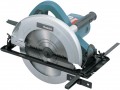 | 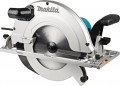 |
|---|---|---|
| Makita N5900B | Makita 5903R | |
from $501.22 | from $586.58 | |
| User reviews | ||
| TOP sellers | ||
| Product type | circular | circular |
| Type | portable | portable |
| Power source | mains (230 V) | mains (230 V) |
Motor | ||
| Engine location | transversely | transversely |
| Power | 2000 W | 2000 W |
| No load blade speed | 4100 rpm | 4500 rpm |
Cutting equipment | ||
| Bar/blade size | 235 mm | 235 mm |
| Bore diameter | 30 mm | 30 mm |
| Cutting depth | 85 mm | 85 mm |
| Cutting depth (45° angle) | 53 mm | 64 mm |
| Saw angle | 50 ° | 45 ° |
Protective functions | ||
| Soft start |  |  |
| Motor brake | | |
Features | ||
| In box | saw blade | |
General | ||
| Noise level | 100 dB | 106 dB |
| Size | 380x255x287 mm | 400x235x286 mm |
| Weight | 7.2 kg | 7.2 kg |
| Added to E-Catalog | january 2011 | december 2009 |


Compare Makita N5900B and 5903R
You may be interested in
My comparisons
Makita N5900B often compared


Makita 5903R often compared

Glossary
No load blade speed
The maximum speed of the disk, provided by a saw of the appropriate design — disk, cut-off, etc. (see "Device").
Note that most of these saws use gearboxes, so that the blade revolutions are much lower than the engine revolutions (see above). This achieves an increase in torque, which in the case of saws is often more important than the high speed of the blade.
As for the specific number of revolutions, it is first of all worth noting that only saws with the same disc diameter can be compared according to this indicator. In these cases, higher speeds provide better performance, but the trade-off is reduced torque; such saws do better with relatively "light" materials. Conversely, low speeds reduce productivity, but allow the blade to effectively "bite" even into dense, stubborn workpieces. More specific recommendations regarding the choice of a saw according to the number of revolutions of the blade can be found in special sources.
Note that most of these saws use gearboxes, so that the blade revolutions are much lower than the engine revolutions (see above). This achieves an increase in torque, which in the case of saws is often more important than the high speed of the blade.
As for the specific number of revolutions, it is first of all worth noting that only saws with the same disc diameter can be compared according to this indicator. In these cases, higher speeds provide better performance, but the trade-off is reduced torque; such saws do better with relatively "light" materials. Conversely, low speeds reduce productivity, but allow the blade to effectively "bite" even into dense, stubborn workpieces. More specific recommendations regarding the choice of a saw according to the number of revolutions of the blade can be found in special sources.
Cutting depth (45° angle)
Maximum cutting depth achieved when sawing at a 45° bevel.
This feature is indicated only for those models that are originally designed for sawing at an angle — for example, due to the special design of the attachment for the blade / blade (in stationary models, see "Type") or due to the inclined support platform (in manual) . The maximum angle of inclination of the saw in such models can be different (see below for more details), however, 45 ° is considered the standard option, so it is for this inclination that data on the depth of cut is given.
The general meaning of this parameter is quite obvious. On the one hand, a greater depth of cut allows you to cope with thicker workpieces and generally gives you more options; on the other hand, an increase in depth requires an increase in the size of the disk / canvas and an increase in power, which, accordingly, affects the price, dimensions and consumption of electricity / fuel.
This feature is indicated only for those models that are originally designed for sawing at an angle — for example, due to the special design of the attachment for the blade / blade (in stationary models, see "Type") or due to the inclined support platform (in manual) . The maximum angle of inclination of the saw in such models can be different (see below for more details), however, 45 ° is considered the standard option, so it is for this inclination that data on the depth of cut is given.
The general meaning of this parameter is quite obvious. On the one hand, a greater depth of cut allows you to cope with thicker workpieces and generally gives you more options; on the other hand, an increase in depth requires an increase in the size of the disk / canvas and an increase in power, which, accordingly, affects the price, dimensions and consumption of electricity / fuel.
Saw angle
The maximum angle at which the working part of the saw can be tilted relative to the vertical. It can be indicated not only for stationary tools, but also for manual ones — in the event that the design provides for a support platform. It is worth paying attention to this parameter if you have to deal with oblique cuts: making such cuts by setting the saw to a certain angle is much more convenient than adjusting this angle manually.
Soft start
A function that starts the engine smoothly without a sudden jerk and gradually brings the tool up to working speed. It makes the start safer and more comfortable because the saw doesn't jerk in your hands at the moment of activation. In practice, soft start is convenient when you need to make a precise cut in mid-air, work in an awkward position, or simply better control the tool from the first seconds.
Compared to models without such a function, the load on the hands, gearbox, and power network is lower. This is especially useful for powerful circular, reciprocating, and chain saws, where a sudden start is felt most strongly.
Motor brake
A feature that quickly stops the saw's attachment after releasing the button or trigger. Depending on the type of tool, this could be the blade, blade, or chain, which stops rotating noticeably faster than with a regular stop by inertia. Motor brake enhances safety because after finishing the cut, the working part doesn't spin for extra seconds. Compared to saws without a motor brake, the tool becomes more convenient for frequent short operations and hand position changes. In practice, this is especially useful for precise cuts, working on a workbench, and in situations where it's important to quickly put away the saw after cutting.
In box
- Disc. The presence of a saw blade is included in the delivery set of the circular tool. It can be either one or several, which allows you to use the saw “out of the box” without the need to purchase additional consumables. If you already have a saw blade or intend to select it for specific tasks, it is worth taking a closer look at the configurations without a blade - they are usually cheaper.
- Chain. One or more chains included as standard with the saw. The presence of a chain with teeth for cutting allows you to do without purchasing a separate executive body for chain saw. However, there are configurations without a chain - it is assumed that the customer already has a chain or he will select the required option himself.
— Saw blade. The presence of one or more saw blades in the complete set of a reciprocating or band tool. They ensure that the saw is ready for use literally immediately after unpacking. There are also configurations of reciprocating or band models without a saw blade - they are cheaper, and the customer has the right to choose a suitable blade independently.
— Dust collector. A dust collector is included with the saw. The dust collector is a container for collecting sawdust and other d...ebris generated during operation; As a rule, such a container is made removable. Installing a dust collector slightly increases the dimensions of the entire tool, but this is compensated by cleanliness and convenience: dust and other production waste mostly settle in the container and not on surrounding objects.
- Charger. The presence of a charging block in the package allows you to charge batteries. Accordingly, for models with batteries, this accessory is necessary to power the battery. However, there are models without a charger. And saw with it may differ in the charger model, the name of which will allow you to learn more about its characteristics and, if necessary or if required (breakdown), purchase a similar one.
— Case (bag). Availability of a case or bag included with the instrument. A case is a container-suitcase made of hard material; bags are usually made of soft material. This way the case provides maximum protection and the bag can be folded away compactly when not in use. The specific type of case that comes with the saw should be specified separately. However, in any case, a complete case or bag will be more convenient for storing and transporting the instrument than impromptu packaging.
- Stand. The stand makes the saw tool more stable, reliable and safe. The presence of a stand is typical for stationary type saw. Mostly these are powerful, productive, large and heavy models that are located in a separate place. The stand can be implemented either with classic legs (bed) or with a cabinet with a tool compartment. The stand can be equipped with various types of saw: circular saw, miter saw, band saw, cutting saw and even chain saw (with electric drive).
— Wheels for transportation. Transport wheels make it easy to move sawing equipment around the shop. The presence of wheels will come in handy when the saw needs to be moved a little to install some large workpieces or simply when cleaning the workshop. As a rule, wheels are typical for stationary saw with a table top or work holder.
- Chain. One or more chains included as standard with the saw. The presence of a chain with teeth for cutting allows you to do without purchasing a separate executive body for chain saw. However, there are configurations without a chain - it is assumed that the customer already has a chain or he will select the required option himself.
— Saw blade. The presence of one or more saw blades in the complete set of a reciprocating or band tool. They ensure that the saw is ready for use literally immediately after unpacking. There are also configurations of reciprocating or band models without a saw blade - they are cheaper, and the customer has the right to choose a suitable blade independently.
— Dust collector. A dust collector is included with the saw. The dust collector is a container for collecting sawdust and other d...ebris generated during operation; As a rule, such a container is made removable. Installing a dust collector slightly increases the dimensions of the entire tool, but this is compensated by cleanliness and convenience: dust and other production waste mostly settle in the container and not on surrounding objects.
- Charger. The presence of a charging block in the package allows you to charge batteries. Accordingly, for models with batteries, this accessory is necessary to power the battery. However, there are models without a charger. And saw with it may differ in the charger model, the name of which will allow you to learn more about its characteristics and, if necessary or if required (breakdown), purchase a similar one.
— Case (bag). Availability of a case or bag included with the instrument. A case is a container-suitcase made of hard material; bags are usually made of soft material. This way the case provides maximum protection and the bag can be folded away compactly when not in use. The specific type of case that comes with the saw should be specified separately. However, in any case, a complete case or bag will be more convenient for storing and transporting the instrument than impromptu packaging.
- Stand. The stand makes the saw tool more stable, reliable and safe. The presence of a stand is typical for stationary type saw. Mostly these are powerful, productive, large and heavy models that are located in a separate place. The stand can be implemented either with classic legs (bed) or with a cabinet with a tool compartment. The stand can be equipped with various types of saw: circular saw, miter saw, band saw, cutting saw and even chain saw (with electric drive).
— Wheels for transportation. Transport wheels make it easy to move sawing equipment around the shop. The presence of wheels will come in handy when the saw needs to be moved a little to install some large workpieces or simply when cleaning the workshop. As a rule, wheels are typical for stationary saw with a table top or work holder.
Noise level
The noise level produced by the saw during operation. Note that this parameter is rather approximate, because in fact, the “loudness of the work” depends not only on the tool, but also on the material being processed and the characteristics of the environment. Nevertheless, the data given in the characteristics make it possible to assess the comfort of working with the tool. The lower this indicator, the less discomfort the noise will cause, and at high values, even special hearing protection may be needed.
Note that the noise level is usually measured in decibels, and this unit is not linear: for example, a difference of 3 dB corresponds to a difference of 2 times, 10 dB — to 10 times. Therefore, it is easiest to evaluate the noise level using comparative tables. Here is a simplified version of such a table for the range in which modern saws operate:
70 dB — loud conversation of several people in close proximity;
75 dB — a cry in the immediate vicinity;
80 dB — truck engine, mechanical alarm ringing;
85 dB — loud scream;
90 dB — freight car at a distance of 7 – 10 m;
95 dB — subway car at a distance of 7 – 10 m;
100 dB — industrial shop;
110 dB — tractor engine;
120 dB — demolition hammer, thunder from a close lightning strike (pain threshold of auditory perception).
Note that the noise level is usually measured in decibels, and this unit is not linear: for example, a difference of 3 dB corresponds to a difference of 2 times, 10 dB — to 10 times. Therefore, it is easiest to evaluate the noise level using comparative tables. Here is a simplified version of such a table for the range in which modern saws operate:
70 dB — loud conversation of several people in close proximity;
75 dB — a cry in the immediate vicinity;
80 dB — truck engine, mechanical alarm ringing;
85 dB — loud scream;
90 dB — freight car at a distance of 7 – 10 m;
95 dB — subway car at a distance of 7 – 10 m;
100 dB — industrial shop;
110 dB — tractor engine;
120 dB — demolition hammer, thunder from a close lightning strike (pain threshold of auditory perception).
Size
General dimensions of the saw. For a stationary tool (see "Type"), this parameter determines primarily the amount of space that will be required for installation; problems with this can only arise in very tight spaces, so in most cases the dimensions of a stationary saw do not need to be given special attention. In the case of hand-held models, the small size makes it easier to work in hard-to-reach places and improves overall usability. On the other hand, a compact tool inevitably turns out to be low-power; and some jobs by definition require large, heavy saws, with large bar lengths or blade diameters.