
Comparison MOBICOOL U30 DC vs MOBICOOL G30 DC
Add to comparison | 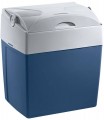 | 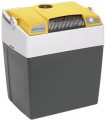 |
|---|---|---|
| MOBICOOL U30 DC | MOBICOOL G30 DC | |
from $78.98 | Outdated Product | |
| TOP sellers | ||
| Type | cooling box | cooling box |
| Principle of operation | thermoelectric | thermoelectric |
| Volume | 30 L | 30 L |
| Operation mode | cooling | cooling |
Specs | ||
| Max. cooling at | 18 °C | 18 °C |
| Min. cooling temperature | 5 °C | |
| Сooling energy consumption | 45 W | 48 W |
| Features | built-in fan removable lid | built-in fan removable lid |
General specs | ||
| Supply voltage | 12 В | 12/230 В |
| Energy label | A+++ | |
| Size (HxWxD) | 45x40x30 cm | 45x40x30 cm |
| Weight | 4 kg | 4.3 kg |
| Added to E-Catalog | june 2014 | june 2014 |


Compare MOBICOOL U30 DC and G30 DC
You may be interested in
My comparisons
MOBICOOL G30 DC often compared


Glossary
Min. cooling temperature
The minimum temperature to which the refrigerator is able to cool the product placed in it when operating in cooling mode. It should be taken into account that the minimum cooling temperature is not always achievable in fact: the actual cooling temperature depends on the ambient temperature and on the capacity of the refrigerator for maximum cooling (for more details on the calculation formula, see "Maximum cooling per (°C)"). However, this applies only to refrigerators that are not equipped with compressors (see Compressor); compressor models are able to reach the minimum cooling temperature regardless of external conditions.
Сooling energy consumption
The power consumed by the refrigerator when operating in cooling mode. The greater this power, the more performant the refrigerator is, usually, and the less time it takes to cool the product. On the other hand, note that more power means more power consumption — which can be critical, for example, during long-term operation from a car battery (that is, when the car engine is turned off).
Supply voltage
The supply voltage for which the car refrigerator is designed. There are several standard options:
— 12 V Standard voltage of the on-board mains of passenger cars, as well as many minibuses and light trucks. Supported by most modern car refrigerators.
— 24 V Standard voltage of the on-board mains of buses, heavy trucks and other large equipment; also found in some SUVs. Car refrigerators "only for 24 V" are almost never produced; as a rule, this option is provided in addition to 12 V.
— 230 V Powered by a standard household outlet. Usually a backup option, in case the refrigerator needs to be turned on outside the car for a while — for example, to pre-cool before a trip. In addition, units with such power can be used as an improvised replacement for a stationary refrigerator — for example, when going to the country, where there is no permanent refrigerator.
— 12 V Standard voltage of the on-board mains of passenger cars, as well as many minibuses and light trucks. Supported by most modern car refrigerators.
— 24 V Standard voltage of the on-board mains of buses, heavy trucks and other large equipment; also found in some SUVs. Car refrigerators "only for 24 V" are almost never produced; as a rule, this option is provided in addition to 12 V.
— 230 V Powered by a standard household outlet. Usually a backup option, in case the refrigerator needs to be turned on outside the car for a while — for example, to pre-cool before a trip. In addition, units with such power can be used as an improvised replacement for a stationary refrigerator — for example, when going to the country, where there is no permanent refrigerator.
Energy label
A parameter that characterizes the efficiency of energy consumption. In modern car refrigerators, there are classes from A + and above; the more “pluses” in the marking, the more economical the device.
Note that the energy class does not describe the actual power consumption, but the efficiency of the device compared to similar models. Therefore, for example, a large built -in A++ class unit may consume more energy than a smaller A+ class armrest refrigerator.
Note that the energy class does not describe the actual power consumption, but the efficiency of the device compared to similar models. Therefore, for example, a large built -in A++ class unit may consume more energy than a smaller A+ class armrest refrigerator.