
Comparison Thermo BD42 vs Thermo BD32
Add to comparison | 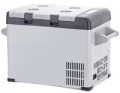 | 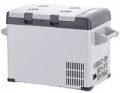 |
|---|---|---|
| Thermo BD42 | Thermo BD32 | |
from $439.96 up to $625.21 | from $419.56 up to $600.56 | |
| TOP sellers | ||
| Type | cooling box | cooling box |
| Principle of operation | compressor | compressor |
| Volume | 42 L | 32 L |
| Operation mode | cooling | cooling |
Specs | ||
| Max. cooling at | 25 °C | 25 °C |
| Min. cooling temperature | 10 °C | 10 °C |
| Сooling energy consumption | 50 W | 45 W |
General specs | ||
| Display |  | |
| Supply voltage | 12/230 В | 12/230 В |
| Energy label | A++ | |
| Size (HxWxD) | 62.5x35.5x46 cm | 52.5x35.5x42 cm |
| Weight | 17.7 kg | 16.1 kg |
| Added to E-Catalog | may 2014 | may 2014 |


Compare Thermo BD42 and BD32
You may be interested in
My comparisons
Thermo BD42 often compared


Glossary
Volume
The volume of the working chamber of the car refrigerator. The larger the volume, the more products can be loaded into the unit at a time. When choosing according to this parameter, it makes sense to select a model with a margin, because it is not recommended to load products too tightly — this adversely affects the quality of the device. On the other hand, note that the volumetric container and dimensions will have the appropriate ones.
Сooling energy consumption
The power consumed by the refrigerator when operating in cooling mode. The greater this power, the more performant the refrigerator is, usually, and the less time it takes to cool the product. On the other hand, note that more power means more power consumption — which can be critical, for example, during long-term operation from a car battery (that is, when the car engine is turned off).
Energy label
A parameter that characterizes the efficiency of energy consumption. In modern car refrigerators, there are classes from A + and above; the more “pluses” in the marking, the more economical the device.
Note that the energy class does not describe the actual power consumption, but the efficiency of the device compared to similar models. Therefore, for example, a large built -in A++ class unit may consume more energy than a smaller A+ class armrest refrigerator.
Note that the energy class does not describe the actual power consumption, but the efficiency of the device compared to similar models. Therefore, for example, a large built -in A++ class unit may consume more energy than a smaller A+ class armrest refrigerator.