
Comparison Thule Force XT L vs Thule Motion XT L
Add to comparison | 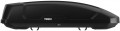 | 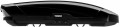 |
|---|---|---|
| Thule Force XT L | Thule Motion XT L | |
| Compare prices 1 | from $799.81 | |
| TOP sellers | ||
The boot is equipped with a central lock. | Model Motion XT L — black gloss, Motion XT L Titan — grey gloss. Crossed sold separately | |
| Type | box | box |
| Installation | crossbars | crossbars |
Specs | ||
| Load capacity | 75 kg | 75 kg |
| Internal capacity | 450 L | 450 L |
| Opening | double-sided | double-sided |
| Skis number | 7 | 7 |
| Lock |  | |
| Material | plastic | plastic |
| External dimensions (LxWxH) | 190x84x46 cm | 195x89x44 cm |
| Weight | 18.7 kg | 20 kg |
| Added to E-Catalog | march 2019 | march 2018 |



Compare Thule Force XT L and Motion XT L
Thule Force XT L and Thule Motion XT L have similar features, such as a load capacity of 75 kg and internal volume of 450 liters. Both boxes open from both sides and are equipped with a lock. However, there are some differences: the Force XT L is slightly smaller (190x84x46 cm) and lighter (18.7 kg), while the Motion XT L is larger (195x89x44 cm) and heavier (20 kg). Also, the Motion XT L can hold 7 pairs of skis or 5 snowboards, while the Force XT L supports only 7 pairs of skis. The choice between them depends on your preferences in size and weight.
Price comparison
You may be interested in
My comparisons
Glossary
External dimensions (LxWxH)
Boot dimensions in working position; usually indicated for open models and boxes (see "Type"). The capacity of the product directly depends on this parameter, in particular, its suitability for transporting large items. And in the case of boxes, dimensions also affect aerodynamics: increasing the height or width increases drag and fuel consumption. At the same time, it should be noted that the aerodynamics of the container also largely depends on its shape.
For open boots, the height is most often not indicated — after all, its actual value usually depends not on the dimensions of the structure, but on the size of the cargo being transported.
For open boots, the height is most often not indicated — after all, its actual value usually depends not on the dimensions of the structure, but on the size of the cargo being transported.
Weight
Net weight of the boot in working (fully assembled) form.
The light weight contributes to fuel economy (especially during long-term use) and also makes it easier to transport the boot outside the car (for example, from storage to the car and back). On the other hand, lightening the product leads either to a decrease in its strength and load capacity, or to an increase in cost. So in certain situations, a relatively heavy boot may be the best choice; and when choosing a light model, you should pay special attention to the claimed load capacity.
The light weight contributes to fuel economy (especially during long-term use) and also makes it easier to transport the boot outside the car (for example, from storage to the car and back). On the other hand, lightening the product leads either to a decrease in its strength and load capacity, or to an increase in cost. So in certain situations, a relatively heavy boot may be the best choice; and when choosing a light model, you should pay special attention to the claimed load capacity.