
Comparison Evenflo EveryStage DLX vs Evenflo Symphony LX
Add to comparison | 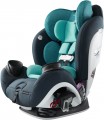 | 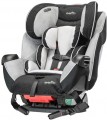 |
|---|---|---|
| Evenflo EveryStage DLX | Evenflo Symphony LX | |
| Outdated Product | Outdated Product | |
| TOP sellers | ||
SensoreSafe technology sends a notification to the smartphone when the temperature inside the car is too low or too high, or if the child unfastened the internal seat belts on his own or the child left the car by himself. Indicator of correct installation. Optional SafeArmour mounting system. | ||
| Weight group | 0+ (0 – 13 kg) 1 (9 – 18 kg) 2 (15 – 25 kg) 3 (22 – 36 kg) | 0+ (0 – 13 kg) 1 (9 – 18 kg) 2 (15 – 25 kg) |
| Age range | 1 – 12 months 8 – 48 months 3 – 7 years old 6 – 12 years old | 1 – 12 months 8 – 48 months 3 – 7 years old |
| Installation | seat belt LATCH | seat belt LATCH |
| Installation | forward facing rear facing | forward facing rear facing |
| Adjustments | backrest tilt headrest height belt height | backrest tilt headrest height belt height |
| Equipment | removable cover anatomical cushion cup holder | removable cover anatomical cushion cup holder |
| Harness type | 5-point | 5-point |
| Weight | 10.5 kg | 9.5 kg |
| Country of origin | USA | USA |
| Color | ||
| Added to E-Catalog | march 2019 | november 2016 |


Compare Evenflo EveryStage DLX and Symphony LX
You may be interested in
My comparisons
Evenflo EveryStage DLX often compared


Evenflo Symphony LX often compared


Glossary
Weight group
The weight of the child for which the car seat is designed.
In total, there are 5 main weight groups: 0 (0 – 10 kg; a rather rare option nowadays), 0+ (0 – 13 kg), 1 (9 – 18 kg), 2 (15 – 25 kg), 3 (22 – 36 kg). However, many car seats are produced that belong to several groups at once: 0 +/1 (0 – 18 kg), 1/2 (9 – 25 kg), 2/3 (15 – 36 kg), 0 + / 1/2 (0 – 25 kg) and even 1/2/3 (9 – 36 kg) and 0+/1/2/3 (0 – 36 kg). Such versatility affects the price, sometimes quite noticeably. On the other hand, a seat that matches several groups at once remains relevant for a child longer, and it usually costs less than two (or even more) separate products, each for a different weight category.
Note also that the weight group is directly related to age; refer to "Age range" for details.
In total, there are 5 main weight groups: 0 (0 – 10 kg; a rather rare option nowadays), 0+ (0 – 13 kg), 1 (9 – 18 kg), 2 (15 – 25 kg), 3 (22 – 36 kg). However, many car seats are produced that belong to several groups at once: 0 +/1 (0 – 18 kg), 1/2 (9 – 25 kg), 2/3 (15 – 36 kg), 0 + / 1/2 (0 – 25 kg) and even 1/2/3 (9 – 36 kg) and 0+/1/2/3 (0 – 36 kg). Such versatility affects the price, sometimes quite noticeably. On the other hand, a seat that matches several groups at once remains relevant for a child longer, and it usually costs less than two (or even more) separate products, each for a different weight category.
Note also that the weight group is directly related to age; refer to "Age range" for details.
Age range
The age of the child for which the car seat is designed. Many models combine several age groups at once; such products, naturally, cost more, but remain relevant for the baby longer.
Note that this indicator is directly related to the weight group; Here are the main age ranges that are found nowadays, and the weight categories to which they correspond:
— 1 – 6 months (weight group 0); rare today.
— 1 – 12 months (weight group 0+); almost completely replaced the category "0".
— 8 – 48 months (weight group 1).
— 3 – 7 years (weight group 2).
— 6 – 12 years (weight group 3). Note that if only this weight category is indicated for the car seat, then it is a booster: a lining without a backrest, which is placed on the standard car seat and allows the grown-up child to use "adult" seat belts. If the note "6 — 12 years" is combined with another weight category - then we have a full-fledged car seat with a backrest.
In conclusion, it is worth saying that this characteristic is not strictly defined: children of the same age may differ in development and build. So, when choosing a seat, first of all, weight should be taken into account, and then age; and if the seat corresponds to the child's height and build, there is nothing wrong with the age discrepancy.
Note that this indicator is directly related to the weight group; Here are the main age ranges that are found nowadays, and the weight categories to which they correspond:
— 1 – 6 months (weight group 0); rare today.
— 1 – 12 months (weight group 0+); almost completely replaced the category "0".
— 8 – 48 months (weight group 1).
— 3 – 7 years (weight group 2).
— 6 – 12 years (weight group 3). Note that if only this weight category is indicated for the car seat, then it is a booster: a lining without a backrest, which is placed on the standard car seat and allows the grown-up child to use "adult" seat belts. If the note "6 — 12 years" is combined with another weight category - then we have a full-fledged car seat with a backrest.
In conclusion, it is worth saying that this characteristic is not strictly defined: children of the same age may differ in development and build. So, when choosing a seat, first of all, weight should be taken into account, and then age; and if the seat corresponds to the child's height and build, there is nothing wrong with the age discrepancy.