
Comparison Gorenje CC 700 vs Gorenje CC 500 white
Add to comparison | 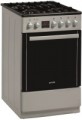 | 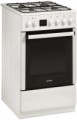 |
|---|---|---|
| Gorenje CC 700 | Gorenje CC 500 white | |
from $264.00 up to $356.40 | from $220.00 up to $290.37 | |
| TOP sellers | ||
Gas control. Auto ignition. Electric oven. Thermostat, oven timer, steam cleaning, grill. Combined (gas hob and electric oven). | ||
| Hob type | gas | gas |
| Burner controls | rotary knobs | rotary knobs |
Oven | ||
| Oven type | electric | electric |
| Oven capacity | 46 L | 46 L |
| Max. temperature | 250 °C | 250 °C |
| Power | 1.85 kW | 1.85 kW |
| Features | thermostat timer convection electric grill oven lighting | thermostat timer convection electric grill oven lighting |
| Oven cleaning | steam cleaning | steam cleaning |
| Guides | frame | frame |
| Number of glass in door | 2 | 2 |
Hob | ||
| Hob material | enamel | enamel |
| Number of gas burners | 4 | 4 |
| Burner grates | cast iron | steel |
More features | ||
| Gas control | hob | hob |
| Auto ignition | hob | hob |
More specs | ||
| Energy class | A | A |
| Connected load | 1.85 kW | 1.85 kW |
| Dimensions (HxWxD) | 85x50x60 cm | 85x50x60 cm |
| Color | ||
| Added to E-Catalog | july 2014 | july 2014 |


Compare Gorenje CC 700 and CC 500
You may be interested in
My comparisons
Gorenje CC 700 often compared


Gorenje CC 500 often compared


Glossary
Burner grates
It is the material from which the burner grates of the stove are made. This parameter is relevant only for gas burners — electric hobs do not have grates.
— Steel grates. The most common type of grates is steel grates coated with a special heat-resistant enamel. They are quite practical, reliable, have a relatively small weight and neat appearance, and at the same time are inexpensive, due to which they are often found in entry-level and middle-level models. The main disadvantage of steel grates can be called the difficulty in cleaning from adhering contaminants — too intensive cleaning can damage the enamel. In addition, they are less durable than cast iron ones, and under heavy dishes containers, they can deform — as a result, the dishes will not stand stably on the stove, and the grate will most likely have to be replaced.
— Cast iron grates. Cast iron grates is much heavier than steel ones. Moreover, they often look more massive and rough. On the other hand, they are more reliable, durable and stable, can cope even with heavy weights and keep their working shape much longer. In addition, cast iron is easier to clean: although dirt comes off worse than enamel, in extreme situations it is quite possible to use abrasive products without fear of damaging the surface.
— Steel grates. The most common type of grates is steel grates coated with a special heat-resistant enamel. They are quite practical, reliable, have a relatively small weight and neat appearance, and at the same time are inexpensive, due to which they are often found in entry-level and middle-level models. The main disadvantage of steel grates can be called the difficulty in cleaning from adhering contaminants — too intensive cleaning can damage the enamel. In addition, they are less durable than cast iron ones, and under heavy dishes containers, they can deform — as a result, the dishes will not stand stably on the stove, and the grate will most likely have to be replaced.
— Cast iron grates. Cast iron grates is much heavier than steel ones. Moreover, they often look more massive and rough. On the other hand, they are more reliable, durable and stable, can cope even with heavy weights and keep their working shape much longer. In addition, cast iron is easier to clean: although dirt comes off worse than enamel, in extreme situations it is quite possible to use abrasive products without fear of damaging the surface.