
Comparison Apple MacBook Air 13 2020 [MVH22] vs Apple MacBook Pro 13 2019 [MUHP2]
Add to comparison | 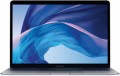 | 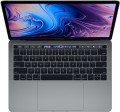 |
|---|---|---|
| Apple MacBook Air 13 2020 [MVH22] | Apple MacBook Pro 13 2019 [MUHP2] | |
| Compare prices 1 | from $1,478.00 | |
| User reviews | ||
| TOP sellers | ||
| Type | ultrabook | ultrabook |
Screen | ||
| Screen size | 13.3 " | 13.3 " |
| Screen type | IPS | IPS |
| Surface treatment | glossy | glossy |
| Screen resolution | 2560x1600 (16:10) | 2560x1600 (16:10) |
| Refresh rate | 60 Hz | 60 Hz |
| Brightness | 500 nt | |
| Light sensor |  | |
CPU | ||
| Series | Core i5 | Core i5 |
| Model | 1030NG7 | 8257U |
| Processor code name | Ice Lake (10th Gen) | |
| Processor cores | 4 | 4 |
| Total threads | 8 | 8 |
| CPU speed | 1.1 GHz | 1.4 GHz |
| TurboBoost / TurboCore frequency | 3.5 GHz | 3.9 GHz |
RAM | ||
| RAM | 8 GB | 8 GB |
| RAM type | DDR4 | DDR3 |
| RAM memory frequency | 3733 MHz | 2133 MHz |
| Amount of RAM slots | built-in | built-in |
Graphics card | ||
| Graphics card type | integrated | integrated |
| Graphics card series | Intel Iris Graphics | Intel Iris Graphics |
| Graphics card model | Iris Plus Graphics G7 | Iris Plus Graphics 645 |
| Test 3DMark06 | 16489 points | |
| Test 3DMark Vantage P | 14442 points | |
Storage | ||
| Drive type | SSD | SSD |
| Drive capacity | 512 GB | 256 GB |
| M.2 drive interface | PCIe 3.0 | |
Connections | ||
| Card reader |  | |
| USB-C 10Gbps | 2 pcs | 2 pcs |
| Thunderbolt interface | x2 v3 | x2 v3 |
| Alternate Mode | | |
| Wi-Fi | Wi-Fi 5 (802.11ac) | Wi-Fi 5 (802.11ac) |
Multimedia | ||
| Webcam | 1280x720 (HD) | 1280x720 (HD) |
| Camera shutter | | |
| Speakers | 2 pcs | 2 pcs |
| Security | fingerprint scanner | fingerprint scanner |
Keyboard | ||
| Backlight | white | white |
| Key design | island type | island type |
| Num block | | |
| Input device | touchpad | touchpad |
| Touch Bar | | |
Battery | ||
| Battery capacity | 50 W*h | 58 W*h |
| Operating time | 12 h | 10 h |
| Power Delivery via USB-C | | |
| Fast charge | | |
General | ||
| Preinstalled OS | MacOS | MacOS |
| Material | aluminum | aluminum |
| Dimensions (WxDxT) | 304x212x16 mm | 304x212x15 mm |
| Weight | 1.29 kg | 1.37 kg |
| Color | ||
| Added to E-Catalog | april 2020 | july 2019 |



Compare Apple MacBook Air 13 (2020) and MacBook Pro 13 (2019)
You may be interested in
Apple MacBook Air 13 (2020) often compared


Apple MacBook Pro 13 (2019) often compared


Glossary
Brightness
The maximum brightness that a laptop screen can provide.
The brighter the ambient light, the brighter the laptop screen should be, otherwise the image on it may be difficult to read. And vice versa: in dim ambient light, high brightness is unnecessary — it greatly burdens the eyes (however, in this case, modern laptops provide brightness control). Thus, the higher this indicator, the more versatile the screen is, the wider the range of conditions in which it can be effectively used. The downside of these benefits is an increase in price and energy consumption.
As for specific values, many modern laptops have a brightness of 250 – 300 nt and even lower. This is quite enough for working under artificial lighting of medium intensity, but in bright natural light, visibility may already be a problem. For use in sunny weather (especially outdoors), it is desirable to have a brightness margin of at least 300 – 350 nt. And in the most advanced models, this parameter can be 350 – 400 nt and even more.
The brighter the ambient light, the brighter the laptop screen should be, otherwise the image on it may be difficult to read. And vice versa: in dim ambient light, high brightness is unnecessary — it greatly burdens the eyes (however, in this case, modern laptops provide brightness control). Thus, the higher this indicator, the more versatile the screen is, the wider the range of conditions in which it can be effectively used. The downside of these benefits is an increase in price and energy consumption.
As for specific values, many modern laptops have a brightness of 250 – 300 nt and even lower. This is quite enough for working under artificial lighting of medium intensity, but in bright natural light, visibility may already be a problem. For use in sunny weather (especially outdoors), it is desirable to have a brightness margin of at least 300 – 350 nt. And in the most advanced models, this parameter can be 350 – 400 nt and even more.
Model
The specific model of the processor installed in the laptop, or rather, the processor index within its series (see above). Knowing the full name of the processor (series and model), you can find detailed information on it (up to practical reviews) and clarify its capabilities.
Processor code name
The code name of the processor installed in the laptop.
This parameter primarily characterizes the generation to which the processor belongs and the microarchitecture used in it. At the same time, chips belonging to the same microarchitecture/generation may have different code names; in such cases, they differ by other parameters—overall positioning, belonging to specific series (see above), presence/absence of certain specific features, etc.
Currently, Intel processors have the following code names: Coffee Lake, Comet Lake, Ice Lake, Tiger Lake, Jasper Lake, Alder Lake, Raptor Lake (13 Gen), Alder Lake-N, Raptor Lake Refresh (14 Gen), Meteor Lake (Series 1), Raptor Lake (Series 1), Arrow Lake (Series 2), Lunar Lake (Series 2), Raptor Lake (Series 2), Panther Lake (Series 3). For AMD, the list looks like this: Zen 2 Renoir, Zen 2 Lucienne, Zen 3 Cezanne..., Zen 3 Barcelo, Zen 3+ Rembrandt, Zen 3+ Rembrandt R, Zen 2 Mendocino, Zen 3 Barcelo R, Zen 4 Dragon Range, Zen 4 Phoenix, Zen 4 Hawk Point, Zen 5 Strix Point, Zen 5 Strix Halo, Zen 5 Krackan Point, Zen 5 Gorgon Point. Detailed data on different code names can be found in specialized sources.
This parameter primarily characterizes the generation to which the processor belongs and the microarchitecture used in it. At the same time, chips belonging to the same microarchitecture/generation may have different code names; in such cases, they differ by other parameters—overall positioning, belonging to specific series (see above), presence/absence of certain specific features, etc.
Currently, Intel processors have the following code names: Coffee Lake, Comet Lake, Ice Lake, Tiger Lake, Jasper Lake, Alder Lake, Raptor Lake (13 Gen), Alder Lake-N, Raptor Lake Refresh (14 Gen), Meteor Lake (Series 1), Raptor Lake (Series 1), Arrow Lake (Series 2), Lunar Lake (Series 2), Raptor Lake (Series 2), Panther Lake (Series 3). For AMD, the list looks like this: Zen 2 Renoir, Zen 2 Lucienne, Zen 3 Cezanne..., Zen 3 Barcelo, Zen 3+ Rembrandt, Zen 3+ Rembrandt R, Zen 2 Mendocino, Zen 3 Barcelo R, Zen 4 Dragon Range, Zen 4 Phoenix, Zen 4 Hawk Point, Zen 5 Strix Point, Zen 5 Strix Halo, Zen 5 Krackan Point, Zen 5 Gorgon Point. Detailed data on different code names can be found in specialized sources.
CPU speed
The clock speed of the processor installed in the laptop (for multi-core processors, the frequency of each individual core).
Theoretically, a higher clock speed has a positive effect on performance, as it allows the processor to perform more operations per unit of time. However, in fact, the capabilities of the CPU depend on a number of other characteristics — primarily on the series to which it belongs (see above). It even happens that of the two chips, the more performant in the overall result is the slower one. With this in mind, it makes sense to compare by clock frequency only processors of the same series, and ideally, also of the same generation; and the laptop as a whole should be judged by the complex characteristics of the system, as well as by the results of tests (see below).
Theoretically, a higher clock speed has a positive effect on performance, as it allows the processor to perform more operations per unit of time. However, in fact, the capabilities of the CPU depend on a number of other characteristics — primarily on the series to which it belongs (see above). It even happens that of the two chips, the more performant in the overall result is the slower one. With this in mind, it makes sense to compare by clock frequency only processors of the same series, and ideally, also of the same generation; and the laptop as a whole should be judged by the complex characteristics of the system, as well as by the results of tests (see below).
TurboBoost / TurboCore frequency
Processor clock speed achieved in TurboBoost or TurboCore "overclocking" mode.
Turbo Boost and Turbo Core technologies are used by different manufacturers (Intel and AMD, respectively), but they have the same principle of operation: load distribution from more loaded processor cores to less loaded ones to improve performance. The "overclocking" mode is characterized by an increased clock frequency, and it is indicated in this case.
For more information about clock speed in general, see the relevant paragraph above.
Turbo Boost and Turbo Core technologies are used by different manufacturers (Intel and AMD, respectively), but they have the same principle of operation: load distribution from more loaded processor cores to less loaded ones to improve performance. The "overclocking" mode is characterized by an increased clock frequency, and it is indicated in this case.
For more information about clock speed in general, see the relevant paragraph above.
RAM type
Laptops mainly use different variants of DDR (so-called double data transfer memory). Here is a list of common types of such memory:
— DDR3. Third generation DDR RAM. Outperforms outdated DDR2 in terms of speed and power efficiency. However, it is also outdated against the background of the fourth version and new items - DDR5.
— DDR3L. A modification of DDR3 memory that supports operation at a reduced voltage - 1.35 V instead of 1.5 V (Low Voltage - hence the index L). Lower voltage contributes to both lower power consumption and better performance. Note that conventional DDR3 memory cannot be installed in such a slot, while the reverse option is quite possible.
— DDR4. A memory standard released in 2014. Introduced further improvements in speed (up to 25.6 GB / s in the future) and energy efficiency. The most popular among laptops of recent years of release.
— DDR5. The procession of the fifth generation of the DDR standard began at the turn of 2020-2021. It provides for approximately a twofold increase in memory subsystem performance and increased bandwidth compared to DDR4. Instead of a single 64-bit data channel, DDR5 uses a pair of independent 32-bit channels that work with 16-byte packets and allow 64 bytes of information to be delivered per clock on each channel. New memory modules require a voltage of 1.1 V, and the maximum volume of one DDR5 bar can rea...ch an impressive 128 GB.
It is worth noting that different types of RAM are not interchangeable.
Some laptops have LPDDR4, LPDDR4X, LPDDR5, LPDDR5X RAM. It was developed by a specialist for mobile devices and is non-expandable, since the corresponding memory modules are built directly into the motherboard. The use of "RAM" standards LPDDR is determined by the achievement of an optimal balance between the performance of the laptop, its size and battery life.
— DDR3. Third generation DDR RAM. Outperforms outdated DDR2 in terms of speed and power efficiency. However, it is also outdated against the background of the fourth version and new items - DDR5.
— DDR3L. A modification of DDR3 memory that supports operation at a reduced voltage - 1.35 V instead of 1.5 V (Low Voltage - hence the index L). Lower voltage contributes to both lower power consumption and better performance. Note that conventional DDR3 memory cannot be installed in such a slot, while the reverse option is quite possible.
— DDR4. A memory standard released in 2014. Introduced further improvements in speed (up to 25.6 GB / s in the future) and energy efficiency. The most popular among laptops of recent years of release.
— DDR5. The procession of the fifth generation of the DDR standard began at the turn of 2020-2021. It provides for approximately a twofold increase in memory subsystem performance and increased bandwidth compared to DDR4. Instead of a single 64-bit data channel, DDR5 uses a pair of independent 32-bit channels that work with 16-byte packets and allow 64 bytes of information to be delivered per clock on each channel. New memory modules require a voltage of 1.1 V, and the maximum volume of one DDR5 bar can rea...ch an impressive 128 GB.
It is worth noting that different types of RAM are not interchangeable.
Some laptops have LPDDR4, LPDDR4X, LPDDR5, LPDDR5X RAM. It was developed by a specialist for mobile devices and is non-expandable, since the corresponding memory modules are built directly into the motherboard. The use of "RAM" standards LPDDR is determined by the achievement of an optimal balance between the performance of the laptop, its size and battery life.
RAM memory frequency
The clock speed of the RAM installed in the laptop.
The higher the frequency (with the same type and amount of memory) — the higher the performance of RAM in general and the faster the laptop will cope with resource-intensive tasks. However modules with the same frequency may differ somewhat in actual performance due to differences in other characteristics; but this difference becomes significant only in very specific cases, for the average user it is not critical. As for specific values, the most popular modules on the modern market are 2400 MHz, 2666 MHz, 2933 MHz and 3200 MHz. Memory at 2133 MHz or less is found mainly in outdated and low-cost devices, and in high-performance configurations this parameter is 2933 MHz, 3200 MHz, 4266 MHz, 4800 MHz, 5200 MHz, 5500 MHz, 5600 MHz, 6000 MHz, 6400 MHz and more.
The higher the frequency (with the same type and amount of memory) — the higher the performance of RAM in general and the faster the laptop will cope with resource-intensive tasks. However modules with the same frequency may differ somewhat in actual performance due to differences in other characteristics; but this difference becomes significant only in very specific cases, for the average user it is not critical. As for specific values, the most popular modules on the modern market are 2400 MHz, 2666 MHz, 2933 MHz and 3200 MHz. Memory at 2133 MHz or less is found mainly in outdated and low-cost devices, and in high-performance configurations this parameter is 2933 MHz, 3200 MHz, 4266 MHz, 4800 MHz, 5200 MHz, 5500 MHz, 5600 MHz, 6000 MHz, 6400 MHz and more.
Graphics card model
GeForce graphics cards from NVIDIA: RTX including RTX 2060, RTX 2060 Max-Q, RTX 2070, RTX 2070 Max-Q, RTX 2070 Super, RTX 2070 Super Max-Q, RTX 2080, RTX 2080 Max-Q, RTX 2080 Super, RTX 2080 Super Max-Q, RTX 3050, RTX 3050 Ti, RTX 3060, RTX 3060 Max-Q, RTX 3070, RTX 3070 Max-Q, RTX 3070 Ti, RTX 3080, RTX 3080 Ti, RTX 4050, RTX 4060, RTX 4070, RTX 4080, RTX 4090, RTX 5050, RTX 5060, RTX 5070, RTX 5070 Ti, RTX 5080, RTX 5090; MX1xx...including MX110, MX130, and MX150, MX2xx (MX230 and MX250), MX3xx (MX330 and MX350), MX450, GTX which includes GTX 1050, GTX 1060, GTX 1060 Max-Q, GTX 1070, GTX 1070 Max-Q, GTX 1080, GTX 1080 Max-Q, GTX 1650, GTX 1650 Max-Q, GTX 1650 Ti, GTX 1660 Ti, GTX 1660 Ti Max-Q and more. AMD offers graphics cards Radeon 520, Radeon 530 (535), Radeon 540X, Radeon 610 (625, 630), Radeon RX 550 (550X, 560), Radeon RX 640, Radeon RX 5500M, Radeon RX 6800M and Radeon Pro.
It should be noted that all the models mentioned above are discrete. Indeed, for a configuration with discrete graphics, the specific model of the separate video adapter is indicated; if it is supplemented by an integrated module, the name of this module can be clarified by the official processor specifications.
It is also worth mentioning that this section provides not the full name of the model, but only its name within the series (with the series itself mentioned separately—see above). Nevertheless, knowing the series and model, one can easily find detailed information about the graphics card.
It should be noted that all the models mentioned above are discrete. Indeed, for a configuration with discrete graphics, the specific model of the separate video adapter is indicated; if it is supplemented by an integrated module, the name of this module can be clarified by the official processor specifications.
It is also worth mentioning that this section provides not the full name of the model, but only its name within the series (with the series itself mentioned separately—see above). Nevertheless, knowing the series and model, one can easily find detailed information about the graphics card.
Test 3DMark06
The result shown by the laptop's graphics card in the 3DMark06 test.
This test primarily determines how well the graphics card handles intensive loads, particularly with detailed 3D graphics. The test result is indicated in points; the more points, the higher the performance of the video adapter. High results in 3DMark06 are especially important for gaming laptops and advanced workstations. However, their reliability is questionable because measurements are taken on graphics cards with different TDP and an averaged score is given. Thus, your laptop may have a higher or lower result than indicated — it all depends on the TDP of the installed graphics card.
This test primarily determines how well the graphics card handles intensive loads, particularly with detailed 3D graphics. The test result is indicated in points; the more points, the higher the performance of the video adapter. High results in 3DMark06 are especially important for gaming laptops and advanced workstations. However, their reliability is questionable because measurements are taken on graphics cards with different TDP and an averaged score is given. Thus, your laptop may have a higher or lower result than indicated — it all depends on the TDP of the installed graphics card.