
Comparison Apple MacBook Pro 16 2019 [MVVJ2] vs Apple MacBook Pro 15 2019 [MV902]
Add to comparison | 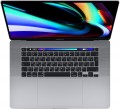 | 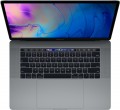 |
|---|---|---|
| Apple MacBook Pro 16 2019 [MVVJ2] | Apple MacBook Pro 15 2019 [MV902] | |
from $783.32 | from $346.99 | |
| User reviews | ||
| TOP sellers | ||
| Type | laptop | laptop |
Screen | ||
| Screen size | 16 " | 15.4 " |
| Screen type | IPS | IPS |
| Surface treatment | glossy | glossy |
| Screen resolution | 3072x1920 (16:10) | 2880x1800 (16:10) |
| Refresh rate | 60 Hz | 60 Hz |
| Brightness | 500 nt | 500 nt |
| Light sensor |  | |
CPU | ||
| Series | Core i7 | Core i7 |
| Model | 9750H | 9750H |
| Processor code name | Coffee Lake (9th Gen) | Coffee Lake (9th Gen) |
| Processor cores | 6 | 6 |
| Total threads | 12 | 12 |
| CPU speed | 2.6 GHz | 2.6 GHz |
| TurboBoost / TurboCore frequency | 4.5 GHz | 4.5 GHz |
| Test 3DMark06 | 10944 points | 10641 points |
| Test Passmark CPU Mark | 13550 points | 13817 points |
| SuperPI 1M | 8.35 с | 8.3 с |
RAM | ||
| RAM | 16 GB | 16 GB |
| RAM type | DDR4 | DDR4 |
| RAM memory frequency | 2666 MHz | 2400 MHz |
| Amount of RAM slots | built-in | built-in |
Graphics card | ||
| Graphics card type | dedicated | dedicated |
| Graphics card series | AMD Radeon | AMD Radeon |
| Graphics card model | Pro 5300M | Pro 555X |
| Video memory | 4 GB | 4 GB |
| Video card memory type | GDDR6 | GDDR5 |
Storage | ||
| Drive type | SSD | SSD |
| Drive capacity | 512 GB | 256 GB |
Connections | ||
| Card reader |  | |
| USB-C 10Gbps | 4 pcs | 4 pcs |
| Thunderbolt interface | x4 v3 | x4 v3 |
| Alternate Mode | | |
| Monitors connection | 4 | |
| Wi-Fi | Wi-Fi 5 (802.11ac) | Wi-Fi 5 (802.11ac) |
| Bluetooth | v5.0 | |
Multimedia | ||
| Webcam | 1280x720 (HD) | 1280x720 (HD) |
| Camera shutter | | |
| Speakers | 6 pcs | 2 pcs |
| Security | fingerprint scanner | fingerprint scanner |
Keyboard | ||
| Backlight | white | white |
| Key design | island type | island type |
| Num block | | |
| Input device | touchpad | touchpad |
| Touch Bar | | |
Battery | ||
| Battery capacity | 100 W*h | 84 W*h |
| Operating time | 11 h | 10 h |
| Power Delivery via USB-C | | |
| Fast charge | | |
General | ||
| Preinstalled OS | MacOS | MacOS |
| Material | aluminum | aluminum |
| Dimensions (WxDxT) | 358x246x16 mm | 349x241x16 mm |
| Weight | 2 kg | 1.83 kg |
| Color | ||
| Added to E-Catalog | november 2019 | june 2019 |


Compare Apple MacBook Pro 16 (2019) and MacBook Pro 15 (2019)
You may be interested in
Apple MacBook Pro 16 (2019) often compared


Apple MacBook Pro 15 (2019) often compared


Glossary
Screen size
Diagonal size of laptop display.
The larger the screen, the more convenient the laptop for watching high-definition movies, modern games, working with large-format graphic materials, etc. Large screens are especially important for multimedia and gaming models. On the other hand, the diagonal of the display directly affects the size and cost of the entire device. So if portability is key, it makes sense to pay attention to relatively small solutions; especially since most modern laptops have video outputs like HDMI or DisplayPort and allow connection of large-format external monitors.
In light of all this, the actual maximum for laptops these days is 17"(17.3"); however larger devices (18") reappeared at the beginning of 2023. The standard option for general purpose laptops is 15"(15.6"), less often 16", a diagonal of 13"(13.3") or 14" is considered small by the standards of such And smaller screens can be found mainly in specific compact varieties of laptops — ultrabooks, 2 in 1, transformers, netbooks; among such devices there are solutions for 12 ", 11" and even 10" or less.
The larger the screen, the more convenient the laptop for watching high-definition movies, modern games, working with large-format graphic materials, etc. Large screens are especially important for multimedia and gaming models. On the other hand, the diagonal of the display directly affects the size and cost of the entire device. So if portability is key, it makes sense to pay attention to relatively small solutions; especially since most modern laptops have video outputs like HDMI or DisplayPort and allow connection of large-format external monitors.
In light of all this, the actual maximum for laptops these days is 17"(17.3"); however larger devices (18") reappeared at the beginning of 2023. The standard option for general purpose laptops is 15"(15.6"), less often 16", a diagonal of 13"(13.3") or 14" is considered small by the standards of such And smaller screens can be found mainly in specific compact varieties of laptops — ultrabooks, 2 in 1, transformers, netbooks; among such devices there are solutions for 12 ", 11" and even 10" or less.
Screen resolution
The resolution of the screen installed in the laptop — that is, the size of the screen in pixels horizontally and vertically.
Higher resolution, on the one hand, gives a sharper, more detailed image; on the other hand, it increases the cost of the laptop. The latter is connected not only with the cost of the displays themselves, but also with the fact that in order to work effectively at high resolutions, you need the appropriate filling (primarily a graphics card). This is especially true in games; so if you are looking for a laptop with a high-resolution screen that can effectively "run" modern games — you should pay attention not only to the characteristics of the display, but also to other data (the type and parameters of the graphics card, test results, the ability to work with certain games — see everything below). On the other hand, if the device is planned to be used for simple tasks such as working with documents, surfing the Internet and watching videos, you can not pay much attention to the “hardware” parameters: anyway, they are selected so that the laptop is guaranteed to be able to cope with such tasks on full resolution of the "native" screen.
As for specific numbers, the resolution options that are relevant today can be divided into 3 groups: Full HD (1080), Quad HD and UltraHD 4K. Here is a more detailed description of them:
...— Full HD (1080). Initially, the Full HD standard provides a frame size of 1920x1080, and it is this resolution that is most often used in laptop screens from this category. However, in addition to this, other resolution options are also included in this format, where the vertical size is at least 1080 pixels, but does not reach 1440 pixels. Examples include 1920x1200 and 2560x1080. In general, Full HD displays provide a good balance between cost, image quality and laptop hardware requirements. Because of this, nowadays they are extremely widespread; matrices of this standard can be found even in low-cost devices, although they are mainly used in more advanced technology.
— Quad HD. A transitional option between the popular Full HD 1080 (see above) and the high-end and expensive UltraHD 4K. The vertical size of such screens starts from 1440 pixels and can reach 2000 pixels. Note that QuadHD resolutions are especially popular in Apple laptops; most often, such devices have 2560x1600 screens, although there are other options.
— Ultra HD 4K. The most advanced standard used in modern laptops. The vertical size of such screens is at least 2160 dots (up to 2400 in some configurations); the classic resolution of a modern UltraHD matrix is 3840x2160, but there are other values. Anyway, a 4K display allows for high image quality, however, it costs accordingly — including due to the corresponding requirements for a graphics adapter; in addition, to work with high resolutions, it can be more convenient to connect an external monitor to the laptop. Thus, such screens are used relatively rarely, and mainly among premium laptops.
Higher resolution, on the one hand, gives a sharper, more detailed image; on the other hand, it increases the cost of the laptop. The latter is connected not only with the cost of the displays themselves, but also with the fact that in order to work effectively at high resolutions, you need the appropriate filling (primarily a graphics card). This is especially true in games; so if you are looking for a laptop with a high-resolution screen that can effectively "run" modern games — you should pay attention not only to the characteristics of the display, but also to other data (the type and parameters of the graphics card, test results, the ability to work with certain games — see everything below). On the other hand, if the device is planned to be used for simple tasks such as working with documents, surfing the Internet and watching videos, you can not pay much attention to the “hardware” parameters: anyway, they are selected so that the laptop is guaranteed to be able to cope with such tasks on full resolution of the "native" screen.
As for specific numbers, the resolution options that are relevant today can be divided into 3 groups: Full HD (1080), Quad HD and UltraHD 4K. Here is a more detailed description of them:
...— Full HD (1080). Initially, the Full HD standard provides a frame size of 1920x1080, and it is this resolution that is most often used in laptop screens from this category. However, in addition to this, other resolution options are also included in this format, where the vertical size is at least 1080 pixels, but does not reach 1440 pixels. Examples include 1920x1200 and 2560x1080. In general, Full HD displays provide a good balance between cost, image quality and laptop hardware requirements. Because of this, nowadays they are extremely widespread; matrices of this standard can be found even in low-cost devices, although they are mainly used in more advanced technology.
— Quad HD. A transitional option between the popular Full HD 1080 (see above) and the high-end and expensive UltraHD 4K. The vertical size of such screens starts from 1440 pixels and can reach 2000 pixels. Note that QuadHD resolutions are especially popular in Apple laptops; most often, such devices have 2560x1600 screens, although there are other options.
— Ultra HD 4K. The most advanced standard used in modern laptops. The vertical size of such screens is at least 2160 dots (up to 2400 in some configurations); the classic resolution of a modern UltraHD matrix is 3840x2160, but there are other values. Anyway, a 4K display allows for high image quality, however, it costs accordingly — including due to the corresponding requirements for a graphics adapter; in addition, to work with high resolutions, it can be more convenient to connect an external monitor to the laptop. Thus, such screens are used relatively rarely, and mainly among premium laptops.
Test 3DMark06
The result shown by the laptop processor in 3DMark06.
This test is primarily focused on testing performance in games — in particular, the ability of the processor to process advanced graphics and artificial intelligence elements. Test scores are reported as scores; the higher this number, the higher the performance of the tested chip. Good 3DMark06 results are especially important for gaming laptops.
This test is primarily focused on testing performance in games — in particular, the ability of the processor to process advanced graphics and artificial intelligence elements. Test scores are reported as scores; the higher this number, the higher the performance of the tested chip. Good 3DMark06 results are especially important for gaming laptops.
Test Passmark CPU Mark
The result shown by the laptop processor in the Passmark CPU Mark test.
Passmark CPU Mark is a comprehensive test that is more detailed and reliable than the popular 3DMark06 (see above). It checks not only the gaming capabilities of the CPU, but also its performance in other modes, based on which it displays the overall score; this score can be used to fairly reliably evaluate the processor as a whole (the more points, the higher the performance).
Passmark CPU Mark is a comprehensive test that is more detailed and reliable than the popular 3DMark06 (see above). It checks not only the gaming capabilities of the CPU, but also its performance in other modes, based on which it displays the overall score; this score can be used to fairly reliably evaluate the processor as a whole (the more points, the higher the performance).
SuperPI 1M
The result shown by the laptop processor in the SuperPI 1M test.
The essence of this test is to calculate the number "pi" to the millionth decimal place. The time spent on this calculation is the final result. Accordingly, the more powerful the processor, the smaller the result will be (this SuperPI 1M is fundamentally different from many other tests).
The essence of this test is to calculate the number "pi" to the millionth decimal place. The time spent on this calculation is the final result. Accordingly, the more powerful the processor, the smaller the result will be (this SuperPI 1M is fundamentally different from many other tests).
RAM memory frequency
The clock speed of the RAM installed in the laptop.
The higher the frequency (with the same type and amount of memory) — the higher the performance of RAM in general and the faster the laptop will cope with resource-intensive tasks. However modules with the same frequency may differ somewhat in actual performance due to differences in other characteristics; but this difference becomes significant only in very specific cases, for the average user it is not critical. As for specific values, the most popular modules on the modern market are 2400 MHz, 2666 MHz, 2933 MHz and 3200 MHz. Memory at 2133 MHz or less is found mainly in outdated and low-cost devices, and in high-performance configurations this parameter is 2933 MHz, 3200 MHz, 4266 MHz, 4800 MHz, 5200 MHz, 5500 MHz, 5600 MHz, 6000 MHz, 6400 MHz and more.
The higher the frequency (with the same type and amount of memory) — the higher the performance of RAM in general and the faster the laptop will cope with resource-intensive tasks. However modules with the same frequency may differ somewhat in actual performance due to differences in other characteristics; but this difference becomes significant only in very specific cases, for the average user it is not critical. As for specific values, the most popular modules on the modern market are 2400 MHz, 2666 MHz, 2933 MHz and 3200 MHz. Memory at 2133 MHz or less is found mainly in outdated and low-cost devices, and in high-performance configurations this parameter is 2933 MHz, 3200 MHz, 4266 MHz, 4800 MHz, 5200 MHz, 5500 MHz, 5600 MHz, 6000 MHz, 6400 MHz and more.
Graphics card model
GeForce graphics cards from NVIDIA: RTX including RTX 2060, RTX 2060 Max-Q, RTX 2070, RTX 2070 Max-Q, RTX 2070 Super, RTX 2070 Super Max-Q, RTX 2080, RTX 2080 Max-Q, RTX 2080 Super, RTX 2080 Super Max-Q, RTX 3050, RTX 3050 Ti, RTX 3060, RTX 3060 Max-Q, RTX 3070, RTX 3070 Max-Q, RTX 3070 Ti, RTX 3080, RTX 3080 Ti, RTX 4050, RTX 4060, RTX 4070, RTX 4080, RTX 4090, RTX 5050, RTX 5060, RTX 5070, RTX 5070 Ti, RTX 5080, RTX 5090; MX1xx...including MX110, MX130, and MX150, MX2xx (MX230 and MX250), MX3xx (MX330 and MX350), MX450, GTX which includes GTX 1050, GTX 1060, GTX 1060 Max-Q, GTX 1070, GTX 1070 Max-Q, GTX 1080, GTX 1080 Max-Q, GTX 1650, GTX 1650 Max-Q, GTX 1650 Ti, GTX 1660 Ti, GTX 1660 Ti Max-Q and more. AMD offers graphics cards Radeon 520, Radeon 530 (535), Radeon 540X, Radeon 610 (625, 630), Radeon RX 550 (550X, 560), Radeon RX 640, Radeon RX 5500M, Radeon RX 6800M and Radeon Pro.
It should be noted that all the models mentioned above are discrete. Indeed, for a configuration with discrete graphics, the specific model of the separate video adapter is indicated; if it is supplemented by an integrated module, the name of this module can be clarified by the official processor specifications.
It is also worth mentioning that this section provides not the full name of the model, but only its name within the series (with the series itself mentioned separately—see above). Nevertheless, knowing the series and model, one can easily find detailed information about the graphics card.
It should be noted that all the models mentioned above are discrete. Indeed, for a configuration with discrete graphics, the specific model of the separate video adapter is indicated; if it is supplemented by an integrated module, the name of this module can be clarified by the official processor specifications.
It is also worth mentioning that this section provides not the full name of the model, but only its name within the series (with the series itself mentioned separately—see above). Nevertheless, knowing the series and model, one can easily find detailed information about the graphics card.
Video card memory type
Type of specialized graphics memory used in a discrete graphics card (see "Type of graphics card").
— GDDR3. The third generation of memory based on double data rate technology. Compared to the previous GDDR 2 standard, it can operate at a higher frequency and with lower heat dissipation. However, it is gradually being replaced by more advanced standards, particularly GDDR5.
— GDDR5. The fifth generation of graphics memory with double data rate; in this generation, the DDR3 standard of RAM was used as a basis for the first time. Considered quite advanced, mainly characteristic of high-performance graphics cards.
— GDDR5X. A modification of the above-described GDDR5, introduced in early 2016. Compared to the original, it provided a twofold increase in maximum bandwidth, which accordingly affected overall performance. However, such graphics cards are quite expensive, and therefore are mainly used in premium-class gaming laptops.
— GDDR6. Further development of GDDR-type graphics memory after GDDR5X, introduced in 2017. Provides twice the speed of the original GDDR5 with slightly lower power consumption; GDDR6 capabilities are sufficient, in particular, for use in virtual reality systems and work with resolutions above 4K. The use of such memory is characteristic of the most advanced graphics cards, predominantly installed in powerful gaming laptops.
— GDDR7. The new generation of graphics memory released in 2024. Thanks to...a binary modulator based on PAM3 (instead of NRZ in GDDR6), GDDR7 provides higher data transfer rates with lower power consumption. This leads to increased graphics card performance, especially in tasks with high memory demands, such as gaming in 4K and 8K, rendering, AI calculations, and professional graphics.
— HBM2. The second generation of HBM type memory. Unlike the GDDR described above, HBM is not a modification of the regular DDR-type "RAM," but a separate type of memory developed, among other things, for graphics cards. Due to design features, such memory provides high bandwidth at a low clock frequency; the latter positively affects power consumption and heat dissipation, and in terms of performance, HBM2 surpasses even the most advanced versions of GDDR. The traditional drawback of this option is high cost; because of it, graphics cards with this type of memory are mainly installed in premium-class laptops.
— GDDR3. The third generation of memory based on double data rate technology. Compared to the previous GDDR 2 standard, it can operate at a higher frequency and with lower heat dissipation. However, it is gradually being replaced by more advanced standards, particularly GDDR5.
— GDDR5. The fifth generation of graphics memory with double data rate; in this generation, the DDR3 standard of RAM was used as a basis for the first time. Considered quite advanced, mainly characteristic of high-performance graphics cards.
— GDDR5X. A modification of the above-described GDDR5, introduced in early 2016. Compared to the original, it provided a twofold increase in maximum bandwidth, which accordingly affected overall performance. However, such graphics cards are quite expensive, and therefore are mainly used in premium-class gaming laptops.
— GDDR6. Further development of GDDR-type graphics memory after GDDR5X, introduced in 2017. Provides twice the speed of the original GDDR5 with slightly lower power consumption; GDDR6 capabilities are sufficient, in particular, for use in virtual reality systems and work with resolutions above 4K. The use of such memory is characteristic of the most advanced graphics cards, predominantly installed in powerful gaming laptops.
— GDDR7. The new generation of graphics memory released in 2024. Thanks to...a binary modulator based on PAM3 (instead of NRZ in GDDR6), GDDR7 provides higher data transfer rates with lower power consumption. This leads to increased graphics card performance, especially in tasks with high memory demands, such as gaming in 4K and 8K, rendering, AI calculations, and professional graphics.
— HBM2. The second generation of HBM type memory. Unlike the GDDR described above, HBM is not a modification of the regular DDR-type "RAM," but a separate type of memory developed, among other things, for graphics cards. Due to design features, such memory provides high bandwidth at a low clock frequency; the latter positively affects power consumption and heat dissipation, and in terms of performance, HBM2 surpasses even the most advanced versions of GDDR. The traditional drawback of this option is high cost; because of it, graphics cards with this type of memory are mainly installed in premium-class laptops.
Drive capacity
The total amount of built-in storage is typically shown as the cumulative capacity when multiple drives are installed. For example, 512 GB + 1 TB is considered 1.5 TB, even though they are physically two separate drives. When total storage capacity reaches 2 TB and above, laptops are often chosen not just to "have enough space," but for specific scenarios involving heavy data: large game libraries, RAW photos, video editing projects, local backups, virtual machines. Moreover, "2 TB on one drive" and "2 TB total" can feel different: one large SSD is easier to manage and transfer projects, while a total of 2 TB might be more convenient if it comprises two drives with different roles, like a fast SSD for the system and work files plus a second drive for archiving. The speed and comfort depend on the exact type of drives. For example, for a videographer, 2–4 TB total offers the ability to keep active projects locally while on the go, and for a gamer, it allows installing many games without constant deletions, especially if part of the capacity is allocated to a separate drive.