
Comparison Momert 5200 vs Medisana PSD
Add to comparison | 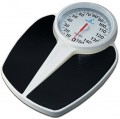 | 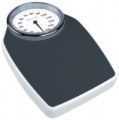 |
|---|---|---|
| Momert 5200 | Medisana PSD | |
| Outdated Product | from $135.00 | |
| TOP sellers | ||
There is a similar model with 5210 with chrome trim. | ||
| Scales type | floor | floor |
| Mechanism | mechanical | mechanical |
| Max. measurement weight | 160 kg | 150 kg |
| Scale division | 1000 g | 500 g |
General | ||
| Platform material | rubber | metal |
| Dimensions | 435x320x70 mm | 285x425x85 mm |
| Color | ||
| Added to E-Catalog | january 2019 | october 2012 |


Compare Momert 5200 and Medisana PSD
You may be interested in
Momert 5200 often compared


Glossary
Max. measurement weight
The largest weight that is allowed to be placed on the platform of this scale model. If this parameter is exceeded, the scales, at best, will not be able to show the correct data, at worst, they will completely fail. Obviously, the maximum weight is directly related to the purpose, but even kitchen scales can weigh both up to 5 kg and up to 20 kg.
Actually, floor scales have the largest maximum measurement weight, in such models it can reach 200 kg or even more. And the most delicate are jewelry models (refer to "Type"). Also note that in mechanical devices (refer to "Mechanism") the scale is usually graduated to the maximum weight.
Now on the market there are scales with such a maximum weight: up to 1 kg, up to 5 kg, up to 10 kg, up to 50 kg, up to 150 kg, up to 200 kg.
Actually, floor scales have the largest maximum measurement weight, in such models it can reach 200 kg or even more. And the most delicate are jewelry models (refer to "Type"). Also note that in mechanical devices (refer to "Mechanism") the scale is usually graduated to the maximum weight.
Now on the market there are scales with such a maximum weight: up to 1 kg, up to 5 kg, up to 10 kg, up to 50 kg, up to 150 kg, up to 200 kg.
Scale division
Scale division value. Initially, the term "scale division" referred only to mechanical devices (see "Mechanism") and meant the distance between divisions on a scale; however, out of habit, they began to use it for electronic scales. Moreover, both there and there the meaning of this parameter is the same — in fact, it directly describes the accuracy of measurements. For example, if the division value is 1 g, the weight on such devices can be measured with an accuracy of 1 g, regardless of whether it is a mechanical model or an electronic one.
Theoretically, the lower the division value, the more accurate the measurements and the more advanced the device is. On the other hand, high accuracy has a corresponding effect on the price, although in some situations it is not required in principle. So when choosing it is worth considering the features of the application of the device. For example, a kitchen scale with a division value of 0.5 – 1 g will be indispensable for a sophisticated cooker who cooks according to complex recipes with an abundance of ingredients in a small dosage; and for ordinary household cooking on a large scale, an accuracy of 10–20 g is quite enough. But there are also cases when, over the entire measurement range, the division value changes. So for more correct measurements (low weight), the accuracy can be measured in units of grams, for average values — in tens of grams, and already for heavyweights, where an er...ror of 50 – 100 grams is not so critical, even in hundreds of grams. In such cases, we have a value for the general average range in the catalog (if we take into account the floor, then this is approximately for a person of 70 kg).
Theoretically, the lower the division value, the more accurate the measurements and the more advanced the device is. On the other hand, high accuracy has a corresponding effect on the price, although in some situations it is not required in principle. So when choosing it is worth considering the features of the application of the device. For example, a kitchen scale with a division value of 0.5 – 1 g will be indispensable for a sophisticated cooker who cooks according to complex recipes with an abundance of ingredients in a small dosage; and for ordinary household cooking on a large scale, an accuracy of 10–20 g is quite enough. But there are also cases when, over the entire measurement range, the division value changes. So for more correct measurements (low weight), the accuracy can be measured in units of grams, for average values — in tens of grams, and already for heavyweights, where an er...ror of 50 – 100 grams is not so critical, even in hundreds of grams. In such cases, we have a value for the general average range in the catalog (if we take into account the floor, then this is approximately for a person of 70 kg).
Platform material
The material from which the working surface of the scales is made — platform.
— Plastic. An inexpensive yet practical material suitable for any type of scale. Plastic is often considered not very durable, but this opinion is mistaken: it can even be used to make platforms for floor scales designed for loads of 150 kg or more. A practical advantage of this material is that it does not feel cold to the skin, making it comfortable to stand on even barefoot; this feature can also be quite beneficial for children's models (see "Type of Scales").
— Metal. Metal is characterized by high durability and it gives the device a solid appearance. On the other hand, it is more expensive than plastic, and these benefits are rarely significant for scales. Therefore, this material is mainly used in rather expensive scales. In budget models, "metal" may refer to a thin metal coating applied to a plastic platform.
— Glass. The main feature of glass surfaces is their stylish appearance. Glass is considered fragile, but it takes a substantial impact to break it. Modern glass is strong enough for floor scales with a weight limit of over 100 kg. Another advantage of this material is its ease of cleaning.
— Wood. Wooden platforms look unusual and attractive due to their characteristic color and...surface pattern. Additionally, this option is highly valued by lovers of natural materials and the "eco" style. On the other hand, wood does not have significant practical advantages over plastic and can be noticeably more expensive. As a result, this material is mainly used for design reasons, and there are relatively few "wooden" scales on the market.
— Rubber. Rubber is predominantly found in two types of scales — pocket and floor. In pocket models, the platform refers to the lower part of the device, which rests against the hand when weighing; rubber is a soft and comfortable material for such use, making it quite popular for this type of scale. In floor devices, rubber platforms are used for roughly the same reasons: rubber is softer than plastic, less slippery, making it more comfortable to stand on, and can include massage bumps, whereas on hard plastic, they might cause discomfort. However, these advantages are not key, and rubber is more expensive, which is why it is less common.
In addition to those described above, modern scales can also use other, sometimes quite unusual materials — such as marble or stone (including mosaic-covered platforms), or leather (imitation leather). Such materials are usually employed for aesthetic purposes.
— Plastic. An inexpensive yet practical material suitable for any type of scale. Plastic is often considered not very durable, but this opinion is mistaken: it can even be used to make platforms for floor scales designed for loads of 150 kg or more. A practical advantage of this material is that it does not feel cold to the skin, making it comfortable to stand on even barefoot; this feature can also be quite beneficial for children's models (see "Type of Scales").
— Metal. Metal is characterized by high durability and it gives the device a solid appearance. On the other hand, it is more expensive than plastic, and these benefits are rarely significant for scales. Therefore, this material is mainly used in rather expensive scales. In budget models, "metal" may refer to a thin metal coating applied to a plastic platform.
— Glass. The main feature of glass surfaces is their stylish appearance. Glass is considered fragile, but it takes a substantial impact to break it. Modern glass is strong enough for floor scales with a weight limit of over 100 kg. Another advantage of this material is its ease of cleaning.
— Wood. Wooden platforms look unusual and attractive due to their characteristic color and...surface pattern. Additionally, this option is highly valued by lovers of natural materials and the "eco" style. On the other hand, wood does not have significant practical advantages over plastic and can be noticeably more expensive. As a result, this material is mainly used for design reasons, and there are relatively few "wooden" scales on the market.
— Rubber. Rubber is predominantly found in two types of scales — pocket and floor. In pocket models, the platform refers to the lower part of the device, which rests against the hand when weighing; rubber is a soft and comfortable material for such use, making it quite popular for this type of scale. In floor devices, rubber platforms are used for roughly the same reasons: rubber is softer than plastic, less slippery, making it more comfortable to stand on, and can include massage bumps, whereas on hard plastic, they might cause discomfort. However, these advantages are not key, and rubber is more expensive, which is why it is less common.
In addition to those described above, modern scales can also use other, sometimes quite unusual materials — such as marble or stone (including mosaic-covered platforms), or leather (imitation leather). Such materials are usually employed for aesthetic purposes.