
Comparison Ardesto SCB-921 vs Ardesto SCB-965
Add to comparison | 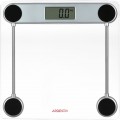 |  |
|---|---|---|
| Ardesto SCB-921 | Ardesto SCB-965 | |
| Outdated Product | Outdated Product | |
| User reviews | ||
| TOP sellers | ||
Possibility to choose from 3 units of measurement: lb (pounds), kilograms (kg), st (stones). | Built-in function for comparing weighing results. The device is equipped with a low battery indicator. Powered by two AAA batteries. | |
| Scales type | floor | floor |
| Mechanism | electronic | electronic |
| Minimum measurement weight | 5 kg | |
| Max. measurement weight | 150 kg | 150 kg |
| Scale division | 50 g | 50 g |
| Units of measurement | kg / lb | |
Features | ||
| Functions | automatic activation automatic switch-off | automatic activation automatic switch-off thermometer |
General | ||
| Platform material | glass | glass |
| Power source | 2xAAA | |
| Dimensions | 300x300 mm | 300x300x18 mm |
| Color | ||
| Added to E-Catalog | december 2018 | december 2018 |


Compare Ardesto SCB-921 and SCB-965
You may be interested in
My comparisons
Glossary
Minimum measurement weight
The minimum weight limit at which the scale's readings must align with the specified margin of error is referred to as the minimum load parameter. While theoretically the scale can display measurements below this threshold, the reliability of results can't be guaranteed due to the extremely low load on the sensors in the device's design. The minimum load requirement is primarily determined by the type and intended use of the scales. For instance, kitchen models typically have a range of a few grams, floor scales start at a couple of kilograms, and commodity warehouse scales might begin at 10-15 kg.
Units of measurement
Weights are able to keep records in various units of measurement, while accounting can be done both by mass and by volume. Among the most common units of measurement, we highlight the following.
— Grams (g) — a unit of weight that belongs to the metric system. Grams are used in desktop kitchen scales.
— Kilograms (kg) — a unit of weight that belongs to the metric system. Kilograms are used in floor weighing equipment.
— Pounds (lb:oz) is a common unit of weight used in some countries in Europe, as well as in the United States. 1 pound can be equated to 0.45 kilograms.
— Milliliters (ml) — a unit of volume that belongs to the metric system. Some models of scales are able to determine the volume of milk and water based on mass.
— Ounces (fl'oz) is a unit of volume used in English-speaking countries. 1 US ounce is equivalent to 30 mL.
— Stones (st) is the British unit of weight. Stones are used to take into account the mass of the human body, so this measurement system is found in floor household and specialized diagnostic scales. 1 stone can be equated to 6.35 kilograms.
— Grams (g) — a unit of weight that belongs to the metric system. Grams are used in desktop kitchen scales.
— Kilograms (kg) — a unit of weight that belongs to the metric system. Kilograms are used in floor weighing equipment.
— Pounds (lb:oz) is a common unit of weight used in some countries in Europe, as well as in the United States. 1 pound can be equated to 0.45 kilograms.
— Milliliters (ml) — a unit of volume that belongs to the metric system. Some models of scales are able to determine the volume of milk and water based on mass.
— Ounces (fl'oz) is a unit of volume used in English-speaking countries. 1 US ounce is equivalent to 30 mL.
— Stones (st) is the British unit of weight. Stones are used to take into account the mass of the human body, so this measurement system is found in floor household and specialized diagnostic scales. 1 stone can be equated to 6.35 kilograms.
Functions
— Tare function. A scale feature that allows you to reset the current reading to zero and not account for additional weight on the platform. In baby scales, it is convenient if you first place a diaper, towel, or soft pad, and then weigh only the baby without their weight. In floor scales, it represents a weighing mode with a child and allows the scale to exclude the mass of an adult and separately determine the weight of the child in arms.
— Automatic activation. Automatic activation of electronic scales when a load is placed on them. Small, but quite handy option.
— Automatic shutdown. This function ensures that the electronic balance (see "Mechanism") turns off some time after the load has been removed from it. Thanks to auto-off, you can not be afraid to run out of batteries by forgetting to turn off the device. And in some models, manual shutdown is not provided at all — only automatic.
— Voice notification. Scales incorporating a voice notification feature offer audible results, typically relayed through the device's speaker. This function is commonly found in bathroom scales (as discussed in "Type of scales"), where it holds significant relevance. It caters to users who may have difficulty viewing the display without leaning or those who might find leaning inconvenient or impractical due to health issue...s. Voice notifications can be provided in various languages, allowing users to select their preferred language from the available options.
— Thermometer. Availability of the built-in thermometer in scales. Usually, this function is performed by a simple thermal sensor that determines the ambient temperature; and most scales with such equipment are kitchen scales or floor scales (refer to "Type of scales"). Note that in fact, the need for a thermometer occurs relatively rarely, and this function is more of a “nice addition” than a serious functional advantage. However, such equipment has almost no effect on the cost of scales — thermal sensors are very inexpensive.
— Synchronization with a smartphone. The capacity to link scales with a mobile device (smartphone, tablet) for data exchange is a prevalent feature. Generally, this involves installing a designated application, which might even be provided alongside the scales. The specifics of this connection and its functionalities can vary, contingent on the type and model of the scale. This feature is commonly found in floor-standing diagnostic scales, where measurement data is used to maintain a record of body information. It particularly benefits athletes, fitness enthusiasts, and individuals using physical activity for therapeutic purposes. Notably, compatibility extends beyond proprietary software to encompass third-party medical and fitness services. Another category of devices featuring synchronization capability is kitchen scales, where the accompanying application is employed for working with various culinary recipes.
— Automatic activation. Automatic activation of electronic scales when a load is placed on them. Small, but quite handy option.
— Automatic shutdown. This function ensures that the electronic balance (see "Mechanism") turns off some time after the load has been removed from it. Thanks to auto-off, you can not be afraid to run out of batteries by forgetting to turn off the device. And in some models, manual shutdown is not provided at all — only automatic.
— Voice notification. Scales incorporating a voice notification feature offer audible results, typically relayed through the device's speaker. This function is commonly found in bathroom scales (as discussed in "Type of scales"), where it holds significant relevance. It caters to users who may have difficulty viewing the display without leaning or those who might find leaning inconvenient or impractical due to health issue...s. Voice notifications can be provided in various languages, allowing users to select their preferred language from the available options.
— Thermometer. Availability of the built-in thermometer in scales. Usually, this function is performed by a simple thermal sensor that determines the ambient temperature; and most scales with such equipment are kitchen scales or floor scales (refer to "Type of scales"). Note that in fact, the need for a thermometer occurs relatively rarely, and this function is more of a “nice addition” than a serious functional advantage. However, such equipment has almost no effect on the cost of scales — thermal sensors are very inexpensive.
— Synchronization with a smartphone. The capacity to link scales with a mobile device (smartphone, tablet) for data exchange is a prevalent feature. Generally, this involves installing a designated application, which might even be provided alongside the scales. The specifics of this connection and its functionalities can vary, contingent on the type and model of the scale. This feature is commonly found in floor-standing diagnostic scales, where measurement data is used to maintain a record of body information. It particularly benefits athletes, fitness enthusiasts, and individuals using physical activity for therapeutic purposes. Notably, compatibility extends beyond proprietary software to encompass third-party medical and fitness services. Another category of devices featuring synchronization capability is kitchen scales, where the accompanying application is employed for working with various culinary recipes.
Power source
The vast majority of electronic scales are powered by a battery pack. But some models may have a built-in battery, which does not require constant replacement. Just remember to recharge the scales.
Battery powered scales can use different types of batteries:
— AA — the format of the classic "finger" batteries;
— AAA — "microfinger" batteries;
— CR2032 — the so-called coin type. Many PC users are familiar with this battery format. "Coins" are used to power BIOS memory in motherboards.
In addition to the type of batteries, you also need to pay attention to their number in the battery compartment.
Battery powered scales can use different types of batteries:
— AA — the format of the classic "finger" batteries;
— AAA — "microfinger" batteries;
— CR2032 — the so-called coin type. Many PC users are familiar with this battery format. "Coins" are used to power BIOS memory in motherboards.
In addition to the type of batteries, you also need to pay attention to their number in the battery compartment.