
Comparison Jabra Talk 45 vs Jabra Talk 30
Add to comparison | 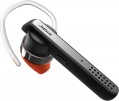 | 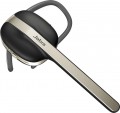 |
|---|---|---|
| Jabra Talk 45 | Jabra Talk 30 | |
| Compare prices 1 | from $99.99 | |
| User reviews | ||
| TOP sellers | ||
High sound quality. Voice announcements. Redial. | High sound quality. Voice announcements. Redial. | |
| Device | bluetooth headset | bluetooth headset |
| Design | earbuds | |
| Behind ear |  | |
| Connection | Bluetooth v4.0 | Bluetooth v4.0 |
| Range | 30 m | 30 m |
Specs | ||
| Impedance | 16 Ohm | 32 Ohm |
| Frequency range | 200 – 8000 Hz | 200 – 7000 Hz |
| Sensitivity | 112 dB | 105 dB |
| Speaker diameter | 11 mm | 13 mm |
| Microphone frequency range | 100 – 8000 Hz | 100 – 8000 Hz |
| Microphone sensitivity | -40 dB | -38 dB |
| Features | Multipoint noise cancellation volume control auto volume control voice dialing A2DP profile | Multipoint noise cancellation volume control auto volume control voice dialing A2DP profile |
General | ||
| Power source | battery | battery |
| Battery capacity | 80 mAh | 50 mAh |
| Battery life | 6 h | 5 h |
| USB charging port | microUSB | microUSB |
| Charging time | 2 h | |
| Replaceable ear hooks |  | |
| Replaceable silicone tips | | |
| Dimensions (WxHxD) | 15x57x24 mm | 24x67x16 mm |
| Weight | 7.2 g | 8.3 g |
| Color | ||
| Added to E-Catalog | december 2018 | december 2018 |



Compare Jabra Talk 45 and Talk 30
Price comparison
You may be interested in
Jabra Talk 45 often compared


Jabra Talk 30 often compared


Glossary
Design
The design of the earpiece used in a Bluetooth headset.
— Earbuds. A small earpiece located in the auricle outside the auditory canal (as opposed to in-ear). The unequivocal advantages of inserts are simplicity and low cost. The sound insulation of such devices turns out to be rather weak, which can be both a minus and a plus: the earbud is not suitable for a noisy environment, but it almost does not interfere with hearing. But the sound quality of the earbuds is somewhat lower than that of the in-channel counterparts. In addition, such an earpiece is less securely held in the ear and is more difficult to adjust to the individual biological nuances of a person (although interchangeable nozzles of different sizes are available for the earbuds).
— In-ear. An earpiece that, during use, is inserted deep into the ear canal and held there by a soft cap made of silicone or other similar material. These headphones are considered more advanced than earbuds: at lower volume (and less power consumption), they provide more powerful and rich sound. The unequivocal disadvantages of in-ear models include a higher cost. In addition, a high degree of sound insulation can create inconvenience: when using such headsets, ear is almost completely closed. On the other hand, it allows you to hear the sound well even in a rather noisy environment.
— Earbuds. A small earpiece located in the auricle outside the auditory canal (as opposed to in-ear). The unequivocal advantages of inserts are simplicity and low cost. The sound insulation of such devices turns out to be rather weak, which can be both a minus and a plus: the earbud is not suitable for a noisy environment, but it almost does not interfere with hearing. But the sound quality of the earbuds is somewhat lower than that of the in-channel counterparts. In addition, such an earpiece is less securely held in the ear and is more difficult to adjust to the individual biological nuances of a person (although interchangeable nozzles of different sizes are available for the earbuds).
— In-ear. An earpiece that, during use, is inserted deep into the ear canal and held there by a soft cap made of silicone or other similar material. These headphones are considered more advanced than earbuds: at lower volume (and less power consumption), they provide more powerful and rich sound. The unequivocal disadvantages of in-ear models include a higher cost. In addition, a high degree of sound insulation can create inconvenience: when using such headsets, ear is almost completely closed. On the other hand, it allows you to hear the sound well even in a rather noisy environment.
Impedance
The nominal impedance of the earpiece or speaker installed in the device. This parameter is indicated in the specifications extremely rarely, and even in such cases it is purely for reference: the hardware of the device is initially optimized for the corresponding headphone/speaker impedance.
Frequency range
The range of sound that a headset or speakerphone (see "Device") can play through headphones or a speaker, and that the car kit can transmit to external speakers.
The frequency range perceived by the human ear averages from 16 Hz to 20 kHz. In a perfect case scenario, the sound device should also support the same range — this will provide the most complete sound without cutting off in frequencies. On the other hand, in order to reliably convey the human voice, a range of only 300 to 3400 Hz is sufficient. Therefore, if the device is planned to be used exclusively for voice communication, you can ignore this parameter. The mentioned 300 – 3400 Hz cover all modern models, and the extensive frequency range gives a not so noticeable gain in quality. But if you plan to listen to music, it is desirable that the specs of the device be as close as possible to the perfect 16 – 20,000 Hz; this is especially important for models with stereo support (see "Sound").
The frequency range perceived by the human ear averages from 16 Hz to 20 kHz. In a perfect case scenario, the sound device should also support the same range — this will provide the most complete sound without cutting off in frequencies. On the other hand, in order to reliably convey the human voice, a range of only 300 to 3400 Hz is sufficient. Therefore, if the device is planned to be used exclusively for voice communication, you can ignore this parameter. The mentioned 300 – 3400 Hz cover all modern models, and the extensive frequency range gives a not so noticeable gain in quality. But if you plan to listen to music, it is desirable that the specs of the device be as close as possible to the perfect 16 – 20,000 Hz; this is especially important for models with stereo support (see "Sound").
Sensitivity
The sensitivity of the earpiece used in the headset (see "Device"); for speakerphones and car kits, a similar parameter is not fundamental, and therefore is not indicated.
The higher the sensitivity, the louder the earpiece will sound with the same power of the signal supplied to it. Accordingly, this spec primarily affects the maximum volume. However the actual loudness in models with the same sensitivity may vary slightly, but in general, the difference in sensitivity more or less corresponds to the real difference. However, note that too much sound adversely affects hearing. Therefore, it makes sense to look for a headset with a sensitivity above 100 dB if you often have to talk in a noisy environment such as a busy street, subway car, factory, etc. For relatively quiet conditions, you can take a more modest model.
The higher the sensitivity, the louder the earpiece will sound with the same power of the signal supplied to it. Accordingly, this spec primarily affects the maximum volume. However the actual loudness in models with the same sensitivity may vary slightly, but in general, the difference in sensitivity more or less corresponds to the real difference. However, note that too much sound adversely affects hearing. Therefore, it makes sense to look for a headset with a sensitivity above 100 dB if you often have to talk in a noisy environment such as a busy street, subway car, factory, etc. For relatively quiet conditions, you can take a more modest model.
Speaker diameter
The diameter of the speaker installed in the device. In this case, we can talk about both the actual speaker installed in the speakerphone, and the headphone emitter that the Bluetooth headset is equipped with (see "Device"). Accordingly, the meaning of this spec in both cases will be different.
In general, the large size of the speaker, on the one hand, allows you to achieve better volume and more reliable transmission of low frequencies; on the other hand, it requires more space for installation. This is especially true for headsets, since the types of headphones used in them (see "Design") have severe size restrictions: earbuds are made no larger than 15 mm, in-ear solutions have a diameter of less than 10 mm (only the headphones of the same type may be compared by size with each other). Note that an earpiece that is too large may be uncomfortable, or even not fit in the ear at all. So the perfect option is to try on the headset before buying.
In turn, speakerphones usually use speakers with a diameter of about 50 mm — this size is considered the best compromise between overall efficiency and compactness.
In general, the large size of the speaker, on the one hand, allows you to achieve better volume and more reliable transmission of low frequencies; on the other hand, it requires more space for installation. This is especially true for headsets, since the types of headphones used in them (see "Design") have severe size restrictions: earbuds are made no larger than 15 mm, in-ear solutions have a diameter of less than 10 mm (only the headphones of the same type may be compared by size with each other). Note that an earpiece that is too large may be uncomfortable, or even not fit in the ear at all. So the perfect option is to try on the headset before buying.
In turn, speakerphones usually use speakers with a diameter of about 50 mm — this size is considered the best compromise between overall efficiency and compactness.
Battery capacity
The capacity of the battery installed in the device (see "Power").
Theoretically, a higher battery capacity allows you to work longer on one charge. At the same time, the actual battery life will also depend on the power consumption of the device, and it is determined by a number of technical specs. Therefore, it is better to evaluate battery life not by battery capacity, but by directly claimed operating time (see below). It makes sense to use this parameter if the operating time is not specified; at the same time, it makes sense to make conclusions only if devices similar in specs differ in capacity — for example, 60 and 110 mAh.
Theoretically, a higher battery capacity allows you to work longer on one charge. At the same time, the actual battery life will also depend on the power consumption of the device, and it is determined by a number of technical specs. Therefore, it is better to evaluate battery life not by battery capacity, but by directly claimed operating time (see below). It makes sense to use this parameter if the operating time is not specified; at the same time, it makes sense to make conclusions only if devices similar in specs differ in capacity — for example, 60 and 110 mAh.
Battery life
Time of operation of the self-powered device (see "Power") on one battery charge.
Usually, the battery life in the talk mode is meant, when the device consumes the most energy. In headsets with high-capacity batteries, this battery life can be 9 hours or more. However, talking for several hours without pauses is almost impossible, so in fact the operating time is noticeably longer than in the specifications. So, a headset with an operating time of the same 9 hours is most likely quite enough for a 12-hour work shift, even if you have to constantly make calls through it; and if we are talking about only 5 – 6 calls per day, then the charge is guaranteed to last for several days, or even a week. At the same time, the difference in the claimed operating time is usually quite consistent with the difference in actual battery life, and it is quite possible to compare the real capabilities of different models by it.
Usually, the battery life in the talk mode is meant, when the device consumes the most energy. In headsets with high-capacity batteries, this battery life can be 9 hours or more. However, talking for several hours without pauses is almost impossible, so in fact the operating time is noticeably longer than in the specifications. So, a headset with an operating time of the same 9 hours is most likely quite enough for a 12-hour work shift, even if you have to constantly make calls through it; and if we are talking about only 5 – 6 calls per day, then the charge is guaranteed to last for several days, or even a week. At the same time, the difference in the claimed operating time is usually quite consistent with the difference in actual battery life, and it is quite possible to compare the real capabilities of different models by it.
Charging time
The time it takes to fully charge the battery in powered headsets.
In this case, we mean the time it takes to charge the battery from 0 to 100% when using a standard charger (or a third-party charger with identical specs). Accordingly, this indicator may differ from the stated one, depending on the specifics of the situation. However, it is quite possible to evaluate different models using it, compare them with each other and choose a headset with fast charging.
We also note that increasing the battery capacity inevitably implies an increase in charging time. To compensate for this point, special fast charging technologies can be used. However, they affect the cost and require the use of specialized chargers.
In this case, we mean the time it takes to charge the battery from 0 to 100% when using a standard charger (or a third-party charger with identical specs). Accordingly, this indicator may differ from the stated one, depending on the specifics of the situation. However, it is quite possible to evaluate different models using it, compare them with each other and choose a headset with fast charging.
We also note that increasing the battery capacity inevitably implies an increase in charging time. To compensate for this point, special fast charging technologies can be used. However, they affect the cost and require the use of specialized chargers.
Replaceable ear hooks
You can change the ear hook that is used to attach the Bluetooth headset to the ear. This feature allows you to adjust the device to the features of the auricle, which is especially necessary for people with a non-standard size or shape of the ears. Usually spare temples are included in the package, and if necessary, they can be purchased separately.