
Comparison Xiaomi Piston Fresh vs 1More Piston Fit
Add to comparison | 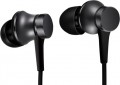 | 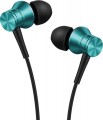 |
|---|---|---|
| Xiaomi Piston Fresh | 1More Piston Fit | |
from $9.99 | Compare prices 2 | |
| User reviews | ||
| TOP sellers | ||
Connection and design | ||
| Design | in-ear | in-ear |
| Connection type | wired | wired |
| Connection | mini-Jack (3.5 mm) | mini-Jack (3.5 mm) |
| Plug | straight | straight |
| Cable supply | double-sided | double-sided |
| Cable length | 1.25 m | 1.25 m |
| Cable type | round | round |
Specs | ||
| Impedance | 32 Ohm | 32 Ohm |
| Frequency range | 20 – 20000 Hz | 20 – 20000 Hz |
| Sensitivity | 101 dB | 100 dB |
| Speaker size | 8 mm | |
| Emitter type | dynamic | dynamic |
Microphone specs | ||
| Microphone | on cable | on cable |
General | ||
| Material | metal | metal |
| Weight | 14 g | 14 g |
| In box | silicone tips | silicone tips |
| Color | ||
| Added to E-Catalog | september 2017 | september 2017 |



Compare Xiaomi Piston Fresh and 1More Piston Fit
Price comparison
You may be interested in
My comparisons
Xiaomi Piston Fresh often compared


1More Piston Fit often compared

Glossary
Sensitivity
Rated headphone sensitivity. Technically, this is the volume at which they sound when a certain standard signal from the amplifier is connected to them. Thus, sensitivity is one of the parameters that determine the overall volume of the headphones: the higher it is, the louder the sound will be with the same input signal level and other things being equal. However, we must not forget that the volume level also depends on the resistance (impedance, see above); moreover, it is worth choosing “ears” for a specific device first by impedance, and only then by sensitivity. In this case, one parameter can be compensated for by another: for example, a model with high resistance and high sensitivity can work even on a relatively weak amplifier.
As for specific figures, headphones with indicators of 100 dB or less are designed mainly for use in a quiet environment (in some similar models, the sensitivity does not exceed 90 dB). For use on the street, in transport and other similar conditions, it is desirable to have more sensitive headphones — about 101 – 105 dB, or even 110 dB. And in some models, this figure can reach 116 – 120 dB. and even more.
It is also worth noting that this parameter is relevant only for a wired connection according to the analogue standard — for example, via a 3.5 mm mini-...jack. When using digital interfaces like USB and wireless channels like Bluetooth, the sound is processed in the built-in headphone converter, and if you plan to mainly use this kind of application, you can not pay much attention to sensitivity.
As for specific figures, headphones with indicators of 100 dB or less are designed mainly for use in a quiet environment (in some similar models, the sensitivity does not exceed 90 dB). For use on the street, in transport and other similar conditions, it is desirable to have more sensitive headphones — about 101 – 105 dB, or even 110 dB. And in some models, this figure can reach 116 – 120 dB. and even more.
It is also worth noting that this parameter is relevant only for a wired connection according to the analogue standard — for example, via a 3.5 mm mini-...jack. When using digital interfaces like USB and wireless channels like Bluetooth, the sound is processed in the built-in headphone converter, and if you plan to mainly use this kind of application, you can not pay much attention to sensitivity.
Speaker size
The diameter of the speaker installed in the headphones; models with multiple drivers (see "Number of drivers"), usually, the size of the largest speaker is taken into account, other dimensions can be specified in the notes.
In general, this parameter is relevant primarily for over-ear headphones (see "Design"). In them, emitters can have different sizes; the larger it is, the more saturated the sound is and the better the speaker reproduces the bass, however, large emitters have a corresponding effect on the dimensions, weight and price of the headphones. But in-ear "ears" and earbuds, by definition, have very small speakers, and rich bass in them is achieved due to other design features.
In general, this parameter is relevant primarily for over-ear headphones (see "Design"). In them, emitters can have different sizes; the larger it is, the more saturated the sound is and the better the speaker reproduces the bass, however, large emitters have a corresponding effect on the dimensions, weight and price of the headphones. But in-ear "ears" and earbuds, by definition, have very small speakers, and rich bass in them is achieved due to other design features.