
Comparison Sony RX100 II vs Sony RX100
Add to comparison | 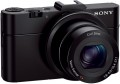 | 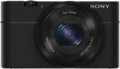 |
|---|---|---|
| Sony RX100 II | Sony RX100 | |
| Compare prices 1 | from $909.95 | |
| TOP sellers | ||
| Camera type | digital compact | digital compact |
| DxOMark rating | 67 | 66 |
Sensor | ||
| Sensor | CMOS (CMOS) | CMOS (CMOS) |
| Sensor size | 1" (13.2x8.8 mm) | 1" (13.2x8.8 mm) |
| Total MP | 20.9 | |
| Effective MP number | 20.2 | 20.2 |
| Maximum image size | 5472x3648 px | 5472x3648 px |
| Light sensitivity (ISO) | 160-12800 | 125-6400 |
| RAW format recording |  | |
Lens | ||
| Aperture | f/1.8 - f/4.9 | f/1.8 - f/4.9 |
| Focal length | 28 - 100 mm | 28 - 100 mm |
| Optical zoom | 3.6 | 3.6 |
| Manual focus | | |
| Image stabilization | optical | optical |
| Macro shooting, from | 5 cm | 5 cm |
Photo shooting | ||
| Frames per series (JPEG) | 15 шт | |
| HDR |  | |
| White balance measuring | | |
| Exposure compensation | ± 3 EV, in 1/3 EV steps | ± 3 EV, in 1/3 EV steps |
| Auto bracketing | | |
| Exposure modes | auto shutter priority aperture priority manual mode | auto shutter priority aperture priority manual mode |
| Metering system | point centre-weighted sensor (estimated) | point centre-weighted sensor (estimated) |
Video recording | ||
| Full HD (1080) | 1920x1080 px 50 fps | |
| File recording formats | MPEG4 | MPEG4 |
| Maximum video length | memory limit | memory limit |
| Connection ports | HDMI v 1.4 | HDMI v 1.4 headphone Jack |
Focus | ||
| Autofocus modes | one shot tracking | one shot tracking in face |
Viewfinder and shutter | ||
| Viewfinder | in absent | in absent |
| Shutter speed | 30 - 1/2000 с | 30 - 1/2000 с |
| Continuous shooting | 10 fps | 10 fps |
Screen | ||
| Screen size | 3 '' | 3 '' |
| Screen resolution | 1228 thousand pixels | 1228 thousand pixels |
| Rotary display | | |
Memory and communications | ||
| Memory cards types | SD, SDHC, SDXC | SD, SDHC, SDXC |
| Communications | Wi-Fi NFC | |
Flash | ||
| Built-in flash | | |
| Application range | 15 m | |
| External flash connect | | |
Power source | ||
| Power source | battery | battery |
| Battery model | NP-BX1 | NP-BX1 |
| Shots per charge | 350 шт | 330 шт |
General | ||
| Case/case model | LCS-ASB1, DSC-RX100M2, LCJ-RXC, LCJ-RXF | LCS-ASB1, LCJ-RXA, LCJ-RXC, LCJ-RXF |
| Charger model | ACC-TRBX | ACC-TRBX |
| Console/synchronizer model | RM-VPR1 | |
| Material | aluminium alloy | aluminium alloy |
| Dimensions (WxHxD) | 102x58x38 mm | 102x59x36 mm |
| Weight | 281 g | 213 g |
| Color | ||
| Added to E-Catalog | july 2013 | june 2012 |



Compare Sony RX100 II and RX100
Price comparison
You may be interested in
My comparisons
Sony RX100 II often compared


Sony RX100 often compared


Glossary
DxOMark rating
The result shown by the camera in the DxOMark ranking.
DxOMark is one of the most popular and respected resources for expert camera testing. According to the test results, the camera receives a certain number of points; The more points, the higher the final score.
DxOMark is one of the most popular and respected resources for expert camera testing. According to the test results, the camera receives a certain number of points; The more points, the higher the final score.
Total MP
The total number of individual light sensitive dots (pixels) provided in the camera's sensor. Denoted in megapixels - millions of pixels.
The total number of MPs, as a rule, is greater than the number of megapixels from which the frame is directly built (for more details, see "Effective number of MPs"). This is due to the presence of service areas on the matrix. In general, this parameter is more of a reference than practically significant: a larger total number of MPs with the same size and effective resolution means a slightly smaller size of each pixel, and, accordingly, an increased likelihood of noise (especially at high ISO values).
The total number of MPs, as a rule, is greater than the number of megapixels from which the frame is directly built (for more details, see "Effective number of MPs"). This is due to the presence of service areas on the matrix. In general, this parameter is more of a reference than practically significant: a larger total number of MPs with the same size and effective resolution means a slightly smaller size of each pixel, and, accordingly, an increased likelihood of noise (especially at high ISO values).
Light sensitivity (ISO)
The sensitivity range of a digital camera matrix. In digital photography, light sensitivity is expressed in the same ISO units as in film photography; however, unlike film, the light sensitivity of the sensor in a digital camera can be changed, which gives you more options for adjusting shooting parameters. High maximum light sensitivity is important if you have to use a lens with a low aperture (see Aperture), as well as when shooting dimly lit scenes and fast-moving objects; in the latter case, high ISO allows you to use low shutter speeds, which minimizes image blur. However, note that with an increase in the value of the applied ISO, the level of noise in the resulting images also increases.
Frames per series (JPEG)
The highest number of shots a camera can capture “in one go” in JPEG continuous shooting.
The technical features of modern digital cameras are such that during continuous shooting, photos have to be recorded in a special buffer, and only then, after the end of the series, they can be copied to a memory card. This buffer has a limited size, so the number of frames in one series is also limited. At the same time, we note that this indicator is usually indicated for shooting at the highest possible resolution (see "Maximum image size"); at lower resolutions, the volume of each image is reduced, and the number of frames in the series may turn out to be more than stated in the specifications.
JPEG, the most popular digital photography format today, is smaller and requires less processing power than RAW (see "Recording in RAW Format"). Therefore, in a JPEG series, as a rule, more frames are available to the photographer. However, in some models that have two separate buffers (for RAW and JPEG), it may be the other way around.
The technical features of modern digital cameras are such that during continuous shooting, photos have to be recorded in a special buffer, and only then, after the end of the series, they can be copied to a memory card. This buffer has a limited size, so the number of frames in one series is also limited. At the same time, we note that this indicator is usually indicated for shooting at the highest possible resolution (see "Maximum image size"); at lower resolutions, the volume of each image is reduced, and the number of frames in the series may turn out to be more than stated in the specifications.
JPEG, the most popular digital photography format today, is smaller and requires less processing power than RAW (see "Recording in RAW Format"). Therefore, in a JPEG series, as a rule, more frames are available to the photographer. However, in some models that have two separate buffers (for RAW and JPEG), it may be the other way around.
HDR
Camera support for HDR.
HDR stands for High Dynamic Range. The main application of this technology is shooting scenes with significant differences in illumination, when there are both very bright and very dark areas in the frame. The features of modern digital photography are such that in the normal shooting mode, only a rather narrow range of brightness can be correctly processed; as a result, with a large difference in illumination, the image contains either too dark or overexposed fragments. HDR avoids this phenomenon: in this mode, the camera takes several shots with different exposure settings, and then glues them together in such a way as to reduce the brightness in bright places and increase in dark places. This allows you to shoot, for example, landscapes against the backdrop of a bright sunset sky, the interiors of dimly lit buildings with bright windows, etc. In addition, HDR can also be used as an artistic technique — to give the picture an unusual colour scheme.
Note that this effect can also be achieved using post-processing in a graphics editor; however, using the camera is much more convenient.
HDR stands for High Dynamic Range. The main application of this technology is shooting scenes with significant differences in illumination, when there are both very bright and very dark areas in the frame. The features of modern digital photography are such that in the normal shooting mode, only a rather narrow range of brightness can be correctly processed; as a result, with a large difference in illumination, the image contains either too dark or overexposed fragments. HDR avoids this phenomenon: in this mode, the camera takes several shots with different exposure settings, and then glues them together in such a way as to reduce the brightness in bright places and increase in dark places. This allows you to shoot, for example, landscapes against the backdrop of a bright sunset sky, the interiors of dimly lit buildings with bright windows, etc. In addition, HDR can also be used as an artistic technique — to give the picture an unusual colour scheme.
Note that this effect can also be achieved using post-processing in a graphics editor; however, using the camera is much more convenient.
White balance measuring
The presence in the camera of the function of measuring the white balance and adjusting the shooting parameters accordingly.
White balance describes how the same colour is perceived by the camera's sensor depending on the lighting conditions: for example, under a fluorescent lamp, colours will have colder shades than under sunlight, etc. The human eye is able to adapt to changes in lighting automatically, but digital sensors do not have this ability. Therefore, cameras have to use white balance metering — otherwise, with different lighting characteristics, the same object will be displayed in pictures in different shades of colour. White balance correction can be carried out automatically, according to presets, and in advanced cameras — completely manually.
White balance describes how the same colour is perceived by the camera's sensor depending on the lighting conditions: for example, under a fluorescent lamp, colours will have colder shades than under sunlight, etc. The human eye is able to adapt to changes in lighting automatically, but digital sensors do not have this ability. Therefore, cameras have to use white balance metering — otherwise, with different lighting characteristics, the same object will be displayed in pictures in different shades of colour. White balance correction can be carried out automatically, according to presets, and in advanced cameras — completely manually.
Auto bracketing
Bracketing is called shooting a series of frames, in which in each next frame the shooting parameters (exposure, white balance, focus, etc.) change by a certain amount. This allows, for example, to choose the most successful shot from several options, or to determine the effect of changing the settings in one direction or another. Auto bracketing allows you to take such shots automatically. At the same time, it should be taken into account that the set of parameters changed in the process may differ in different camera models. For example, some devices are able to change only the exposure, others — the exposure and/or white balance, etc.
Full HD (1080)
The maximum resolution and frame rate of video captured by the camera in Full HD (1080p).
The traditional Full HD video resolution in this case is 1920x1080; other options are more specific and practically do not occur in modern cameras. Regarding the frame rate, it is worth noting first of all that a normal (not slow-motion) video is shot at a speed of up to 60 fps, and in this case, the higher the frame rate, the smoother the video will be, the less jerks will be noticeable when moving in the frame. If the frame rate is 100 fps or higher, this usually means that the camera has a slow-motion video mode.
The traditional Full HD video resolution in this case is 1920x1080; other options are more specific and practically do not occur in modern cameras. Regarding the frame rate, it is worth noting first of all that a normal (not slow-motion) video is shot at a speed of up to 60 fps, and in this case, the higher the frame rate, the smoother the video will be, the less jerks will be noticeable when moving in the frame. If the frame rate is 100 fps or higher, this usually means that the camera has a slow-motion video mode.
Connection ports
— USB-C. A universal USB interface using a Type C connector. USB ports (of all types) are mainly used for connecting the camera to a computer to transfer captured materials, manage settings, update firmware, etc. Specifically, the Type C connector is comparable in size to the earlier miniUSB and microUSB, but it has a reversible design that allows the plug to be inserted either way. Moreover, USB-C often operates at a USB 10Gbps standard, allowing for connection speeds up to 10 Gbps—a useful feature when transferring large amounts of content.
— HDMI. An all-encompassing digital interface that allows video (including high resolution) and audio (up to multichannel) to be transmitted via a single cable. Having such a port allows the use of the camera as a player: it can be directly connected to a TV, monitor, projector, etc., to view captured materials on a big screen. These transmission capabilities may include not only video playback but also displaying captured photos as a slideshow. HDMI inputs are found in most modern video devices, and connection is usually not problematic.
Currently, several versions of the HDMI interface are available on the market:
— Headphone Output. An audio output that allows headphones to be connected to the camera. It is typically represented by a classic 3.5mm mini-jack. Such an output provides the ability to monitor sound in real time during video recording. This is especially important when shooting interviews, video blogs, and other similar projects.
— Microphone Input. A specialized input for connecting an external microphone to the camera. External microphones significantly outperform built-in ones in sound quality. Firstly, they are less sensitive to the camera's "own" sounds—from buttons, control wheels, focus motors, etc. (and if the microphone uses a long cable and is not mounted on the body, these sounds will not be audible at all). Secondly, external microphones themselves have more advanced characteristics. On the other hand, their use is mainly justified for professional video recording; therefore, the presence of a microphone input usually corresponds to advanced video shooting capabilities.
— HDMI. An all-encompassing digital interface that allows video (including high resolution) and audio (up to multichannel) to be transmitted via a single cable. Having such a port allows the use of the camera as a player: it can be directly connected to a TV, monitor, projector, etc., to view captured materials on a big screen. These transmission capabilities may include not only video playback but also displaying captured photos as a slideshow. HDMI inputs are found in most modern video devices, and connection is usually not problematic.
Currently, several versions of the HDMI interface are available on the market:
- v 1.4. The oldest of the current versions, released in 2009. Nevertheless, it supports 3D video, can work with resolutions up to 4096x2160 at 24 fps, and in Full HD resolution, the frame rate can reach up to 120 fps. Besides the original v.1.4, there are also improved modific...ations — v.1.4a and v.1.4b; they are similar in basic capabilities, with improvements primarily focused on 3D content.
- v 2.0. A significant HDMI update, introduced in 2013. In this version, the maximum frame rate at 4K increased to 60 fps, and new features include support for ultra-wide format 21:9. In the v.2.0a update, HDR support was added to the interface's capabilities; in v.2.0b, this feature was enhanced and expanded.
- v 2.1. Despite the similar naming to v.2.0, this version, released in 2017, was a very significant update. It added support for 8K and even 10K at speeds of up to 120 fps, as well as further expanded capabilities for working with HDR. A dedicated cable—HDMI Ultra High Speed—was released for this version, and all v.2.1 capabilities are only available using cables of this standard, although basic functions can be used with simpler cables.
— Headphone Output. An audio output that allows headphones to be connected to the camera. It is typically represented by a classic 3.5mm mini-jack. Such an output provides the ability to monitor sound in real time during video recording. This is especially important when shooting interviews, video blogs, and other similar projects.
— Microphone Input. A specialized input for connecting an external microphone to the camera. External microphones significantly outperform built-in ones in sound quality. Firstly, they are less sensitive to the camera's "own" sounds—from buttons, control wheels, focus motors, etc. (and if the microphone uses a long cable and is not mounted on the body, these sounds will not be audible at all). Secondly, external microphones themselves have more advanced characteristics. On the other hand, their use is mainly justified for professional video recording; therefore, the presence of a microphone input usually corresponds to advanced video shooting capabilities.