
Comparison Kemping Solo vs Terra Incognita Campo 200
Add to comparison | 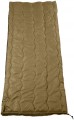 | 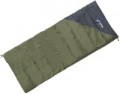 |
|---|---|---|
| Kemping Solo | Terra Incognita Campo 200 | |
from $22.28 up to $30.02 | from $31.40 up to $38.36 | |
| TOP sellers | ||
| By features | camping | camping |
| Type | blanket bag | blanket bag |
| Suitable for | universal | universal |
| Seasonality | summer | summer |
| Weight | 1 kg | 1.4 kg |
Temperature and materials | ||
| Max. comfort t° | 26 °C | |
| comfort t° (for men) | 25 °C | 10 °C |
| t° limit (for men) | 15 °C | |
| comfort t° (for women) | 25 °C | 10 °C |
| t° limit (for women) | 15 °C | |
| extreme t° | 3 °C | 3 °C |
| External material | polyester | polyester |
| Inner material | polyester | polycotton |
| Insulation | synthetics | synthetics |
| Insulation layers | 1 | 2 |
Features | ||
| Equipment | fastening possibility light accumulating loop drying loops compression bag | fastening possibility light accumulating loop drying loops compression bag |
| Zipper | side | side |
General | ||
| Bag dimensions | 220x80x80 cm | 190x80x80 cm |
| Dimensions (folded) | 39x19x19 cm | 34x21x21 cm |
| Volume (folded) | 14.2 l | |
| Color | ||
| Added to E-Catalog | april 2014 | september 2012 |


Compare Kemping Solo and Terra Incognita Campo 200
You may be interested in
Kemping Solo often compared

Terra Incognita Campo 200 often compared


Glossary
Weight
Since a sleeping bag is a travel outfit, its weight can be one of the key characteristics. Two points should be taken into account here: firstly, more insulation usually requires more material and increases weight, and secondly, warm models with low weight are much more expensive than heavier options with the same temperature characteristics.
Also, when choosing a sleeping bag, you should decide what exactly you are buying it for. If we are talking about picnics, festivals and other simple trips to nature without long walks, or if you plan to carry equipment by car, you can not pay much attention to weight, focus on other characteristics. If you plan to go on long hiking or cycling trips, you should choose a model with a minimum weight.
As for specific numbers, most modern sleeping bags are in the range of 1.1 – 1.5 kg or 1.6 – 2 kg, although there are quite a few ultra-light models — 1 kg or less. An indicator of 2.1 – 2.5 kg is already considered quite significant, and a weight of 2.6 – 3 kg or more is found mainly in two types of sleeping bags: separate expeditionary models with a high degree of insulation, as well as double products.
Also, when choosing a sleeping bag, you should decide what exactly you are buying it for. If we are talking about picnics, festivals and other simple trips to nature without long walks, or if you plan to carry equipment by car, you can not pay much attention to weight, focus on other characteristics. If you plan to go on long hiking or cycling trips, you should choose a model with a minimum weight.
As for specific numbers, most modern sleeping bags are in the range of 1.1 – 1.5 kg or 1.6 – 2 kg, although there are quite a few ultra-light models — 1 kg or less. An indicator of 2.1 – 2.5 kg is already considered quite significant, and a weight of 2.6 – 3 kg or more is found mainly in two types of sleeping bags: separate expeditionary models with a high degree of insulation, as well as double products.
Max. comfort t°
The highest ambient temperature at which a person can comfortably spend the night in a sleeping bag without excessive sweating and overheating of the body. The parameter is indicated for conditions when the hood and zipper of the sleeping bag remain open, and the hands of the sleeper are outside the sleeping bag.
comfort t° (for men)
Some manufacturers use their own criteria to designate this temperature; however, they predominantly use the accepted standard. According to it, the comfort temperature is the lowest ambient temperature at which a man in thermal underwear can comfortably sleep in a sleeping bag all night (a minimum of 8 hours) without waking from the cold, in a relaxed position. Naturally, actual comfort will depend on the individual's body and preparation.
t° limit (for men)
Some manufacturers use their own criteria to define this temperature, but the generally accepted standard is predominantly used. According to this standard, the comfort limit temperature is the lowest ambient air temperature at which a man in thermal underwear can sleep in a sleeping bag all night (at least 8 hours) in a heat-conserving position (curled up in the "fetal position"), maintaining thermal balance. Naturally, in each individual case, comfort will also depend on the characteristics of the individual's body and the tourist's preparation.
comfort t° (for women)
Some manufacturers use their own criteria to designate this temperature, but predominantly, the common standard is used. According to it, the comfort temperature is the lowest ambient air temperature at which a woman in thermal underwear can sleep comfortably, without waking up from the cold, in a sleeping bag throughout the night (at least 8 hours) in a relaxed position. Of course, actual comfort will depend on the individual's body characteristics and specific person's preparation.
t° limit (for women)
Some manufacturers use their own criteria to indicate this temperature, but the generally accepted standard is predominantly used. According to this standard, the comfort limit temperature is the lowest ambient air temperature at which a woman in thermal underwear can sleep in a sleeping bag for the entire night (at least 8 hours) in a heat-conserving position (curled up), maintaining thermal balance. Naturally, comfort will also depend on the individual characteristics of the organism and the preparation of the tourist in each specific case.
Inner material
— Polyester. Synthetic material. The advantages of polyester are good water-repellent properties, strength and durability. On the other hand, it, like many synthetic materials, is not very pleasant to the touch and can cause some discomfort, especially in warm weather, when you can sleep in one underwear.
— Flannel. Natural fabric of cotton or wool type. It is pleasant to the touch and quite versatile: it is well suited for both warm and even hot weather (due to naturalness), and for cold weather (it saves heat well). The disadvantages of flannel are the tendency to wear (the appearance of "pellets") with prolonged use, as well as high hygroscopicity — the fabric absorbs moisture well and dries for a long time.
— Cotton. Cotton, like flannel, belongs to natural materials and is well suited for use in hot weather, however, the thermal insulation of such an “insider” is significantly lower. Among the other advantages of cotton, it is worth noting strength, resistance to water, temperature extremes and light (although it may turn yellow in the light); of the shortcomings is hygroscopicity (although less than that of flannel).
— Polycotton. Combined material based on a combination of polyester and cotton in varying proportions. Designed to combine the advantages of both materials. Polycotton is strong, durable,...has good water repellency while being nicer to the touch than pure polyester and is better for use in hot weather.
— Fleece. Synthetic material, widely used for the manufacture of warm clothing. It has the appropriate characteristics, in particular it is light, retains heat well, including in a wet state; passes the evaporated moisture ("breathes"), does not accumulate it and dries quickly. At the same time, fleece is somewhat less durable than the rest of the synthetics, and also catches fire easily, therefore it requires some caution in the presence of fires and other sources of fire nearby.
— Nylon. A synthetic material similar in most properties to polyester (see above), but somewhat less durable and resistant to moisture (tends to stretch when wet). It is used mainly in inexpensive models of sleeping bags.
— Flannel. Natural fabric of cotton or wool type. It is pleasant to the touch and quite versatile: it is well suited for both warm and even hot weather (due to naturalness), and for cold weather (it saves heat well). The disadvantages of flannel are the tendency to wear (the appearance of "pellets") with prolonged use, as well as high hygroscopicity — the fabric absorbs moisture well and dries for a long time.
— Cotton. Cotton, like flannel, belongs to natural materials and is well suited for use in hot weather, however, the thermal insulation of such an “insider” is significantly lower. Among the other advantages of cotton, it is worth noting strength, resistance to water, temperature extremes and light (although it may turn yellow in the light); of the shortcomings is hygroscopicity (although less than that of flannel).
— Polycotton. Combined material based on a combination of polyester and cotton in varying proportions. Designed to combine the advantages of both materials. Polycotton is strong, durable,...has good water repellency while being nicer to the touch than pure polyester and is better for use in hot weather.
— Fleece. Synthetic material, widely used for the manufacture of warm clothing. It has the appropriate characteristics, in particular it is light, retains heat well, including in a wet state; passes the evaporated moisture ("breathes"), does not accumulate it and dries quickly. At the same time, fleece is somewhat less durable than the rest of the synthetics, and also catches fire easily, therefore it requires some caution in the presence of fires and other sources of fire nearby.
— Nylon. A synthetic material similar in most properties to polyester (see above), but somewhat less durable and resistant to moisture (tends to stretch when wet). It is used mainly in inexpensive models of sleeping bags.
Insulation layers
The number of individual insulation layers provided in a sleeping bag. A multi-layer construction significantly improves the "insulating" characteristics of the sleeping bag — firstly, due to additional air layers between the filler layers, and secondly, due to the overlap of one layer's seam by another layer. For summer sleeping bags (see "Seasonality"), 1-2 layers are considered sufficient, in autumn-spring bags there are usually 2-3, and in winter bags — a minimum of 3 layers.
It is worth noting that the number of layers is usually specified for synthetic filler (see "Insulation"); down insulation is not laid in layers.
It is worth noting that the number of layers is usually specified for synthetic filler (see "Insulation"); down insulation is not laid in layers.
Bag dimensions
Dimensions of the sleeping bag when unfolded. Although the designation of sizes includes the traditional three numbers, in the case of sleeping bags there is a peculiarity: these numbers do not indicate length, width and height (depth, thickness), but length, width at the shoulders and width at the legs. For example, the designation 220x80x50 means 220 cm in length, 80 cm in width at the shoulders and 50 cm in width at the legs (for more information about sleeping bags with different widths, see “Type”).
It is believed that the optimal sleeping bag sizes are:
- Length - 15-20 cm more than a person’s height (for sleeping bags with a hood) or his height to the shoulders (for sleeping bags without a hood).
— The width at the shoulders is such that the sleeping bag fits tightly and at the same time does not interfere with movement.
— The width in the legs (for cocoons, see “Type”) is such that you can slightly bend your legs without tension on the fabric of the sleeping bag (otherwise heat loss is possible, and it will wear out more).
Note that these requirements apply primarily to sleeping bags intended for use in cold weather. If you are purchasing a sleeping bag for summer trips, the width requirements are not so critical - the main thing is that it does not feel cramped and the length matches.
Of course, when folded, the sleeping bag takes up significantly less space - see “Dimensions (folded)”.
It is believed that the optimal sleeping bag sizes are:
- Length - 15-20 cm more than a person’s height (for sleeping bags with a hood) or his height to the shoulders (for sleeping bags without a hood).
— The width at the shoulders is such that the sleeping bag fits tightly and at the same time does not interfere with movement.
— The width in the legs (for cocoons, see “Type”) is such that you can slightly bend your legs without tension on the fabric of the sleeping bag (otherwise heat loss is possible, and it will wear out more).
Note that these requirements apply primarily to sleeping bags intended for use in cold weather. If you are purchasing a sleeping bag for summer trips, the width requirements are not so critical - the main thing is that it does not feel cramped and the length matches.
Of course, when folded, the sleeping bag takes up significantly less space - see “Dimensions (folded)”.