
Comparison GamePro Nitro GP310 vs Esperanza Fighter PC
Add to comparison | 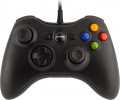 | 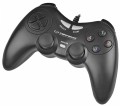 |
|---|---|---|
| GamePro Nitro GP310 | Esperanza Fighter PC | |
| Outdated Product | Outdated Product | |
| User reviews | ||
| TOP sellers | ||
| Product type | gamepad | gamepad |
Connection | ||
| Platform | PC (Windows) | PC (Windows) |
| Interface | wired | wired |
| Wired interface | USB-A | USB-A |
| Cable length | 1.8 m | |
Control | ||
| Number of buttons | 11 pcs | 11 pcs |
| Switch type | membrane | |
| Feedback | vibration | vibration |
| D-pad | 8 position | 4 position |
| Sticks | 2 asymmetrical | 2 both from below |
| Bumpers (shifts) | 2 pcs | 4 pcs |
| Triggers | 2 pcs | |
Power supply | ||
| Power source | USB port | USB port |
General | ||
| Material | plastic | plastic |
| Weight | 255 g | |
| Color | ||
| Added to E-Catalog | november 2019 | december 2017 |


Compare GamePro Nitro GP310 and Esperanza Fighter PC
You may be interested in
GamePro Nitro GP310 often compared


Glossary
Cable length
The length of the cable provided in the design or delivery set of the wired or combined controller (see "Connection").
In general, the meaning of this parameter is obvious: a longer cable gives more freedom of movement, but can create inconvenience at short distances. In fact, the length of the wire is important mainly in cases where a wired connection is used to play on a large screen: for comfortable viewing, it is desirable to be at a fairly large distance from such a screen. However, even in this case, a relatively short cable can be compensated for by the length of the wires going from the console (or other gaming device) to the screen, or even by connecting the set-top box to the screen wirelessly (many modern models have this capability). If the controller is used for a computer, this parameter can be ignored: the system unit or laptop is usually located in close proximity to the user, and even a fairly short wire is enough to connect.
In general, the meaning of this parameter is obvious: a longer cable gives more freedom of movement, but can create inconvenience at short distances. In fact, the length of the wire is important mainly in cases where a wired connection is used to play on a large screen: for comfortable viewing, it is desirable to be at a fairly large distance from such a screen. However, even in this case, a relatively short cable can be compensated for by the length of the wires going from the console (or other gaming device) to the screen, or even by connecting the set-top box to the screen wirelessly (many modern models have this capability). If the controller is used for a computer, this parameter can be ignored: the system unit or laptop is usually located in close proximity to the user, and even a fairly short wire is enough to connect.
Switch type
The type of switches indicates the mechanism under the buttons of a gamepad or controller and how exactly the device registers pressing. This affects the click feel, response speed, noise, durability, and accuracy of repeated presses.
— Membrane. Under the button is a flexible rubber or silicone membrane that gets pressed to close the contact. These switches are usually quieter, softer, and cheaper but can lose elasticity over time and do not match mechanical solutions in terms of response precision.
— Mechanical. In mechanical switches, each press is handled by an individual mechanism with a spring and more pronounced tactile feedback. These buttons feel better to the fingers, return to the starting position faster, and are well-suited for fighting games, arcade games, and frequent commands.
— Optical. An optical switch registers the button's movement by interrupting or changing a light beam, rather than through regular contact. Compared to mechanical solutions, it can respond faster and wear less in the contact zone, making them a good choice for active gaming and esports.
— Membrane. Under the button is a flexible rubber or silicone membrane that gets pressed to close the contact. These switches are usually quieter, softer, and cheaper but can lose elasticity over time and do not match mechanical solutions in terms of response precision.
— Mechanical. In mechanical switches, each press is handled by an individual mechanism with a spring and more pronounced tactile feedback. These buttons feel better to the fingers, return to the starting position faster, and are well-suited for fighting games, arcade games, and frequent commands.
— Optical. An optical switch registers the button's movement by interrupting or changing a light beam, rather than through regular contact. Compared to mechanical solutions, it can respond faster and wear less in the contact zone, making them a good choice for active gaming and esports.
D-pad
The presence of the D-Pad manipulator in the controller design; the type of such a manipulator can also be specified here.
D-Pad is used to move the character, cursor, etc. in strictly defined, standard directions. In some cases, this can be more convenient than using analogue levers that tilt to either side (see below). As for the varieties, nowadays there are such options:
— 4-position. The classic D-Pad, which appeared at the dawn of game consoles and does not lose popularity nowadays. Available as a set of 4 buttons in a distinctive cross-shaped layout, or as a single solid "multi-sided" button. Anyway, such a device provides 4 fixed directions: up, down, right, left. But to move diagonally, you need to select 2 corresponding directions at once; this is not always convenient, so in this regard, 4-way D-Pads are considered somewhat less practical than the 8-way ones described below. On the other hand, they are also quite functional, while being simpler in design, reliable and inexpensive; and strictly diagonal movements are not required as often as horizontal and vertical ones. So this type of D-Pads can be found even in accessories for the latest generations of game consoles.
— 8-position. A variation of the D-Pad, in which 4 standard directions (2 horizontal, 2 vertical) are supplemented by 4 intermediate — diagonal. In this case, we are usually talking about full-fledge...d fixed positions of the manipulator; in other words, to move diagonally, you need to click not on two standard directions, but on one intermediate one. The classic design of this type of D-Pad is a multi-sided button, which is the most suitable option in this case. However, this variety also includes some solutions for 4 separate buttons — provided that these buttons are placed very close, and pressing two at once with one finger is not difficult. Anyway, 8-position manipulators are somewhat more expensive, but more convenient than 4-position ones.
D-Pad is used to move the character, cursor, etc. in strictly defined, standard directions. In some cases, this can be more convenient than using analogue levers that tilt to either side (see below). As for the varieties, nowadays there are such options:
— 4-position. The classic D-Pad, which appeared at the dawn of game consoles and does not lose popularity nowadays. Available as a set of 4 buttons in a distinctive cross-shaped layout, or as a single solid "multi-sided" button. Anyway, such a device provides 4 fixed directions: up, down, right, left. But to move diagonally, you need to select 2 corresponding directions at once; this is not always convenient, so in this regard, 4-way D-Pads are considered somewhat less practical than the 8-way ones described below. On the other hand, they are also quite functional, while being simpler in design, reliable and inexpensive; and strictly diagonal movements are not required as often as horizontal and vertical ones. So this type of D-Pads can be found even in accessories for the latest generations of game consoles.
— 8-position. A variation of the D-Pad, in which 4 standard directions (2 horizontal, 2 vertical) are supplemented by 4 intermediate — diagonal. In this case, we are usually talking about full-fledge...d fixed positions of the manipulator; in other words, to move diagonally, you need to click not on two standard directions, but on one intermediate one. The classic design of this type of D-Pad is a multi-sided button, which is the most suitable option in this case. However, this variety also includes some solutions for 4 separate buttons — provided that these buttons are placed very close, and pressing two at once with one finger is not difficult. Anyway, 8-position manipulators are somewhat more expensive, but more convenient than 4-position ones.
Sticks
The number and location of analogue sticks provided in the design of the manipulator.
The analogue lever can be described as a "miniature joystick" — it is a protruding lever that can be deflected in any direction. Its purpose is generally similar to the D-Pad (see above), but the stick does not have fixed positions; this provides more "fine" control, which is very important in modern games. In addition, tilting it is often more convenient than pressing the D-Pad.
Separately, it is worth mentioning sticks on Hall sensors. The design of such levers is more reliable due to the absence of rubbing and contacting parts, and the position of the stick is determined by changes in the fluctuations of the magnetic field, which are monitored by appropriate sensors. Sticks on Hall sensors do not have “dead zones”, are devoid of the drift effect (misalignment), and wear out an order of magnitude slower. However, such solutions are not cheap.
This feature is most widely used in gamepads (see "Device type") — most of these controllers have at least one lever, models without sticks are already considered rare. In addition, such equipment, by definition, is installed in all arcade controllers; and analogue levers are also found in virtual reality weapons and motion controllers — it is very convenient to control the movement of the character through them.
...As for the location, it is indicated mainly for traditional design gamepads with a full set of controls, including 2 sticks. The most common options here are the left lever on top, the right one on the bottom ( like Xbox) or both levers on the bottom (like PlayStation). Much less common are devices where both analogue sticks are installed on top — this is, in particular, a regular gamepad for Wii U, as well as many models for mobile gadgets. And in some manipulators, a customizable (adjustable) arrangement of levers is provided: usually, the right stick in such models is fixed, and the left one can be installed from above or below, changing the format of the gamepad to suit your preferences.
The analogue lever can be described as a "miniature joystick" — it is a protruding lever that can be deflected in any direction. Its purpose is generally similar to the D-Pad (see above), but the stick does not have fixed positions; this provides more "fine" control, which is very important in modern games. In addition, tilting it is often more convenient than pressing the D-Pad.
Separately, it is worth mentioning sticks on Hall sensors. The design of such levers is more reliable due to the absence of rubbing and contacting parts, and the position of the stick is determined by changes in the fluctuations of the magnetic field, which are monitored by appropriate sensors. Sticks on Hall sensors do not have “dead zones”, are devoid of the drift effect (misalignment), and wear out an order of magnitude slower. However, such solutions are not cheap.
This feature is most widely used in gamepads (see "Device type") — most of these controllers have at least one lever, models without sticks are already considered rare. In addition, such equipment, by definition, is installed in all arcade controllers; and analogue levers are also found in virtual reality weapons and motion controllers — it is very convenient to control the movement of the character through them.
...As for the location, it is indicated mainly for traditional design gamepads with a full set of controls, including 2 sticks. The most common options here are the left lever on top, the right one on the bottom ( like Xbox) or both levers on the bottom (like PlayStation). Much less common are devices where both analogue sticks are installed on top — this is, in particular, a regular gamepad for Wii U, as well as many models for mobile gadgets. And in some manipulators, a customizable (adjustable) arrangement of levers is provided: usually, the right stick in such models is fixed, and the left one can be installed from above or below, changing the format of the gamepad to suit your preferences.
Bumpers (shifts)
Bumpers or Shifts are buttons located on the top of gaming controllers. They are intended for assigning various actions in games, and are also used for user interaction with menu interfaces and applications on gaming consoles or computers.
Such control elements are characteristic of gamepads (see "Type") and are rarely found in other types of gaming controllers. Shifts are usually pressed with the index fingers while holding the gamepad. Often, bumper buttons can perform different functions depending on the game (for example, switching weapons, running mode, etc.), and they are also used for navigating between sections of the user interface. In any case, bumpers provide additional control options for the player.
Such control elements are characteristic of gamepads (see "Type") and are rarely found in other types of gaming controllers. Shifts are usually pressed with the index fingers while holding the gamepad. Often, bumper buttons can perform different functions depending on the game (for example, switching weapons, running mode, etc.), and they are also used for navigating between sections of the user interface. In any case, bumpers provide additional control options for the player.
Triggers
Auxiliary controls located on the top of the gamepad at the back of the body. The triggers are pressed by the player's index or middle fingers.
In classic gamepads and joysticks, triggers are used to control various actions in games (for example, accelerating a car in racing games, shooting in shooters, etc.). Some models allow the trigger to be pressed halfway for aiming in the game or fully for firing at enemies. Such buttons may also feature a vibration feedback function. In the vast majority of cases, triggers are based on potentiometers (variable resistors), less frequently on Hall sensors, which track changes in the magnetic field fluctuations and lack frictional parts in their construction (though they are more expensive).
Triggers are arranged somewhat differently in clip-on gamepads for smartphones (see "Type"). Often these controls are equipped with lever-type mechanisms and sensitive contacts to the touchscreen layer, which touch a specific area of the display when the levers are pressed. Depending on the game layout, various control functions (shooting, aiming, crouching, or jumping, etc.) are typically assigned to the triggers.
In classic gamepads and joysticks, triggers are used to control various actions in games (for example, accelerating a car in racing games, shooting in shooters, etc.). Some models allow the trigger to be pressed halfway for aiming in the game or fully for firing at enemies. Such buttons may also feature a vibration feedback function. In the vast majority of cases, triggers are based on potentiometers (variable resistors), less frequently on Hall sensors, which track changes in the magnetic field fluctuations and lack frictional parts in their construction (though they are more expensive).
Triggers are arranged somewhat differently in clip-on gamepads for smartphones (see "Type"). Often these controls are equipped with lever-type mechanisms and sensitive contacts to the touchscreen layer, which touch a specific area of the display when the levers are pressed. Depending on the game layout, various control functions (shooting, aiming, crouching, or jumping, etc.) are typically assigned to the triggers.