
Comparison Aerocool Sentinel black vs Gamemax StarLight white
Add to comparison | 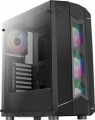 | 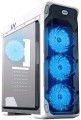 |
|---|---|---|
| Aerocool Sentinel black | Gamemax StarLight white | |
from $62.60 | Outdated Product | |
| User reviews | ||
| TOP sellers | ||
| Features | gaming | gaming |
| Form factor | Midi Tower | Midi Tower |
| Mount | vertical | vertical |
| Motherboard support | ATX | ATX |
| PSU form factor | ATX (regular) | ATX (regular) |
Computer case | ||
| Dimensions (HxWxD) | 387x218x445 mm | 470x205x440 mm |
| Graphics card max lenght | 325 mm | 360 mm |
| Fan max height | 164 mm | 170 mm |
| Weight | 5 kg | 4.6 kg |
| Material | steel | steel |
| Sidewall thickness | 0.5 mm | 0.5 mm |
| Rubber feet |  | |
| Lighting type | backlit fan | backlit fan |
| Lighting colour | RGB | blue, green, red and white |
| Lighting sync | multi compatibility | |
| Side panel | removable | removable |
Storage | ||
| PSU |  | |
| PSU mount | bottom | bottom |
| 3.5" bays | 2 | 2 |
| internal 2.5" compartments | 3 | 2 |
| Expansion slots | 7 | 7 |
Cooling | ||
| Installed fans | 4 шт | 4 шт |
| Fans (back) | 1x120mm | 1x120mm |
| Fans (front) | 2x200mm | 3x120mm |
| Fans (top) | 2x120mm | 2x120mm |
| Fan mounts total | 6 | 6 |
| Dust filter | + | + |
| Liquid cooling system support | | |
Liquid cooling system | ||
| Liquid cooling (rear) | 120 mm | |
| Liquid cooling (front) | 240mm | |
| Liquid cooling (top) | 240mm | 240mm |
| Liquid cooling mounts | 3 | 1 |
Connectors and functions | ||
| Placement | on top of the case | on top of the case |
| Fan controler | | |
| USB-A 2.0 | 2 pcs | 2 pcs |
| USB-A 5Gbps | 1 pcs | 1 pcs |
| Audio (microphone/headphones) | | |
More features | ||
| Front panel | lattice | glass |
| Side panel window | tempered glass | acrylic |
| More features | hidden wiring CPU cooling mount window | CPU cooling mount window |
| Color | ||
| Added to E-Catalog | october 2019 | september 2019 |


Compare Aerocool Sentinel and Gamemax StarLight
You may be interested in
My comparisons
Aerocool Sentinel often compared


Gamemax StarLight often compared


Glossary
Graphics card max lenght
The maximum length of a graphics card that can be installed in this case.
Modern mid-range and top-end video cards with high performance often differ in considerable length, which is why such a card can not fit into any case. So before collecting components, it is worth evaluating the length of the proposed graphics card and choosing a case in which it is guaranteed to fit. This forethought is useful anyway, but it's especially true if you're building a system that requires a powerful graphics adapter, such as a high-end gaming PC or 3D design workstation.
Modern mid-range and top-end video cards with high performance often differ in considerable length, which is why such a card can not fit into any case. So before collecting components, it is worth evaluating the length of the proposed graphics card and choosing a case in which it is guaranteed to fit. This forethought is useful anyway, but it's especially true if you're building a system that requires a powerful graphics adapter, such as a high-end gaming PC or 3D design workstation.
Fan max height
The highest cooler height allowed for this case.
In this case, we mean a cooler used to cool the processor — such a component is found in the vast majority of modern PCs. Height is measured relative to the motherboard.
In this case, we mean a cooler used to cool the processor — such a component is found in the vast majority of modern PCs. Height is measured relative to the motherboard.
Lighting colour
For more on decorative lighting in general, see Light Type above. Here we note that it can have different shades, and sometimes several options are indicated in the characteristics at once. If these options are listed through "and" (for example, "red, blue and green") — this means that this model contains all the specified colours, and the user can switch between them at his discretion. If the shades are listed through “or” (for example, “red, blue or green”), this means that this model is available in several versions that differ in the colour of the backlight.
Special mention is the "RGB" option. This is the name of the most advanced backlight, the shade of which can be chosen at your discretion. However the original RGB backlighting is capable of simultaneously displaying only one of several basic colours (white, yellow, green, red, blue or purple); nevertheless, even these possibilities are enough to customize the appearance of the case and apply various effects (such as backlight synchronization — see below).
And relatively recently, an even more advanced type of adjustable systems has appeared — ARGB backlight. The key difference between ARGB and classic RGB is the possibility of simultaneous operation of diodes of different colours. In other words, classic RGB lighting can display only one colour at a time, while ARGB can display several colours, which provides additional effects. Also, ARGB lighting is connecte...d using a 3pin 5v connector, while regular RGB uses a 4pin 12v connection. It can be represented by various types of illumination. So, ARGB is often integrated into the cooling system, the front panel and magnetic LED strips, which the user can mount at his discretion. To control the backlight, a special controller is usually provided, and buttons or controls for switching the illumination operation modes are placed on the interface panel. In some cases, the backlight is controlled by the motherboard, through a special connector. Many ARGB systems support the ability to fine-tune through specialized software.
Special mention is the "RGB" option. This is the name of the most advanced backlight, the shade of which can be chosen at your discretion. However the original RGB backlighting is capable of simultaneously displaying only one of several basic colours (white, yellow, green, red, blue or purple); nevertheless, even these possibilities are enough to customize the appearance of the case and apply various effects (such as backlight synchronization — see below).
And relatively recently, an even more advanced type of adjustable systems has appeared — ARGB backlight. The key difference between ARGB and classic RGB is the possibility of simultaneous operation of diodes of different colours. In other words, classic RGB lighting can display only one colour at a time, while ARGB can display several colours, which provides additional effects. Also, ARGB lighting is connecte...d using a 3pin 5v connector, while regular RGB uses a 4pin 12v connection. It can be represented by various types of illumination. So, ARGB is often integrated into the cooling system, the front panel and magnetic LED strips, which the user can mount at his discretion. To control the backlight, a special controller is usually provided, and buttons or controls for switching the illumination operation modes are placed on the interface panel. In some cases, the backlight is controlled by the motherboard, through a special connector. Many ARGB systems support the ability to fine-tune through specialized software.
Lighting sync
The timing technology provided in the illuminated housing (see “Light Type”).
Synchronization itself allows you to "match" the backlight of the case with the backlight of other system components — the motherboard, graphics card, keyboard, mouse, etc. Thanks to this matching, all components can change colour synchronously, turn on / off at the same time, etc. It is worth noting that all such systems have RGB backlighting. The specific features of the operation of such a backlight depend on the synchronization technology used, and, usually, each manufacturer has its own (Mystic Light Sync for MSI, Aura Sync for Asus, etc.). The compatibility of the components also depends on this: they must all support the same technology. So the easiest way to achieve backlight compatibility is to collect components from the same manufacturer.
Synchronization itself allows you to "match" the backlight of the case with the backlight of other system components — the motherboard, graphics card, keyboard, mouse, etc. Thanks to this matching, all components can change colour synchronously, turn on / off at the same time, etc. It is worth noting that all such systems have RGB backlighting. The specific features of the operation of such a backlight depend on the synchronization technology used, and, usually, each manufacturer has its own (Mystic Light Sync for MSI, Aura Sync for Asus, etc.). The compatibility of the components also depends on this: they must all support the same technology. So the easiest way to achieve backlight compatibility is to collect components from the same manufacturer.
internal 2.5" compartments
The number of internal 2.5" bays provided in the case design.
Such bays are mainly used for installing internal hard drives and SSD modules; The 2.5" form factor was originally created as "laptop" form factor, but recently it has been increasingly used in components for full-size PCs. At the same time, when evaluating the number of these bays, note that drives are recommended to be installed through a slot; so in Ideally, the number of bays should be twice the planned number of drives.
Also note that some cases use combined bays: initially they have a size of 3.5", but if desired, they can be converted to 2.5". These bays count towards both 3.5-inch and 2.5-inch slots. In fact, this means that the total number of available slots is not always equal to the sum of the number of both. For example, a case with 10 3.5" bays and 6 2.5" bays can have 4 combined bays, and the total number of slots in this case will not be 16, but only 12.
Such bays are mainly used for installing internal hard drives and SSD modules; The 2.5" form factor was originally created as "laptop" form factor, but recently it has been increasingly used in components for full-size PCs. At the same time, when evaluating the number of these bays, note that drives are recommended to be installed through a slot; so in Ideally, the number of bays should be twice the planned number of drives.
Also note that some cases use combined bays: initially they have a size of 3.5", but if desired, they can be converted to 2.5". These bays count towards both 3.5-inch and 2.5-inch slots. In fact, this means that the total number of available slots is not always equal to the sum of the number of both. For example, a case with 10 3.5" bays and 6 2.5" bays can have 4 combined bays, and the total number of slots in this case will not be 16, but only 12.
Fans (front)
The number of fan slots on the front of the case, and the size of the fans these slots are designed for. The presence of the fans themselves in the kit should be specified separately.
The larger the fan, the more advanced it is considered: a large diameter allows you to work efficiently at relatively low speeds, which reduces the noise level and energy consumption. Case fans are available in several standard diameters; specifically for the front panel, the size up to 92 mm is considered relatively small, 120 mm — medium, 140 mm — large, and in the most advanced solutions, fans of 180 mm or even more can be installed.
Also note that most often the holes for installing fans are designed for one specific size, however, there are also “multi-size” seats, for 2-3 options. Moreover, these options may differ both in diameter and in quantity: for example, it may be possible to install two 140 mm fans or three 120 mm fans.
The larger the fan, the more advanced it is considered: a large diameter allows you to work efficiently at relatively low speeds, which reduces the noise level and energy consumption. Case fans are available in several standard diameters; specifically for the front panel, the size up to 92 mm is considered relatively small, 120 mm — medium, 140 mm — large, and in the most advanced solutions, fans of 180 mm or even more can be installed.
Also note that most often the holes for installing fans are designed for one specific size, however, there are also “multi-size” seats, for 2-3 options. Moreover, these options may differ both in diameter and in quantity: for example, it may be possible to install two 140 mm fans or three 120 mm fans.
Liquid cooling (rear)
Size of the mounting space for the liquid cooling system provided on the back of the case.
In cases supporting liquid cooling systems, water cooling radiators are installed in the same slots as traditional fans. In other words, either a fan (or fans) or a liquid cooling radiator can be fitted into the same space. The size of the mounting space for a liquid cooling system is indicated by a single digit — the length (on the larger side); the width can be determined based on this information. The point is that modern liquid cooling radiators typically use fans of one of the standard sizes — 120 mm or 140 mm; and if there are several of such fans, they are arranged in a row. As a result, the length of the radiator becomes a multiple, and the width is equal to one of these numbers: for example, 280 mm is 2x140 mm with a width of 140 mm, and 360 mm is 3x120 mm with a width of 120 mm.
Note that the same nuances are relevant here as for air cooling: a larger fan occupies more space and is more expensive, but it is considered more advanced as it can operate efficiently at lower speeds — which reduces noise levels and vibrations.
In cases supporting liquid cooling systems, water cooling radiators are installed in the same slots as traditional fans. In other words, either a fan (or fans) or a liquid cooling radiator can be fitted into the same space. The size of the mounting space for a liquid cooling system is indicated by a single digit — the length (on the larger side); the width can be determined based on this information. The point is that modern liquid cooling radiators typically use fans of one of the standard sizes — 120 mm or 140 mm; and if there are several of such fans, they are arranged in a row. As a result, the length of the radiator becomes a multiple, and the width is equal to one of these numbers: for example, 280 mm is 2x140 mm with a width of 140 mm, and 360 mm is 3x120 mm with a width of 120 mm.
Note that the same nuances are relevant here as for air cooling: a larger fan occupies more space and is more expensive, but it is considered more advanced as it can operate efficiently at lower speeds — which reduces noise levels and vibrations.
Liquid cooling (front)
The size of the mounting space for the liquid cooling system provided on the front side of the case.
In cases with support for LCS, water-cooling radiators are installed in the same slots as traditional fans. In other words, either a fan (or fans) or an LCS radiator can be installed in the same mounting space. The size of the mounting space for LCS is specified by a single number — the length (on the longer side); the width can be determined based on these data. The fact is that modern LCS radiators usually use fans of one of the standard sizes — either 120 mm or 140 mm; and if there are several such fans, they are arranged in a row. As a result, the radiator length is a multiple, and the width is equal to one of these numbers: for example, 280 mm is 2x140 mm with a width of 140 mm, and 360 mm is 3x120 mm with a width of 120 mm. Generally, a front radiator size of 240 mm or less is considered relatively small, 280 mm is medium, 360 mm is large, and in some models, it reaches 420 mm and even 480 mm.
Note that the same nuances apply here as for air cooling: a larger fan occupies more space and costs more, but it is considered more advanced because it can work efficiently at a lower speed — reducing noise and vibrations.
Liquid cooling mounts
The total number of spaces available for liquid cooling systems in the case, in other words, the maximum number of LCS radiators that can be installed in the case. These radiators are usually placed one per side of the case, so several radiators are often located on different sides: for example, 3 LCS spaces can be located at the rear, top, and front.
When evaluating the number of mounting slots (of all types), it's important to consider that fans and LCS radiators usually use the same mounting locations.
When evaluating the number of mounting slots (of all types), it's important to consider that fans and LCS radiators usually use the same mounting locations.