
Comparison Treker MAT-103 vs Treker MAT-100
Add to comparison | 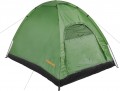 | 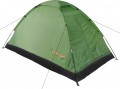 |
|---|---|---|
| Treker MAT-103 | Treker MAT-100 | |
| Outdated Product | Outdated Product | |
| TOP sellers | ||
| Suitable for | trekking | trekking |
| Number of berths | 2 | 2 |
| Seasonality | spring/autumn summer | spring/autumn summer |
| Weight | 1.6 kg | 1 kg |
Design | ||
| Body shape | hemisphere | hemisphere |
| Number of entrances | 1 шт | 1 шт |
| Bedroom entrances | 1 шт | 1 шт |
| Ventilation windows |  | |
Frame and materials | ||
| Frame type | external | external |
| Main poles | 2 | 2 |
| Arc thickness | 8 mm | 8 mm |
| Frame material | fibreglass | fibreglass |
| Tent material | polyester | polyester |
| Bottom material | polyethylene | polyethylene |
Protective features | ||
| Seam sealing | | |
| UV protection | | |
| Refractory impregnation | | |
General | ||
| More features | mosquito net inside pockets | mosquito net inside pockets |
| External dimensions | 200x140x120 cm | 200x120x100 cm |
| Dimensions in case | 70x45 cm | 69x34 cm |
| Color | ||
| Added to E-Catalog | april 2018 | april 2018 |


Compare Treker MAT-103 and MAT-100
You may be interested in
My comparisons
Treker MAT-103 often compared


Treker MAT-100 often compared


Glossary
Weight
The total weight of the tent is including the frame and other accessories.
This parameter depends primarily on the purpose (see above), and after that — on seasonality, capacity, and additional functions. For example, in trekking and expedition models, the weight usually does not exceed 5 – 7.5 kg, and the lightest of these products can weigh 2 – 3 kg or even less, while being full-fledged tents for 2 people or even more. However, for a trekking tent, such a small weight with a capacity of more than 2 people usually means that this model is designed exclusively for the summer. For most camping tents, the weight starts at 6 kg, although among them there are also quite light products — by 4 – 5 kg, 3 – 4 kg, or even less (in such cases, light weight can also mean a purely summer specialization). And the most capacious and/or multifunctional models can have a weight of 10 – 15 kg, 15 – 20 kg and even more; in this weight category, you can mainly find tents, camping tents for many people and fishing tents for carp fishing (see "Destination").
When choosing a tent according to this indicator, it is worth considering that it does not always make sense to chase the maximum weight reduction. Yes, the...light tent is the most convenient to carry; on the other hand, weight reduction inevitably affects one or several other characteristics at once. So, most often, lighter models are either more expensive or smaller in size and less roomy and functional than their heavier counterparts. And sometimes weight reduction also negatively affects the security (including moisture resistance) and the overall reliability of the product. Therefore, it makes sense to specifically look for the lightest tent possible in cases where weight reduction is of key importance; a typical example is long trips, in which all the equipment has to be carried “on oneself” for a long time. And even in such cases, it is worth remembering other important characteristics. For example, for use in late autumn, when frosts are likely, it is better to choose a heavier tent with winter seasonality than a light model that is not designed for winter conditions.
This parameter depends primarily on the purpose (see above), and after that — on seasonality, capacity, and additional functions. For example, in trekking and expedition models, the weight usually does not exceed 5 – 7.5 kg, and the lightest of these products can weigh 2 – 3 kg or even less, while being full-fledged tents for 2 people or even more. However, for a trekking tent, such a small weight with a capacity of more than 2 people usually means that this model is designed exclusively for the summer. For most camping tents, the weight starts at 6 kg, although among them there are also quite light products — by 4 – 5 kg, 3 – 4 kg, or even less (in such cases, light weight can also mean a purely summer specialization). And the most capacious and/or multifunctional models can have a weight of 10 – 15 kg, 15 – 20 kg and even more; in this weight category, you can mainly find tents, camping tents for many people and fishing tents for carp fishing (see "Destination").
When choosing a tent according to this indicator, it is worth considering that it does not always make sense to chase the maximum weight reduction. Yes, the...light tent is the most convenient to carry; on the other hand, weight reduction inevitably affects one or several other characteristics at once. So, most often, lighter models are either more expensive or smaller in size and less roomy and functional than their heavier counterparts. And sometimes weight reduction also negatively affects the security (including moisture resistance) and the overall reliability of the product. Therefore, it makes sense to specifically look for the lightest tent possible in cases where weight reduction is of key importance; a typical example is long trips, in which all the equipment has to be carried “on oneself” for a long time. And even in such cases, it is worth remembering other important characteristics. For example, for use in late autumn, when frosts are likely, it is better to choose a heavier tent with winter seasonality than a light model that is not designed for winter conditions.