
Comparison Kingston ValueRAM DDR3 1x4GB KVR13N9S8/4 vs Kingmax DDR3 FLFF65F
Add to comparison | 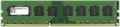 | 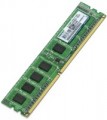 |
|---|---|---|
| Kingston ValueRAM DDR3 1x4GB KVR13N9S8/4 | Kingmax DDR3 FLFF65F | |
| Compare prices 2 | from $25.00 | |
| User reviews | ||
| TOP sellers | ||
| Memory capacity | 1 x 4GB | 1 x 4GB |
| Form factor | DIMM (PC) | DIMM (PC) |
| Type | DDR3 | DDR3 |
Specs | ||
| Speed | 1333 MT/s | 1333 MT/s |
| Clock speed | 10600 MB/s | 10600 MB/s |
| Timing diagram | 9-9-9 | 9-9-9-27 |
| First Word Latency | 13.5 ns | 13.5 ns |
| Voltage | 1.5 В | 1.5 В |
| Cooling | without cooling | without cooling |
| Strip profile | standard 30 mm | standard |
| Added to E-Catalog | march 2013 | february 2013 |



Compare Kingston KVR13N9S8/4 and Kingmax FLFF65F Kingston ValueRAM DDR3 1x4GB и Kingmax DDR3?
Price comparison
You may be interested in
My comparisons
Kingston ValueRAM DDR3 1x4GB often compared


Glossary
Timing diagram
Timing is a term that refers to the time it takes to complete an operation. To understand the timing scheme, you need to know that structurally RAM consists of banks (from 2 to 8 per module), each of which, in turn, has rows and columns, like a table; when accessing memory, the bank is selected first, then the row, then the column. The timing scheme shows the time during which the four main operations are performed when working with RAM, and is usually written in four digits in the format CL-Trcd-Trp-Tras, where
CL is the minimum delay between receiving a command to read data and the start of their transfer;
Trcd — the minimum time between the selection of a row and the selection of a column in it;
Trp is the minimum time to close a row, that is, the delay between the signal and the actual closing. Only one bank line can be opened at a time; Before opening the next line, you must close the previous one.
Tras — the minimum time the row is active, in other words, the shortest time after which the row can be commanded to close after it has been opened.
Time in the timing scheme is measured in cycles, so the actual memory performance depends not only on the timing scheme, but also on the clock frequency. For example, 1600 MHz 8-8-8-24 memory will run at the same speed as 800 MHz 4-4-4-12 memory—in either case timings, if expressed in nanoseconds, will be 5-5-5-15.
CL is the minimum delay between receiving a command to read data and the start of their transfer;
Trcd — the minimum time between the selection of a row and the selection of a column in it;
Trp is the minimum time to close a row, that is, the delay between the signal and the actual closing. Only one bank line can be opened at a time; Before opening the next line, you must close the previous one.
Tras — the minimum time the row is active, in other words, the shortest time after which the row can be commanded to close after it has been opened.
Time in the timing scheme is measured in cycles, so the actual memory performance depends not only on the timing scheme, but also on the clock frequency. For example, 1600 MHz 8-8-8-24 memory will run at the same speed as 800 MHz 4-4-4-12 memory—in either case timings, if expressed in nanoseconds, will be 5-5-5-15.
Strip profile
The profile of the stick is important for compatibility within the case: the memory may hit a large CPU cooler, a tight mini-case, or adjacent system elements. Therefore, the standard and low profile help quickly determine whether the module is designed for a typical installation in a standard build or for a more trouble-free installation in a constrained space.