
Comparison Canon PIXMA E304 vs Canon PIXMA iP7250
Add to comparison | 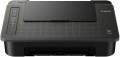 |  |
|---|---|---|
| Canon PIXMA E304 | Canon PIXMA iP7250 | |
| Compare prices 1 | from $882.42 | |
| TOP sellers | ||
A white grid is applied to the printer cover for easy creation of an electronic version of a document using a smartphone. | ||
| Print formats | A4 | A4 |
| Print type | inkjet | inkjet |
| Output type | colour | colour |
Print | ||
| Max. resolution | 4800x1200 dpi | 9600x2400 dpi |
| Mono print | 8 ppm | 15 ppm |
| Colour print | 4 ppm | 10 ppm |
| Photo print | 65 s/p | 21 s/p |
| Duplex printing |  |  |
| CD print | | |
Printing supplies | ||
| Mono cartridge resource | 400 page | 380 page |
| Colour cartridge resource | 300 page | 340 page |
| Cartridges | 2 | 5 |
| Cartridge model | PG-46, CL-56 | PGI-550PGBK, CLI-551BK, CLI-551C, CLI-551M, CLI-551Y |
Features | ||
| Data transfer | PC connection (USB-B) Wi-Fi 4 (802.11n) Bluetooth AirPrint | PC connection (USB-B) Wi-Fi 4 (802.11n) AirPrint |
| Screen | no display | no display |
Hardware | ||
| Grammage (min) | 64 g/m² | 64 g/m² |
| Grammage (max) | 275 g/m² | 300 g/m² |
General | ||
| Feed tray | 60 sheets | 145 sheets |
| Noise level | 45 dB | 44 dB |
| Power consumption | 10 W | 24 W |
| Dimensions (WxDxH) | 430x282x143 mm | 451x368x128 mm |
| Weight | 2.9 kg | 6.6 kg |
| Color | ||
| Added to E-Catalog | april 2018 | july 2015 |



Compare Canon PIXMA E304 and iP7250
Price comparison
You may be interested in
My comparisons
Canon PIXMA E304 often compared


Canon PIXMA iP7250 often compared


Glossary
Max. resolution
The maximum resolution of the image to be printed. It is usually indicated by two numbers denoting the number of dpi (DPI) horizontally and vertical: 600x600, 1200x600, 1200x1200, 2400x600, 2400x1200, 4800x600, 4800x1200, 4800x2400, 5760x1440, 9600x600, 9600x2400. The detail of the image depends on this parameter - the higher the resolution, the more fine details the printer is able to convey and the better their image will be. High print resolution is important, first of all, when working with graphic material; low resolution is sufficient for high-quality text display. So
Mono print
The black and white print speed provided by the printer. It should be noted that this parameter is often indicated for low quality when the device is running at maximum performance; at a higher quality (even at standard), the actual speed can be noticeably lower, so you should choose with a certain margin. Also note that high speed significantly affects the price, power consumption and noise level. Therefore, it does not always make sense to chase maximum performance — for simple applications (for example, at home or in a small office), a relatively slow and inexpensive device may be the best choice.
As for specific values, speeds up to 20 ppm are considered relatively low, 20 – 30 ppm — average, 31 – 40 ppm — decent, and the fastest models are capable of delivering more than 40 pages per minute.
As for specific values, speeds up to 20 ppm are considered relatively low, 20 – 30 ppm — average, 31 – 40 ppm — decent, and the fastest models are capable of delivering more than 40 pages per minute.
Colour print
Colour print speed provided by the printer. Usually, the specifications give speed at low quality, when performance is highest; on standard and especially high settings, the print speed can be noticeably lower, so it’s worth choosing with a certain margin. It is also worth considering that high speed significantly affects the price, power consumption and noise level. Therefore, it does not always make sense to chase maximum performance — for simple applications and small print volumes, a relatively slow and inexpensive device may be the best choice.
The "slowest" colour printers today are capable of delivering less than 10 pages per minute. A more decent value is considered 10 – 20 ppm, a speed of more than 20 ppm can already be called quite good, and in the fastest models this figure exceeds 30 ppm.
The "slowest" colour printers today are capable of delivering less than 10 pages per minute. A more decent value is considered 10 – 20 ppm, a speed of more than 20 ppm can already be called quite good, and in the fastest models this figure exceeds 30 ppm.
Photo print
Printer print speed in photographic (highest) quality. Unlike other similar parameters, in this case the speed is usually indicated for a 10x15 sheet (A6, the most popular format for photographs). In addition, photo printing speed is not expressed in pages per minute, but in seconds per page, because. printing takes a lot of time. This option is worth paying attention to if you plan to print photos frequently.
Duplex printing
Automatic duplex printing function .
In this mode, the user does not need to manually turn over each sheet and send it to print on the second side — this will be done by the printer mechanism, and materials printed on both sides will immediately enter the output tray. This not only saves time, but also eliminates confusion: a person can make a mistake and print one of the sides “upside down”, automation does not allow such errors.
In this mode, the user does not need to manually turn over each sheet and send it to print on the second side — this will be done by the printer mechanism, and materials printed on both sides will immediately enter the output tray. This not only saves time, but also eliminates confusion: a person can make a mistake and print one of the sides “upside down”, automation does not allow such errors.
CD print
Ability to use the printer to print directly on recordable optical discs (CD-R/RW, DVD-R/RW). Thus, after recording a disc, you can put on its non-working surface (non-mirror side used for inscriptions) an inscription or image as you wish. Often these printers come with software that makes it easy to create layouts for printing on disks. Please note that only specially designed discs can be used for printing.
Mono cartridge resource
The maximum number of pages that the printer's ink (toner) can print. The value is rather conditional, in reality the deviations from the norm are very large (up or down). In inkjet printers, the cartridge life is relatively small and amounts to several hundred prints. In laser and LED devices, the bill is already in the thousands.
Colour cartridge resource
The maximum number of pages that the printer's ink (toner) can print. The value is rather conditional, in reality the deviations from the norm are very large (up or down). In inkjet printers, the cartridge life is relatively small and amounts to several hundred prints. In laser and LED devices, the bill is already in the thousands.
Cartridges
The number of ink cartridges required for the full operation of the printer. In black and white devices, usually, one cartridge is installed. For colour printing, at least 4 colours are required (CMYK colour scheme), however, cartridges in such devices can be installed as 4 (one for each colour), or only 2 — black and "colour". The latter is essentially three multi-coloured cartridges in one case; This design somewhat reduces the cost, but creates certain inconveniences: when the supply of ink of one colour is exhausted, the entire colour cartridge becomes inoperative. However, this disadvantage is not critical if the possibility of refueling is provided.
Printers designed for more than 4 cartridges are also available. This design means that this model uses one of the extended colour schemes; this, on the one hand, contributes to high-quality colour reproduction, on the other hand, it significantly affects the price. In the most advanced photo printers, the number of cartridges can reach 9.
Printers designed for more than 4 cartridges are also available. This design means that this model uses one of the extended colour schemes; this, on the one hand, contributes to high-quality colour reproduction, on the other hand, it significantly affects the price. In the most advanced photo printers, the number of cartridges can reach 9.