
Comparison Whirlpool ART 6500 vs Whirlpool ART 65021
Add to comparison | 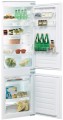 | 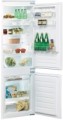 |
|---|---|---|
| Whirlpool ART 6500 | Whirlpool ART 65021 | |
from $327.28 up to $396.48 | from $285.00 up to $430.28 | |
| TOP sellers | ||
| Total capacity | 275 L | 273 L |
| Number of chambers | 2 | 2 |
| Number of cooling circuits | 1 | 1 |
| Number of compressors | 1 | 1 |
Features | ||
| Functions | reversible door | reversible door |
Refrigeration chamber | ||
| Refrigerator capacity | 195 L | 194 L |
| Number of shelves | 5 | |
| Auto-defrost |  | |
| LED lighting |  | |
Freezer chamber | ||
| Freezer location | bottom | bottom |
| Freezer capacity | 80 L | 79 L |
| Number of freezer drawers | 2 | |
| Big drawer | | |
| Slim shelf | | |
| Freezer temperature | -24 °C | -24 °C |
| Autonomy time | 19 h | 19 h |
| Freeze capacity | 4 kg/day | 4 kg/day |
More specs | ||
| Controls | rotary knobs | rotary knobs |
| Energy class | A+ | |
| Energy class (new) | F | |
| Energy consumption per year | 283 kWh | |
| Climate class | SN, N, ST, T (+10...+43 °С) | |
| Noise class | B | |
| Noise level | 35 dB | 35 dB |
| Door panel hinge | sliding mount | |
| Dimensions (HxWxD) | 177x54x55 cm | 177x54x55 cm |
| Cut-out dimensions (HxWxD) | 1776x560x560 mm | 1776x560x550 mm |
| Country of origin | Italy | |
| Added to E-Catalog | april 2015 | september 2014 |


Compare Whirlpool ART 6500 and ART 65021
You may be interested in
My comparisons
Whirlpool ART 6500 often compared


Whirlpool ART 65021 often compared


Glossary
Total capacity
The total volume of a refrigerator is the sum of the volumes of all its compartments, which can vary in specific capacity between different models. It's important to consider this when choosing a refrigerator.
A larger volume for a refrigerator can be beneficial for accommodating more food, but it can also increase the price and size of the appliance. This is especially important to consider if you plan to build the refrigerator into a specific space.
A larger volume for a refrigerator can be beneficial for accommodating more food, but it can also increase the price and size of the appliance. This is especially important to consider if you plan to build the refrigerator into a specific space.
Refrigerator capacity
The refrigerating compartment is designed for storage of products that do not require freezing, i.e. cooling down to temperatures below zero. The temperature range inside varies from +2 to +10. In almost all modern refrigerators, it is this compartment that has the largest volume.
To ensure optimal performance and food quality, it's important to choose the appropriate volume for the refrigerating compartment based on your actual food storage needs and how often you replenish your supplies. Overfilling the compartment can have a negative impact on both the refrigerator's performance and the quality of the stored food.
For singles or couples, a refrigerating compartment of up to 200 liters is enough, while families or those who stock up on food should opt for models with up to 400 liters. Vertical refrigerators with separate freezer access are suitable for those who need moderate storage space, while side-by-side refrigerators with their typically larger volumes are a good option for those who require even more space and have ample free space.
To ensure optimal performance and food quality, it's important to choose the appropriate volume for the refrigerating compartment based on your actual food storage needs and how often you replenish your supplies. Overfilling the compartment can have a negative impact on both the refrigerator's performance and the quality of the stored food.
For singles or couples, a refrigerating compartment of up to 200 liters is enough, while families or those who stock up on food should opt for models with up to 400 liters. Vertical refrigerators with separate freezer access are suitable for those who need moderate storage space, while side-by-side refrigerators with their typically larger volumes are a good option for those who require even more space and have ample free space.
Number of shelves
The amount of shelves in a refrigerator determines the division of space within the refrigeration compartment. Larger refrigeration compartments generally have more shelves, but there are also various configurations available even within the same volume (3 shelves, 4 shelves, 5 shelves and more). It is worth considering that they are mostly removable, which allows you to adjust the height of the shelf. And if necessary, you can buy more.
LED lighting
The presence of a LED lighting system in the design of the refrigerator.
LEDs are currently the most advanced type of household lighting due to their high efficiency, providing bright light with low power consumption. They emit minimal heat, making them ideal for refrigerator lighting. Their compact size also allows for even distribution throughout the interior, illuminating all shelves, which is not the case with incandescent lamps that can only shine in one location, leaving some areas poorly lit.
LEDs are currently the most advanced type of household lighting due to their high efficiency, providing bright light with low power consumption. They emit minimal heat, making them ideal for refrigerator lighting. Their compact size also allows for even distribution throughout the interior, illuminating all shelves, which is not the case with incandescent lamps that can only shine in one location, leaving some areas poorly lit.
Freezer capacity
The primary function of the freezer is to store food in a state of deep freeze, which helps preserve perishable products such as meat, vegetables, fruits, etc. for extended periods of time. The necessary volume of the freezer depends on the planned amount of food to be stored and the length of time it will be stored. A larger freezer is particularly useful if you plan to store food for several months. A compact freezer is relevant for short-term storage (for a day or two) or for seasonal devices (for example, in the village). It is best to ensure that the freezer is not overloaded and has enough space for proper circulation of air to maintain the desired temperature.
Number of freezer drawers
The quantity of freezer drawers in a refrigerator affects the optimal organization of frozen foods. A larger number of drawers allows for better separation of different types of frozen products. However, in the majority of standard two-compartment refrigerators, there are typically three freezer drawers.
Big drawer
One of the desirable features in a freezer are big drawers that can accommodate large items such as a whole turkey. However, what one manufacturer considers as a large drawer may differ from another manufacturer's definition. In some cases, a large drawer in one model may be equivalent in size to a standard drawer in another model.
Slim shelf
The slim shelf is a low (up to 5 cm) tray, which is the best suited for storing seasonings, rolled puff pastry, ice, butter, meat preparations and other small-sized products. In such a container, you can’t place products one on top of the other, so finding the right frozen item will be much easier.
Energy class
The energy class that the refrigerator corresponds to.
Energy consumption classes were originally designated with Latin letters from A (the most efficient) to D (least efficient), but with technological advancements, more advanced classes such as "A+", "A++", etc. were introduced to indicate increasing levels of efficiency. The more pluses a device has, the more economical it is. This was necessary due to the correlation between energy consumption and decreasing efficiency.
For modern built-in refrigerators, the efficiency indicator at the level of class A can be called average, A+ — not bad, A++ — good, A+++ — excellent. Energy consumption rates B and C are rare and mostly found in outdated or cheaper models. Achieving high efficiency requires design innovations, which results in higher device prices. However, these prices can be justified by the resulting reduction in electricity bills. It's worth noting that some built-in refrigerator models are available in different energy consumption classes, allowing customers to choose the best option for their budget and energy efficiency needs.
Energy consumption classes were originally designated with Latin letters from A (the most efficient) to D (least efficient), but with technological advancements, more advanced classes such as "A+", "A++", etc. were introduced to indicate increasing levels of efficiency. The more pluses a device has, the more economical it is. This was necessary due to the correlation between energy consumption and decreasing efficiency.
For modern built-in refrigerators, the efficiency indicator at the level of class A can be called average, A+ — not bad, A++ — good, A+++ — excellent. Energy consumption rates B and C are rare and mostly found in outdated or cheaper models. Achieving high efficiency requires design innovations, which results in higher device prices. However, these prices can be justified by the resulting reduction in electricity bills. It's worth noting that some built-in refrigerator models are available in different energy consumption classes, allowing customers to choose the best option for their budget and energy efficiency needs.