
Comparison LikeBike Flash vs Rover Monster 1
Add to comparison | 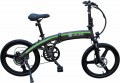 | 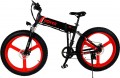 |
|---|---|---|
| LikeBike Flash | Rover Monster 1 | |
| Outdated Product | Outdated Product | |
| User reviews | ||
| TOP sellers | ||
| Type | urban | fatbike |
| Maximum load | 125 kg | 150 kg |
| Foldable design |  | |
Performance specification | ||
| Operating mode | electric drive + hybrid | electric drive + hybrid |
| Range | 60 km | 60 km |
| Motor power | 250 W | 350 W |
| Maximum speed | 30 km/h | 32 km/h |
| Drive | rear | rear |
| Wheel diameter | 20 " | 26 " |
| Depreciation | front | front |
| Front fork | spring-elastomer | spring-elastomer |
| Front brake | disk mechanical | disk mechanical |
| Rear brake | disc mechanical | disc mechanical |
Features | ||
| Speeds | 7 no. | 1 no. |
| Rear derailleur | Shimano | |
| Shifter type | triggered | |
| Shifter model | Shimano | |
| Onboard computer | |  |
Battery | ||
| Battery capacity | 7.8 Ah | 4.4 Ah |
| Battery capacity | 280 Wh | |
| Full charging time | 6 h | 7 h |
| Battery location | in the frame (hidden) | in the frame (hidden) |
General | ||
| In box | chain guard kickstand headlight and parking lights | chain guard kickstand headlight and parking lights |
| Frame material | aluminum | aluminum |
| Weight | 14.5 kg | 28 kg |
| Color | ||
| Added to E-Catalog | june 2018 | june 2018 |


Compare LikeBike Flash and Rover Monster 1
You may be interested in
LikeBike Flash often compared


Rover Monster 1 often compared

Glossary
Type
Type of Electric Bicycle — a structural class of model that defines the seating position, frame geometry, wheels, suspension, and main purpose of the bike.
— Mountain (MTB). An electric bicycle for rough terrain, dirt roads, forest trails, and moderate off-road conditions. It usually has a strong frame, wide tires, a suspension fork, or full suspension, and the motor helps to climb hills and navigate difficult sections of the route more easily.
— Downhill / freeride / enduro. Reinforced mountain e-bikes for aggressive riding, steep descents, rocks, roots, jumps, and complex trails. These models often feature powerful brakes, long-travel suspension, and robust frames but are heavier, more expensive, and less practical for regular city rides.
— Trail. A versatile type of mountain electric bicycle for forest trails, hilly terrain, dirt roads, and moderately difficult descents. Compared to a regular MTB, it is often better prepared for active trail riding, and compared to enduro or downhill models, it remains lighter, more practical, and more convenient for everyday routes.
— Urban. A model for daily city rides, bike lanes, and smooth asphalt. For this type, comfortable seating, fenders, a luggage rack, lighting, a kickstand, and convenience are more important than maximum passability or sports speed.
— Road. An electric bicycle for riding on asphalt, in parks, along...embankments, and on suburban roads. In essence, it is closer to a universal bike for smooth surfaces: faster and lighter than an urban bike but usually not as sporty and demanding in terms of seating as a road bike.
— Touring. A bike for long trips, cycling journeys, and routes with baggage. It is usually designed for stability, comfortable seating, range, and mounts for racks, bags, and fenders, making it well-suited for trips outside the city and multi-day routes.
— Cruiser. A comfortable electric bicycle with a relaxed seating position, wide handlebars, and a design for leisurely rides. This type is convenient for strolling, resort areas, and smooth city routes but not intended for a fast pace, steep climbs, or sporty handling.
— Road bike. A lightweight high-speed e-bike for asphalt, long distances, and sports riding. It usually has narrow tires, aerodynamic seating, and a minimal set of extra equipment, with electric assistance used not for “moped” riding but to maintain pace on climbs and long routes.
— Gravel. An electric bicycle for mixed routes: asphalt, dirt roads, packed forest roads, and light off-road. It is faster and sportier than a touring bike but more stable and versatile than a road bike thanks to wider tires, baggage mounts, and a relaxed geometry.
— Fatbike. An electric bicycle with very wide tires for sand, snow, loose terrain, and rough roads. The large tires provide good passability and absorb bumps, but they increase weight and rolling resistance, so the motor is particularly useful here.
— Mountain (MTB). An electric bicycle for rough terrain, dirt roads, forest trails, and moderate off-road conditions. It usually has a strong frame, wide tires, a suspension fork, or full suspension, and the motor helps to climb hills and navigate difficult sections of the route more easily.
— Downhill / freeride / enduro. Reinforced mountain e-bikes for aggressive riding, steep descents, rocks, roots, jumps, and complex trails. These models often feature powerful brakes, long-travel suspension, and robust frames but are heavier, more expensive, and less practical for regular city rides.
— Trail. A versatile type of mountain electric bicycle for forest trails, hilly terrain, dirt roads, and moderately difficult descents. Compared to a regular MTB, it is often better prepared for active trail riding, and compared to enduro or downhill models, it remains lighter, more practical, and more convenient for everyday routes.
— Urban. A model for daily city rides, bike lanes, and smooth asphalt. For this type, comfortable seating, fenders, a luggage rack, lighting, a kickstand, and convenience are more important than maximum passability or sports speed.
— Road. An electric bicycle for riding on asphalt, in parks, along...embankments, and on suburban roads. In essence, it is closer to a universal bike for smooth surfaces: faster and lighter than an urban bike but usually not as sporty and demanding in terms of seating as a road bike.
— Touring. A bike for long trips, cycling journeys, and routes with baggage. It is usually designed for stability, comfortable seating, range, and mounts for racks, bags, and fenders, making it well-suited for trips outside the city and multi-day routes.
— Cruiser. A comfortable electric bicycle with a relaxed seating position, wide handlebars, and a design for leisurely rides. This type is convenient for strolling, resort areas, and smooth city routes but not intended for a fast pace, steep climbs, or sporty handling.
— Road bike. A lightweight high-speed e-bike for asphalt, long distances, and sports riding. It usually has narrow tires, aerodynamic seating, and a minimal set of extra equipment, with electric assistance used not for “moped” riding but to maintain pace on climbs and long routes.
— Gravel. An electric bicycle for mixed routes: asphalt, dirt roads, packed forest roads, and light off-road. It is faster and sportier than a touring bike but more stable and versatile than a road bike thanks to wider tires, baggage mounts, and a relaxed geometry.
— Fatbike. An electric bicycle with very wide tires for sand, snow, loose terrain, and rough roads. The large tires provide good passability and absorb bumps, but they increase weight and rolling resistance, so the motor is particularly useful here.
Maximum load
The maximum weight for which the frame, wheels, suspension, brakes, and other components of the electric bike are designed. This usually implies the weight of the rider along with baggage and accessories: for example, a backpack, basket, child seat, or load on the luggage rack. It is not advisable to exceed this limit, as the additional weight reduces maneuverability, increases braking distance, and accelerates wear on the wheels, spokes, hubs, and frame.
Motor power
The characteristic of the electric motor in watts shows how actively it assists in acceleration, climbing hills, and riding with a load. For leisurely city rides and bike paths, a motor of about 250 W is often sufficient. For suburban routes, hills, and heavier riders, a reserve of 350 – 500 W is more convenient. Values of 750 W and above are more commonly found in powerful fat bikes, cargo, and off-road models. When choosing, it’s important to consider that high power quickly depletes the charge and doesn’t always mean greater speed: real dynamics are also influenced by torque, bicycle weight, battery capacity, and controller settings.
Maximum speed
The maximum speed at which an electric bike can accelerate using the electric motor. For relaxed city rides and bike paths, models with a limit of around 25 km/h are usually sufficient, while options with speeds of approximately 30–35 km/h are found for suburban routes and more dynamic riding. Higher speeds are more common in powerful off-road bikes, fat bikes, and high-speed models.
It is worth considering that the actual speed depends on the motor's power, rider's weight, battery charge, terrain, wind, and controller settings. In some cases, it may also be limited by traffic regulations or firmware.
It is worth considering that the actual speed depends on the motor's power, rider's weight, battery charge, terrain, wind, and controller settings. In some cases, it may also be limited by traffic regulations or firmware.
Wheel diameter
The wheel size of an electric bicycle in inches affects compactness, stability, rolling, and passability. The larger the wheel, the easier it rolls over bumps and maintains speed, but the bigger the bike itself becomes.
Small 20″ wheels and below are typical for folding e-bikes, 26″ is well-suited for city rides, leisure, and basic off-roading, while 27.5″, 28″, and 29″ are often chosen for mountain, road, touring, and high-speed models.
Small 20″ wheels and below are typical for folding e-bikes, 26″ is well-suited for city rides, leisure, and basic off-roading, while 27.5″, 28″, and 29″ are often chosen for mountain, road, touring, and high-speed models.
Speeds
The number of gears indicates how many mechanical shifts are available to the rider for changing the pedaling effort. Simple transmissions with a small number of gears may suffice for city e-bikes, while a wider range of gears is more convenient for hills, long routes, off-road terrain, and riding without active motor assistance. However, a large number of gears does not always mean a faster e-bike: it primarily affects the convenience of riding in different conditions, not the maximum speed of the electric motor.
This point should not be confused with the motor speed modes: gears change the operation of the chain and sprockets, while modes change the level of assistance from the electric drive.
This point should not be confused with the motor speed modes: gears change the operation of the chain and sprockets, while modes change the level of assistance from the electric drive.
Rear derailleur
Bicycle drivetrain component that moves the chain between gears to select the desired gear. Specifications usually include the series or manufacturer name, such as Shimano, SRAM, Microshift, Shimano Tourney, Altus, Acera, Alivio, Deore, and other options. This helps to roughly understand the drivetrain class, shifting precision, compatibility with the number of speeds, and maintenance level.
Shifter type
Control mechanism used by the rider to shift gears on a bicycle. It determines the convenience of shifting, response speed, compatibility with brake levers, and overall sense of control.
— Trigger. Shifter with levers under the thumb and index finger, used to move the chain to the desired gear. This option is considered one of the most common for mountain, city, and universal e-bikes: shifting is precise, fast, and easy to control even on uneven roads.
— Grip Shift. Rotating shifter built into or located near the handlebar grip. Gears are shifted by rotating the grip, which is convenient for leisurely city rides and simple touring bikes, but during active riding or when wearing gloves, this method may be less precise than trigger shifting.
— Dual Control. Combined lever where brake and gear shifting are integrated into a single unit. This format is more commonly found on road and gravel bikes, where shifting without changing the grip on the handlebars is important, but it is less typical for classic city and mountain e-bikes.
— Electronic. The shifter sends commands to the derailleur not with a cable, but with an electronic signal. This system ensures precise and stable shifting, can work with settings via an app, and is less affected by cable stretching, but it is more expensive and requires monitoring the battery charge or system power supply.
— Trigger. Shifter with levers under the thumb and index finger, used to move the chain to the desired gear. This option is considered one of the most common for mountain, city, and universal e-bikes: shifting is precise, fast, and easy to control even on uneven roads.
— Grip Shift. Rotating shifter built into or located near the handlebar grip. Gears are shifted by rotating the grip, which is convenient for leisurely city rides and simple touring bikes, but during active riding or when wearing gloves, this method may be less precise than trigger shifting.
— Dual Control. Combined lever where brake and gear shifting are integrated into a single unit. This format is more commonly found on road and gravel bikes, where shifting without changing the grip on the handlebars is important, but it is less typical for classic city and mountain e-bikes.
— Electronic. The shifter sends commands to the derailleur not with a cable, but with an electronic signal. This system ensures precise and stable shifting, can work with settings via an app, and is less affected by cable stretching, but it is more expensive and requires monitoring the battery charge or system power supply.
Shifter model
The specific name or series of the gear shifter installed on the bicycle handlebar. This point can indicate the class of the component, compatibility with the number of speeds, and the approximate level of shifting precision: for example, simple Shimano Tourney is often found on basic city models, while Shimano Altus, Acera, Deore, SRAM NX, or GX are found on more versatile and advanced bicycles.